
Beliefs both guide and misguide, by circling them they become as clear as messages written in invisible ink.






Ghost of a Unicorn
Responding to Ghost of a Unicorn, in an Artlyst review, James Payne quoted Alice in Wonderland:
“Do you know, I always thought Unicorns were fabulous monsters, too!” said Alice, “I never saw one alive before!”
“Well, now that we have seen each other,” said the Unicorn, “if you’ll believe in me, I’ll believe in you. Is that a bargain?”
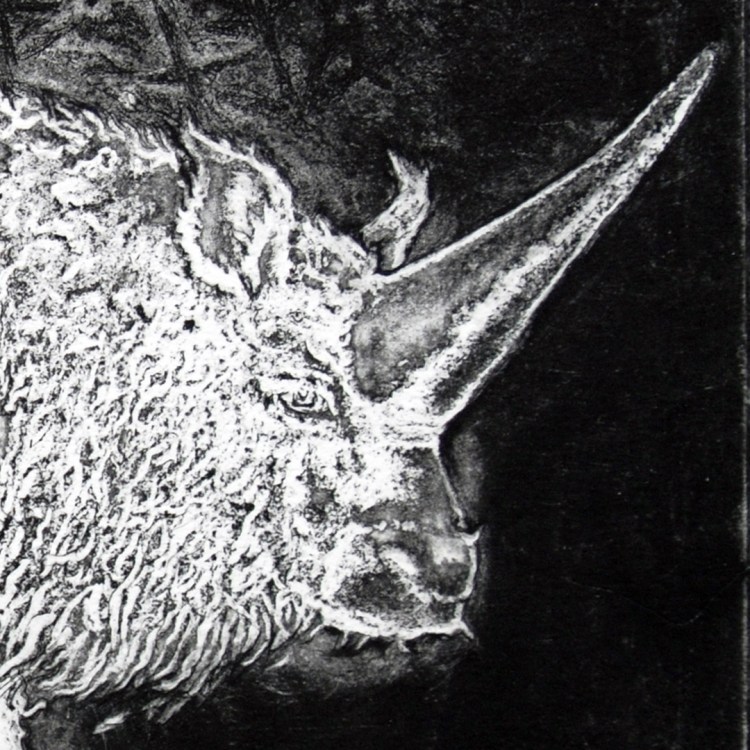

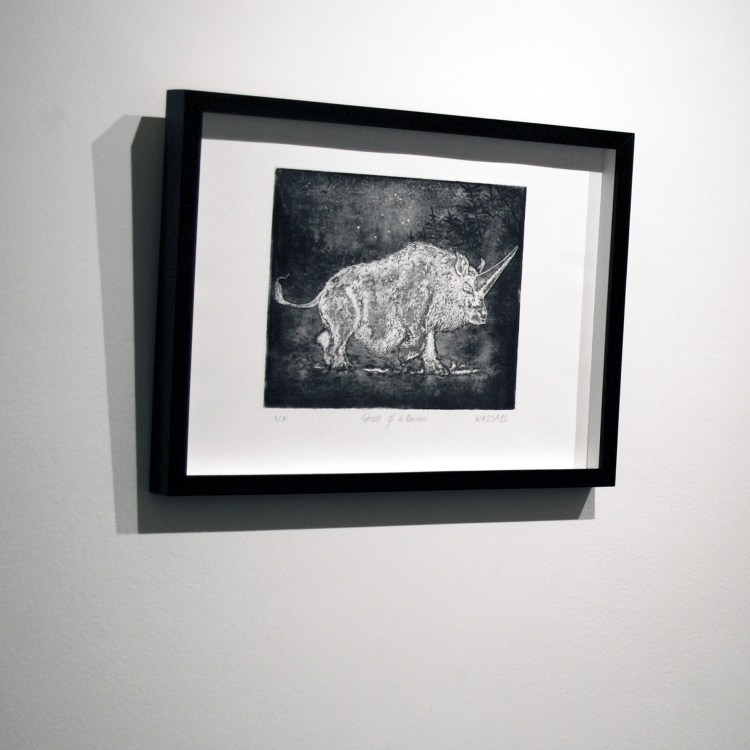

In 2018 Professor Adrian Lister, Merit Researcher at the Natural History Museum, used radiocarbon dating to confirm unicorns lived 35,000 years ago, a far cry from the 100 – 200,000 years previously believed. It seemed remarkable, the idea that ‘unicorns are real’ had passed me by. Focused fact checking ensued. From National Geographic for Kids to Nature Ecology & Evolution , in unison they confirmed, unicorns were real and existed alongside modern man.
Ancient texts spoke about magnificent beasts, huge in proportions and even warlike, nothing like the elegant creature I knew. Disappointingly ‘artist impressions’ of the ‘real unicorn’ looked stiff, and more than that, unlikely. I reimagined this real and mythical creature as a glowing ghost of its former self. Informed by the skeletal structures of Siberian Unicorns, referencing white rhinoceros (the closest living relation), woolly mammoths and other grass land beasts, and came up with something almost unrecognisable to the ‘unicorn myth’, but to my mind more believable.
The unicorn question became fascinating. What forces were at play in this ancient game of Chinese whispers? What transformed this mighty beast into a white horse-like animal, infused with cultural symbolism, to the point where it stopped being something real?
In this etching the ‘Unicorn’ star constellation is visible, so whilst the unicorn is extinct the star constellation serves as a reminder that it was once real.
Ghost of a Unicorn, 2023. Etching on 250gsm 50% cotton Fabriano Unica paper 34h x 42w cm (unframed), print run of 10. £2000 unframed £2100 framed – black tulip wood frame with Tru Vue non reflective glass uv protection.
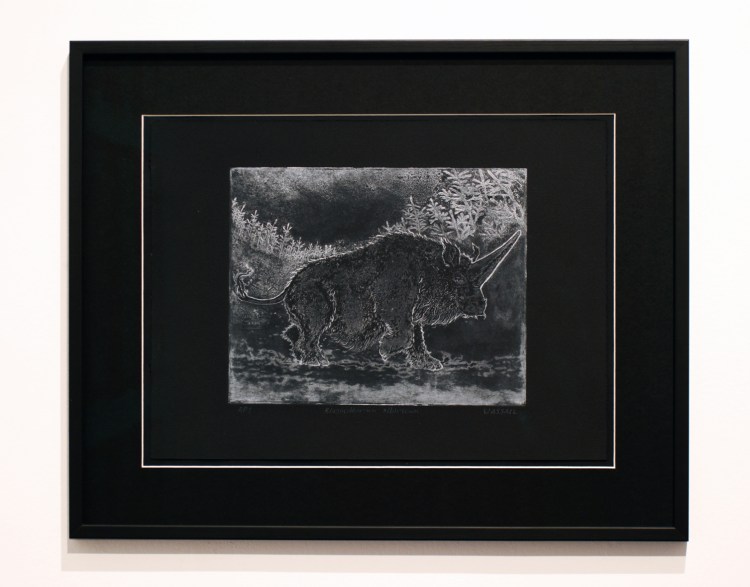
In a ‘second version‘ of the etching, white ink on black paper, called ‘Elasmotherium Sibiricum’ the same plate as ‘Ghost of a Unicorn’ was used. Only two artist proofs have been made, to symbolise and pay respect to the two remaining northern white rhinos, Najin and Fatu (both female). In this version there is no star constellation, these white rhinos will soon be gone with little trace.
Elasmotherium Sibiricum: Velin Arches Noir Somerset 280gsm 100% cotton. 38.5 x 29cm framed in black frame with mount board and Tru Vue non reflective glass. £1550
Pope Joan, Patron Saint of Feminists
‘Pope Joan, Patron Saint of Feminists’ is a contemporary take on icon painting.
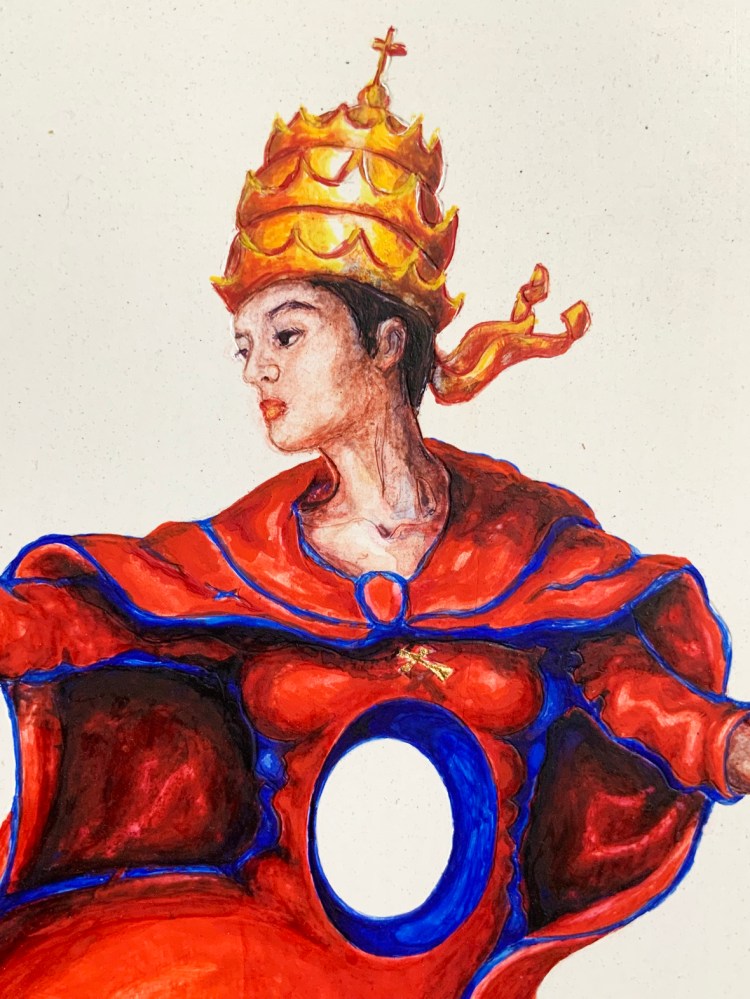

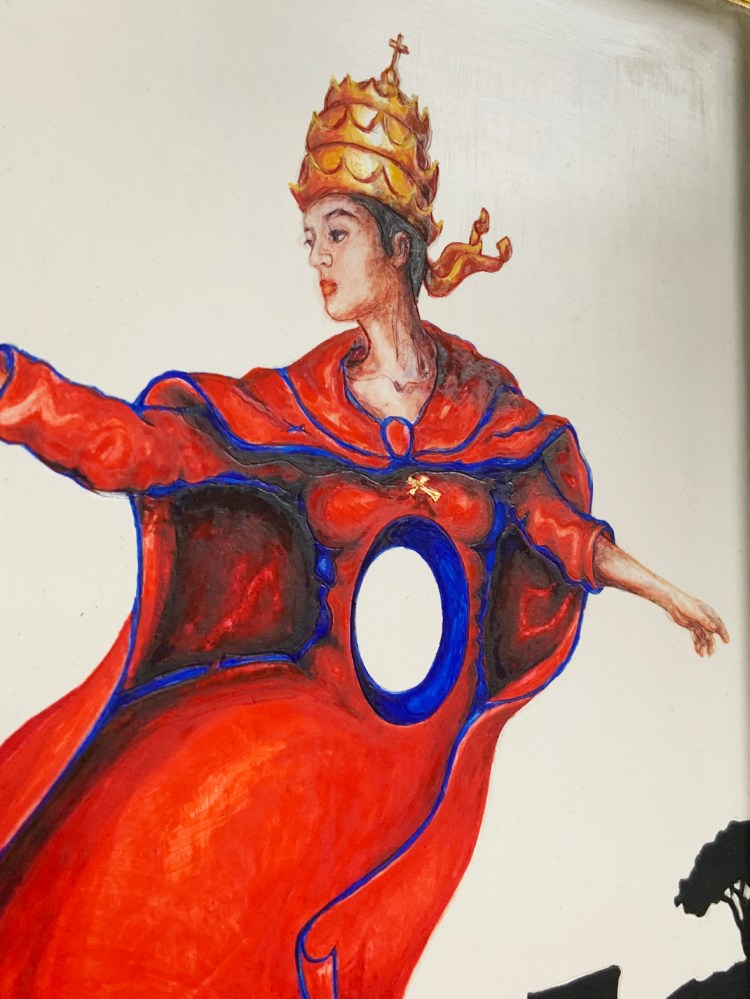
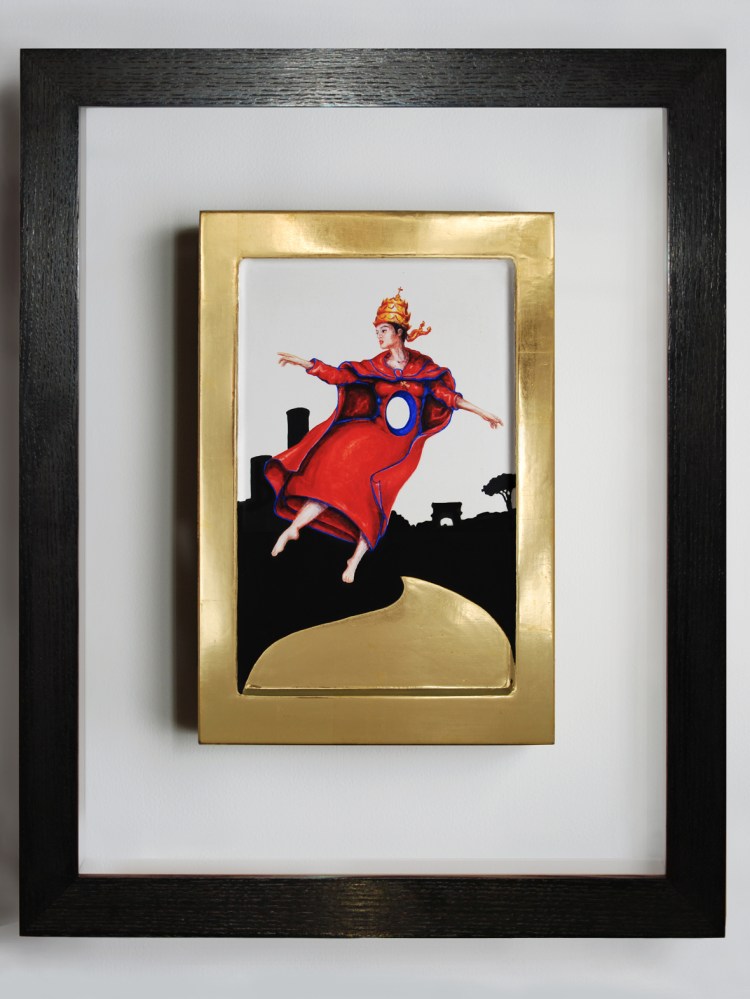
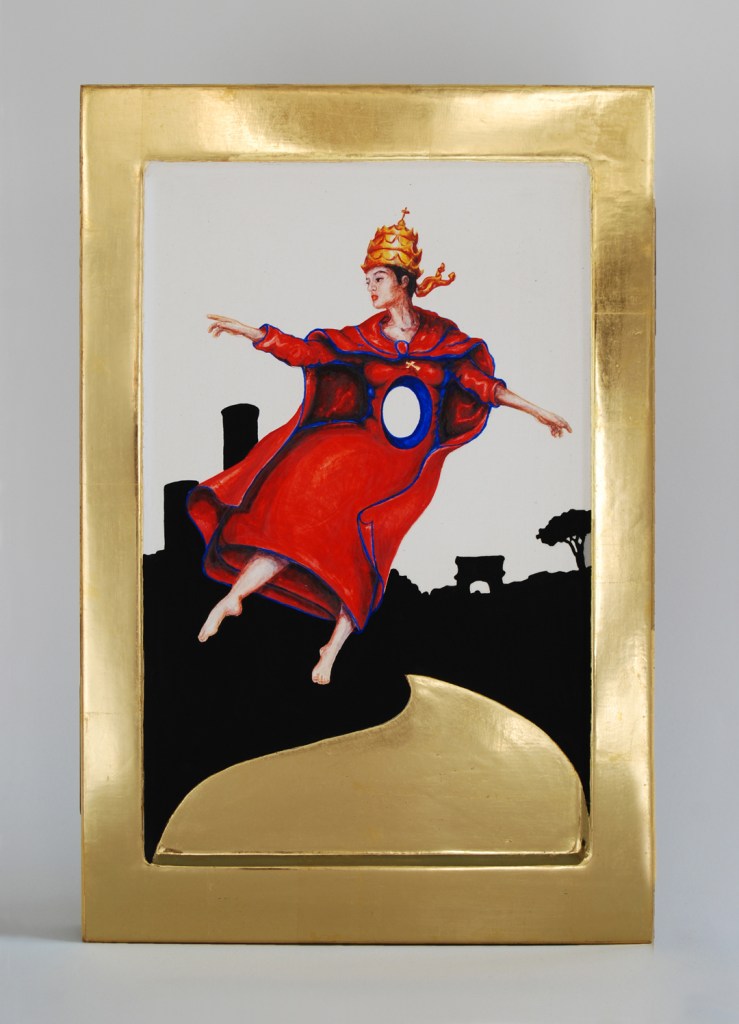
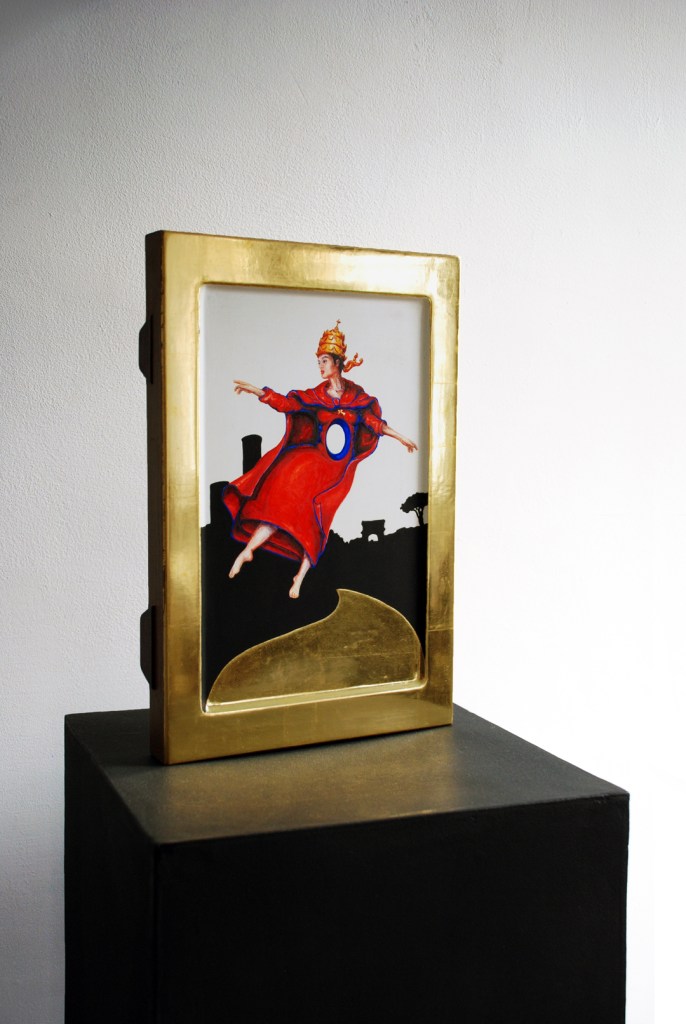
Symbolism is essential in icons, rules dictate composition, standardised facial appearances, poses and colour. Red symbolises the link to the divine and blue to humanity. In this instance the use of red and blue also creates a sense that she glows; the contrasting colours intensify the essence of each other and make the image pop. Her head is turned to the side revealing her ear, so she can hear your prayers. She floats above a golden road, reminiscent of the yellow brick road from the Wizard of Oz; the pathway identified as the best and smartest way to accomplish your goals. The silhouetted skyline is that of Via Sacra in Rome and the gaping hole in her stomach the key symbol of her story.
Pope Joan would have reigned under the title of John VIII for 25 months, from 856 to 858. The story goes that she travelled to Rome and disguised herself as a man so she could study. To get to the nub of the story, she was so successful she became Pope, and all was well. Until she gave birth during a religious procession along Via Sacra and was subsequently stoned to death.
Pope Joan is rejected as a fiction by the Vatican, and academics disagree as to whether she existed. On the one hand it’s argued she was invented to discredit the Catholic Church, on the other hand an Australian archaeologist Michael Habicht and grapho-analyst co-researcher Marguerite Spycher found evidence of two different Pope John VIII in the form of coins from different decades. One coin is from 856 to 858, which they argue commemorates the first Pope John VIII or Pope Joan (as she was later called), and a later one from 875, which commemorates the second Pope John VIII.
Two establishments (archaeology and church) have their own beliefs about history. There are many instances where these establishments are in alignment and also at odds – the piece finds insight in the questions raised as her story lingers on.
Conventions of icon painting are respected within this piece. However, the sky is left as bare gesso, which is seemingly atypical for an icon. This is because it‘s not a ‘blue sky’ picture, reflecting the idea that the story remains unresolved. Yet the bare gesso sky also provides a contemporary take on the other icon tradition; an icon should symbolise a story rather than tell it.
Pope Joan Patron Saint of Feminists, 2023. Icon board 20 x 30cm. Water gilded with 24ct gold and painted with Sennelier Tempera paint and black bole.
Framed in Ash, because in British folklore the ash was revered for its protective and healing properties, specifically in relation to children. In most traditions it is linked to the divine, and yet in the Old Testament it is linked to the Asherah pole – a symbolism of idolatry and false gods, that should be destroyed to guard against disobedience and serve as a reminder of judgement.
Black ash frame 52h x 52w x 6d cm (approx) with Tru Vue non reflective glass. Framed icon of Pope Joan £5000
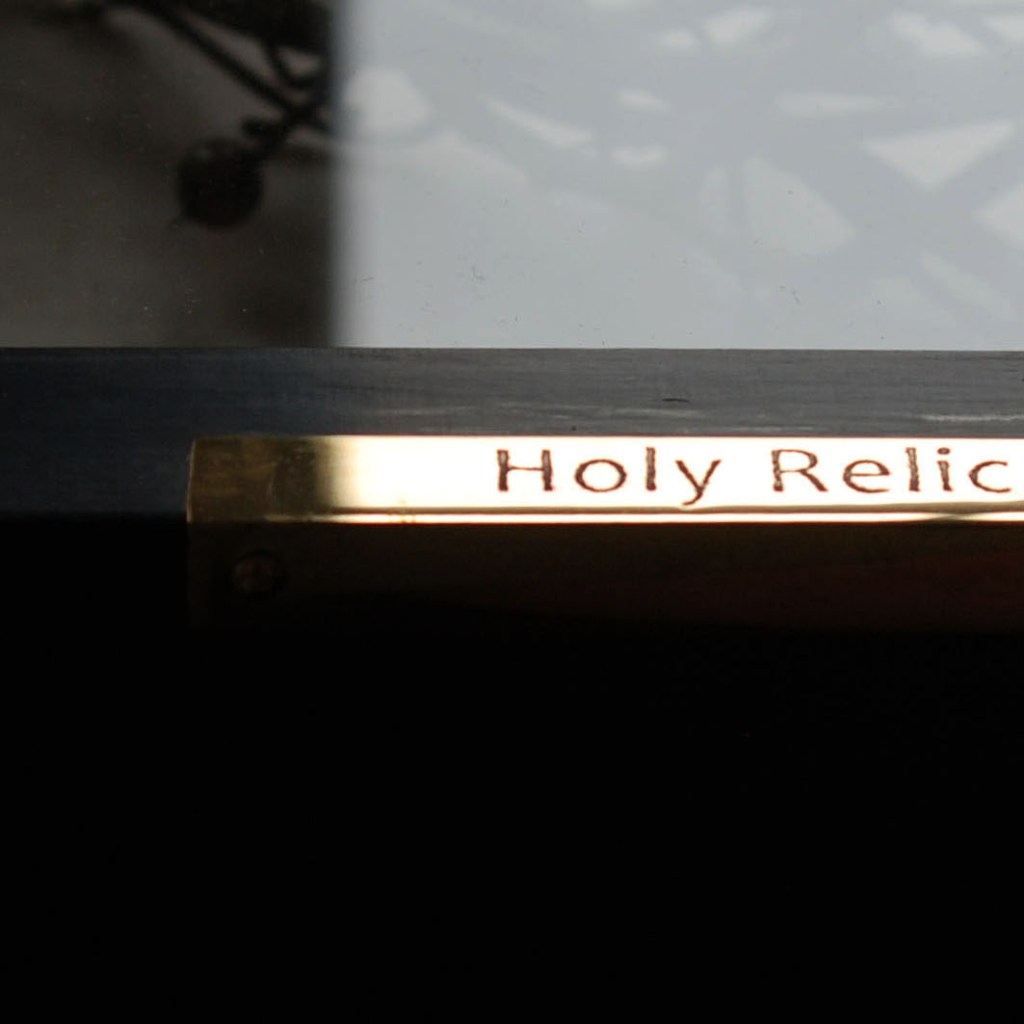
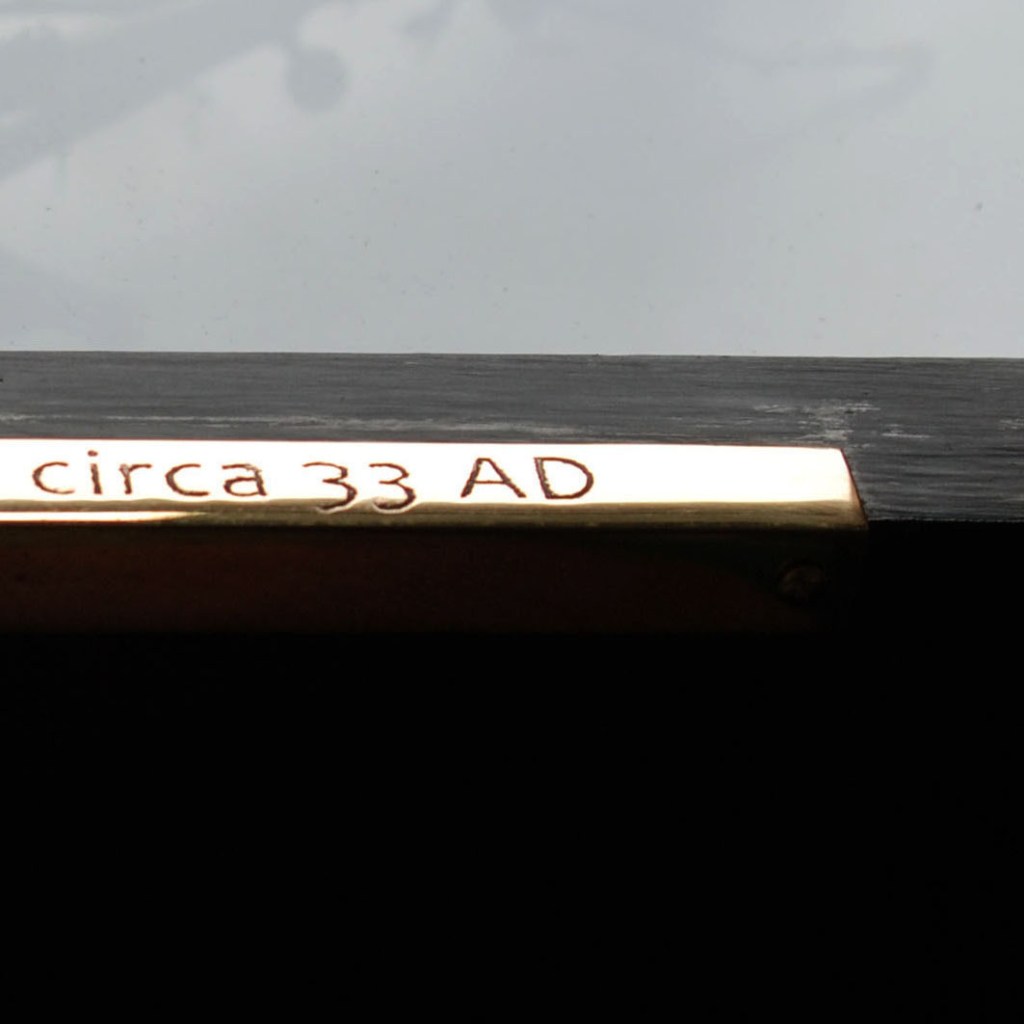
Holy Relic Circa 33AD
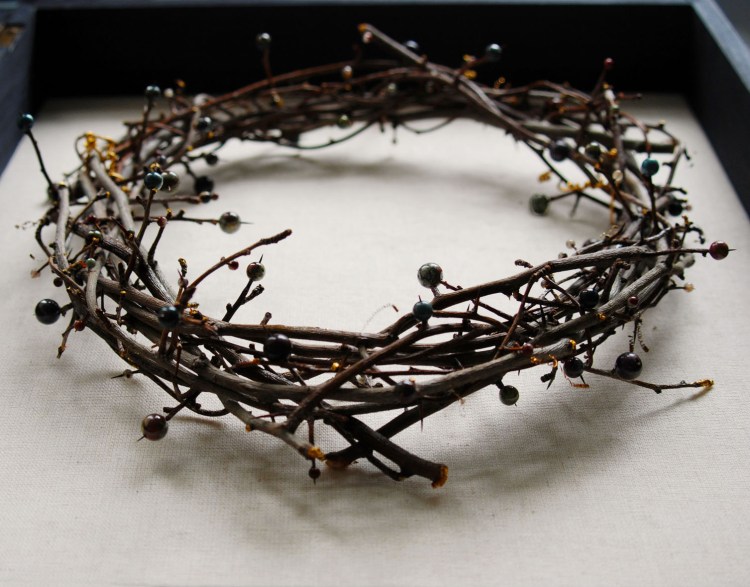
Whilst there is no reference to Jesus, the crown of thorns is so symbolic it’s implied. A cheeky elbow in the ribs, the Shroud of Turin you say? The Catholic Church is still finding proof that it’s real, whilst others find proof that it’s not. What lies between the blood stained sheets of real and belief?


In ancient times hawthorn signified the boundary between the known, safe and civilised world, and the wild mysterious ‘other side’. And significantly, it was used as medicine to cure ailments of the heart.
It seemed curious then that a crown of hawthorn was used by Roman soldiers to mock Jesus, ‘King of the Jews’ and the Sacred Heart. I wondered if it was a retro fit, added to the story for symbolic affect. However, According to legend Joseph of Arimathea (uncle of Jesus) fashioned a staff from the hawthorn bush used to create the famous ‘Crown of Thorns’. He later travelled to Britain to hide the holy cup (Holy Grail!) that held Christ’s blood at the crucifixion. When he arrived at Glastonbury he struck his staff into the ground and it burst into flower.
This original hawthorn lasted for centuries but was killed by vandals. Fortunately people had taken cuttings, and the hawthorn in this Holy Relic is made from those cuttings. The ‘Holy Hawthorn’ is unique because it flowers twice, once in May, when it’s meant to but then a second time at Christmas, to mark Christ’s birthday. Scientists have studied the Glastonbury hawthorn and confirmed that it originated in the Middle East.
Further the Holy Relic it’s decorated with bloodstone which, according to legend, was created when Christ’s blood dropped from his body onto jasper stones at the foot of the cross.
Miracles – after catching Covid I started suffering from (very high) blood pressure. I took leaves from the hawthorn and made tea. Within days my blood pressure was normal, it remains normal, my heart was cured.
So, whilst I cannot argue that this Holy Relic is a first class relic (it is not a body part of a saint) it does feel almost like a second class relic (‘non-bodily’ item directly associated with a particular saint) and arguably it feels more than a third class relic (something that has touched the body part of a saint).
Holy Relic circa 33AD. Wood and glass box with brass plaque saying ‘Holy Relic circa 33AD’ containing holy relic crown made from hawthorn and decorated with bloodstone, gold and shellac. 42h x 33w x 6d cm £2800
Spirit Animals – The Pathway Spread
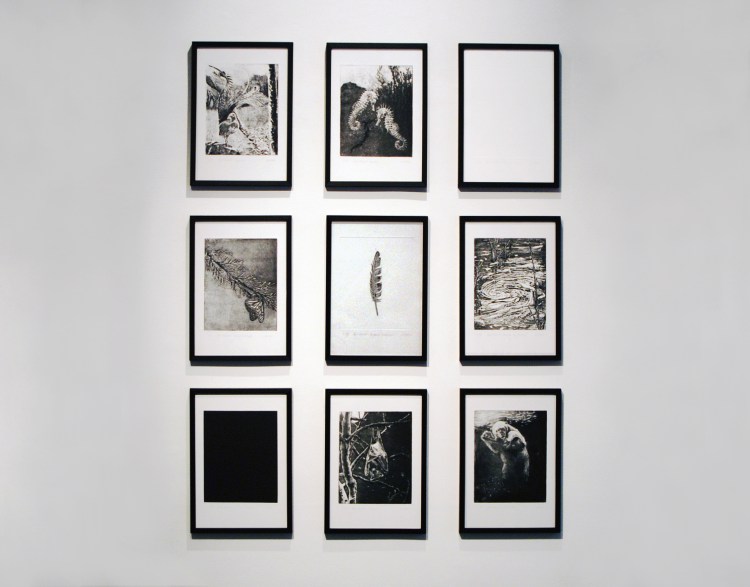
From the C16th wondrous creatures, from the New Worlds, were documented in etchings and engravings. A few hundred years on I use etchings to document their extinction journeys, specifically in relation to climate change.

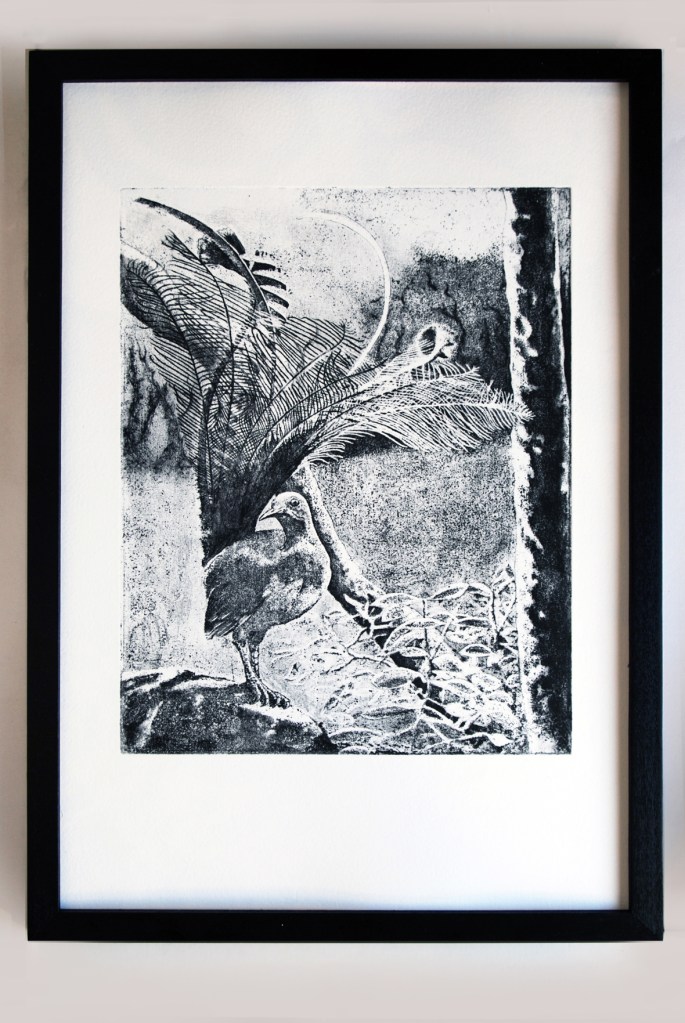


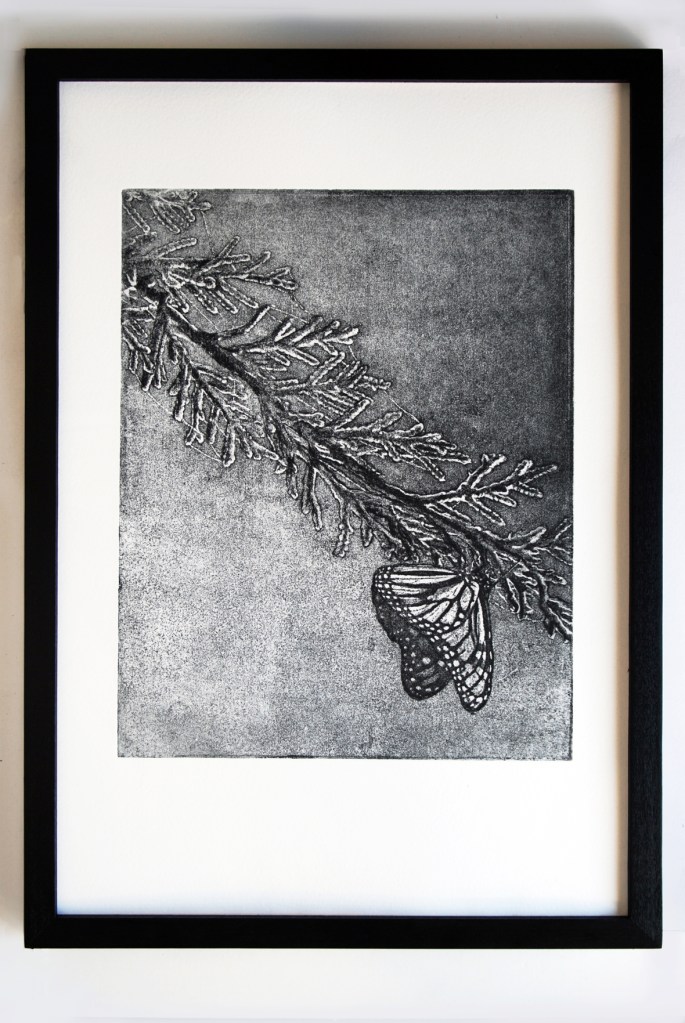
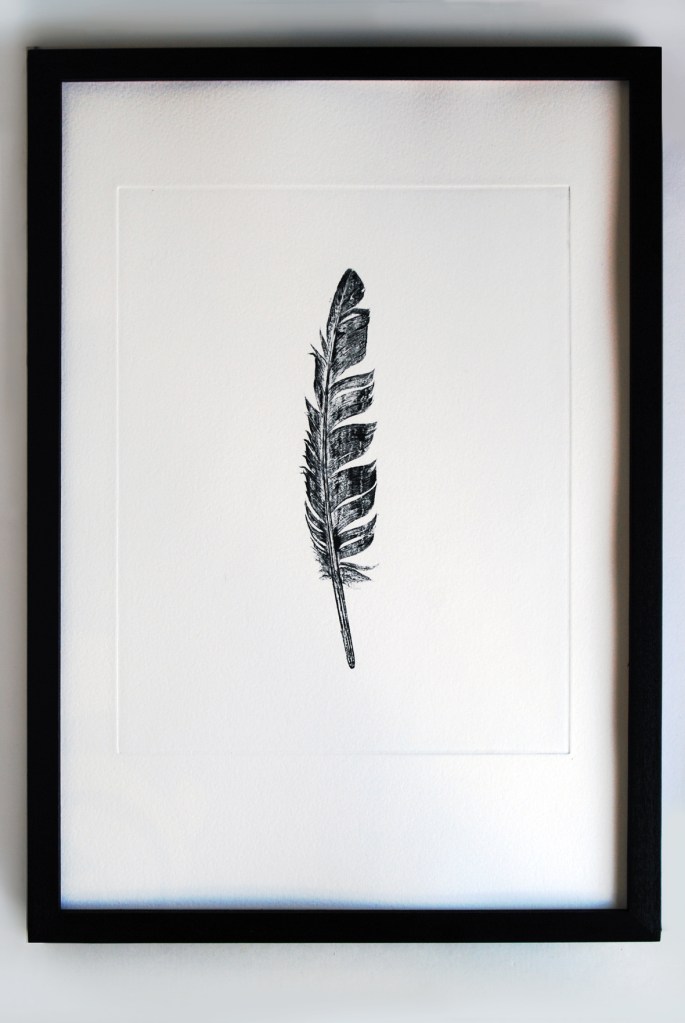
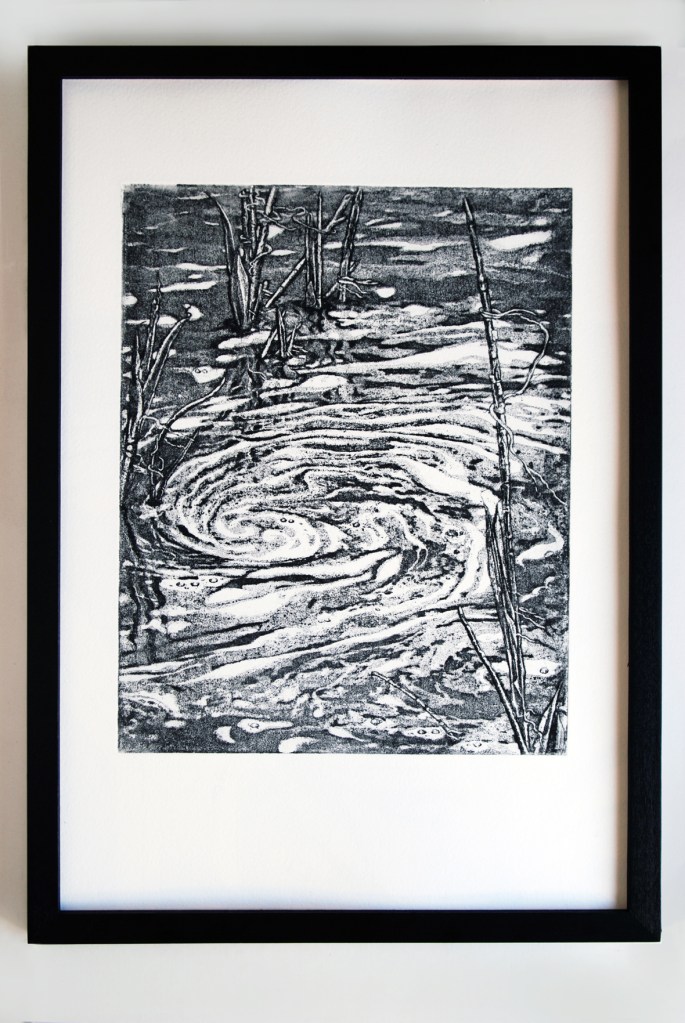
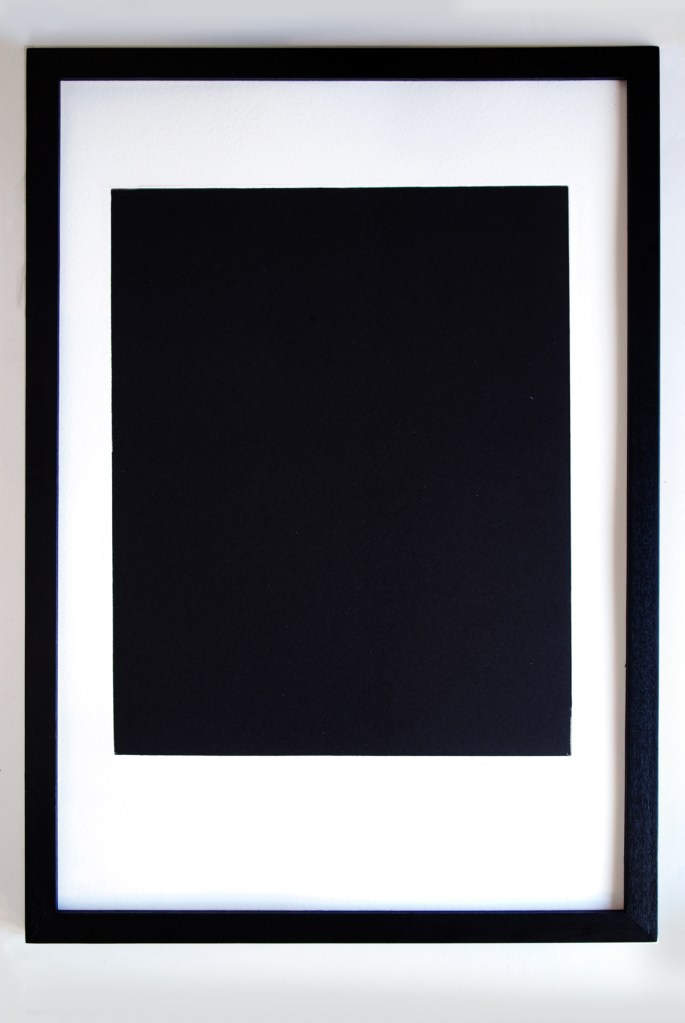
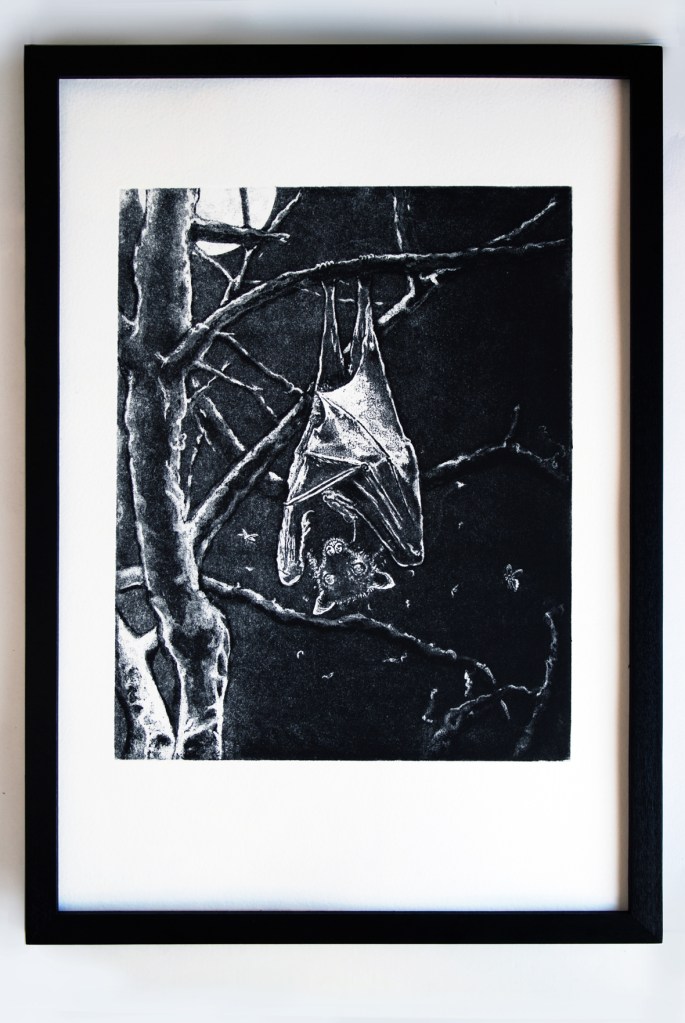
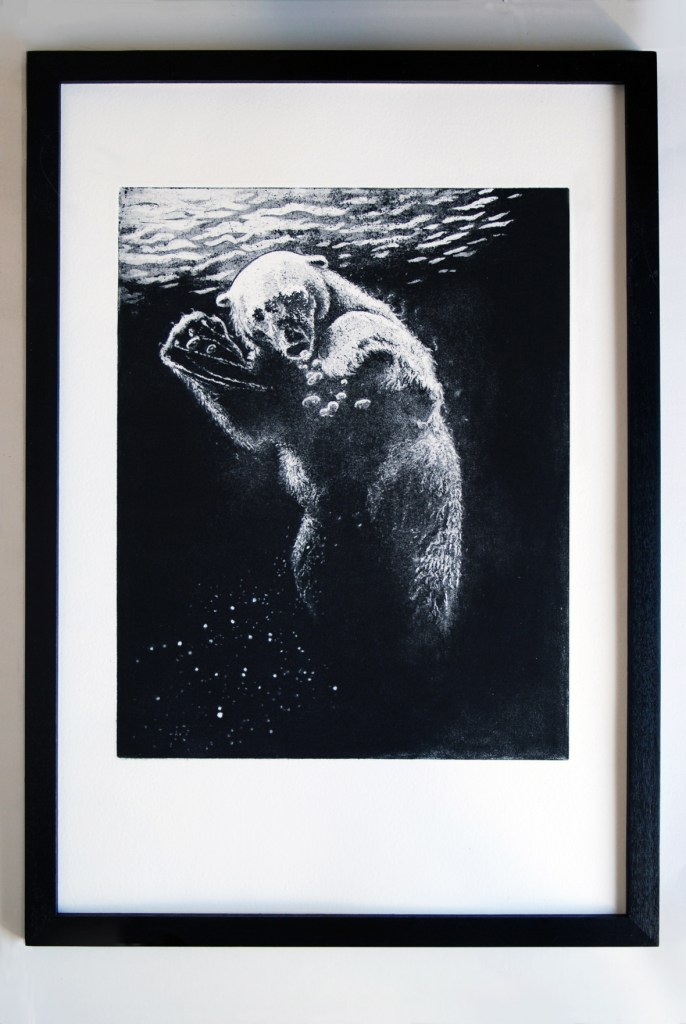
‘Spirit Animals’ are laid out in a tarot card ‘pathway spread’, referencing Native American animal medicine, it uses animal wisdom to understand our connection to Mother Earth through divination. The creatures here have been affected by climate change, and will likely go extinct in our lifetime. In this ‘Pathway ‘Spread’ the position of each card has specific relevance, in terms of what it’s teaching us.
The pathway spread has two empty spaces. However, here they are filled with a white and then a black image the ‘unknown knowns’ and the ‘unknown unknowns’, taken from the Johari window, adding a geo political and psychological twist to the piece.
Significantly the etchings are printed on the back of a previous art work, in a nod to environmentalist principles; one artwork is destroyed to make something new, what we hold dear must be destroyed to make way for the ‘other’.
Taken at face value each animal in the pathway spread has something different to teach us.
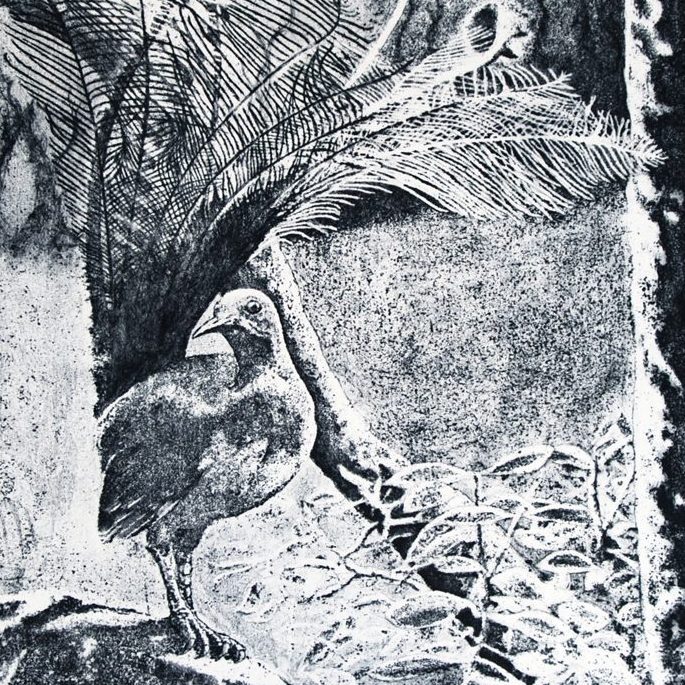
A male Lyrebird, catches the sun and looks half expectantly at the viewer. Climate change dried areas of rainforest not previously susceptible to fires and around 50% of their habitat was burnt in Australia’s 2020 forest fires. Lyrebirds rake the ground reducing leaf litter (fuel for fires) by a third each year, making them a climate critical species. In terms of the ‘Pathway Spread’ the wisdom of the lyrebird Tells us what is working for us .
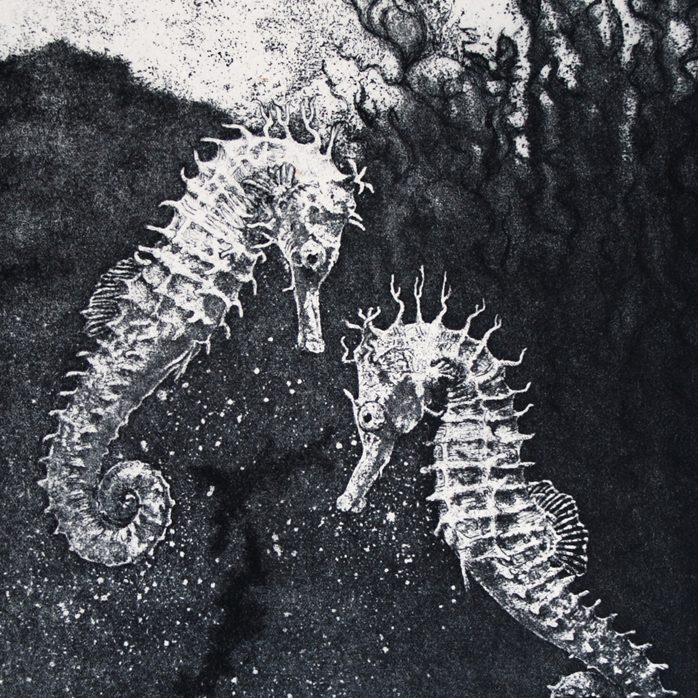
Courting Seahorses float with the shadow of the Seahorse Nebula between them. Their habitat is susceptible to climate change because rising sea temperatures are felt intensely in shallow and inshore waters. This, combined with acidification, creates compound risks around change in behaviour and metabolism, which is concerning scientists. The position of the seahorses in the ‘Pathway Spread’ tells us the pattern or set of life lessons that are moving through our lives.

The Unknown Knowns are represented by a white ‘etching’. In some lights a ghost of the screen print, on the reverse of the paper, is visible. The unknown knowns represent things we’re not aware of but understand. The ‘Known / Unknown’ matrix, coined the Johari Window, was created by psychologists Joseph Luft and Harrington Ingram to help people better understand themselves. Here the matrix makes us aware that theses prints are only part of the picture; we know other creatures are at risk, but we don’t know which they are. This is represented by the white etching, or etching yet to be inked up.

A Monarch Butterfly precariously hangs from a branch on its migratory route. Dependent on environmental cues for reproduction, It’s migratory survival is dependent on the climate. Their epic 4000km migration is therefore at risk, and in 2022 they were put on the IUCN red list. Meaning the days of the great migratory spectacle are numbered. The position of the monarch in the pathway spread tells us our future
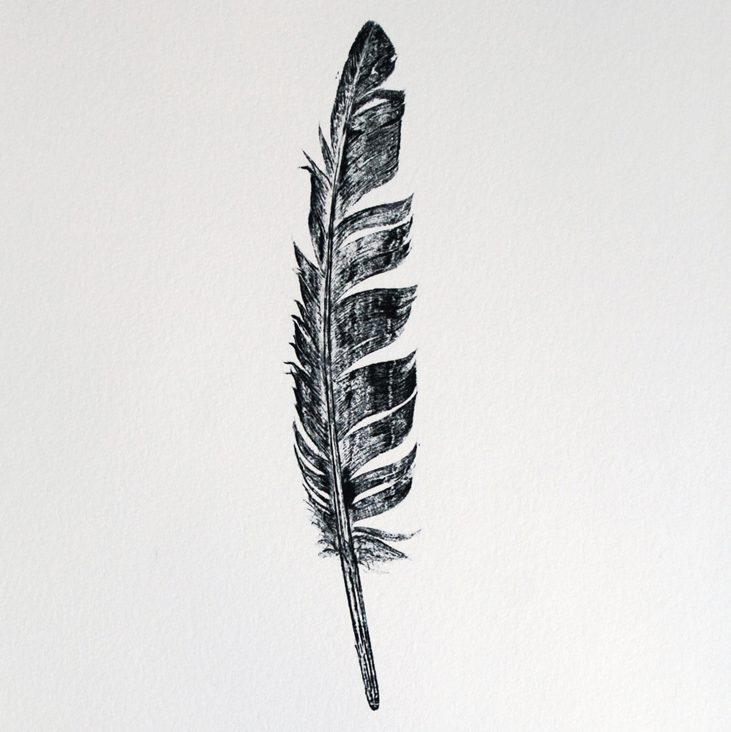
A single feather from an Imperial Woodpecker represents a bird thought to be extinct (last seen in 1956). The IUCN red list says this is a result of climate change and biological resource use, leading to a shifting habitat. However, it seems surprising climate change was a key factor in its extinction back in 1956. The position of this card in the ‘Pathway Spread’ teaches us about our present.

Water swirls amongst kangaroo grass on the Bramble Cay, but the Melomy can’t be seen. The Bramble Cay Melomy was the first species recorded extinct due to climate change. Its habitat, 5 hectares on the northern tip of the Great Barrier Reef, is flooded due to rising sea levels. It was declared extinct by the Queensland Government and University of Queensland researchers in 2016. It’s believed it could have been saved; scientists monitoring this mammal simply didn’t see the severity of the threat. The position of this card tells us about our past.

The Unknown Unknowns (of the Johari Window) are the things we’re neither aware of nor understand. This concept, made famous by Donald Rumsfeld, and used by Department of Defence and NASA, addresses the things that tend to be the most problematic. In terms of climate change, it’s likely that what we don’t know or understand will be the most problematic.
.

The moon shines on an Australian Flying Fox. It tilts its head to better see the viewer, as bugs encircle it. Recent record-breaking temperatures have devastated their population; they can’t survive the new temperature highs. Scientists predict the bats could take refuge in cooler climates, such as Tasmania. However, this could put smaller indigenous species of bats at risk. The position of this card tells us about the lesson just completed.

The underwater Polar Bear is mid motion, with bubbles at its feet (laid out as the ‘Great Bear’ constellation). Their hunting ground is melting and they’re migrating inland to new territories, just as grizzly bears migrate to cooler temperatures in the north. Consequently, a new hybrid bear ‘the pizzily’ is being created. The position of this card tells us what is working against us.
When I positioned these ‘cards’ I did so in terms of what ‘felt right’. Once I had decided on their position I looked back to my book on Medicine Cards to understand the significance of each position.
*International Union for Conservation of Nature and Natural Resources (IUCN)
Spirit Animals – The Pathway Spread, 2023. Etching/drypoint printed on the reverse side of the ‘Fling Geisha Girl’ screen print. Somerset 100% cotton rag paper 280gsm 26w x 38h cm. Each Geisha girl screen print was ripped into 9 pieces to create the ‘sheet’ for these etchings. Whilst these exist as a set of 9, each etching can be displayed singularly or in a custom set. Unframed price £1500 (the two plain ‘etches’ Unknown Knowns and Unknown Unknowns £1250 – unframed)
Mysterious Times
Waste, or at least things that are commonly discarded are transformed into a curious landscape. By changing the context of the elements there is a deconstruction of the scaffolding behind beliefs so as to leave space for curiosity and new narratives.


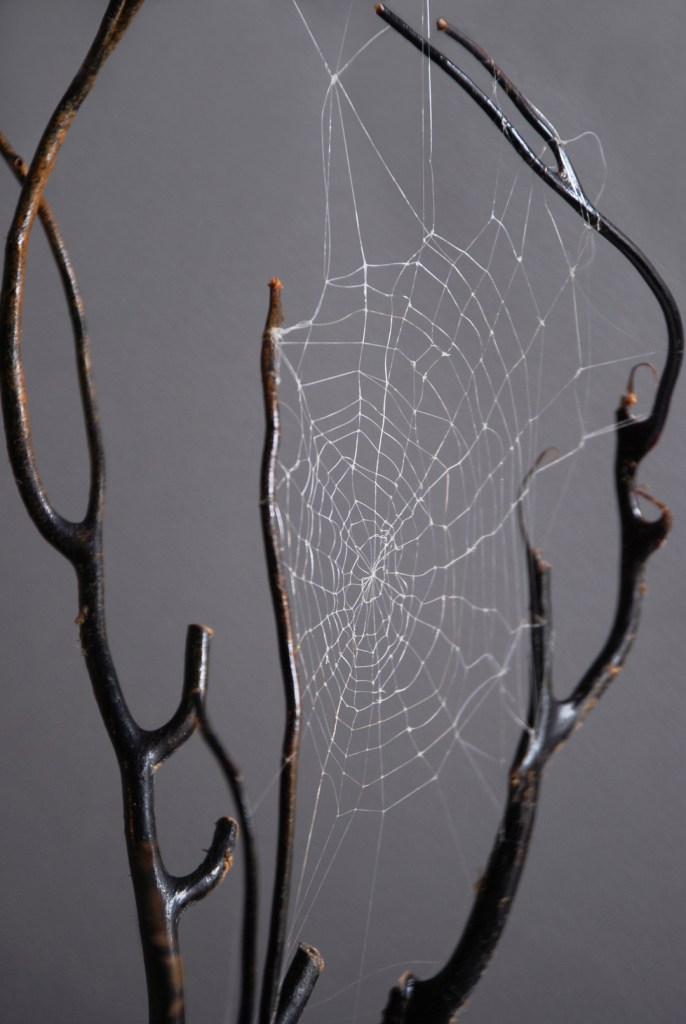
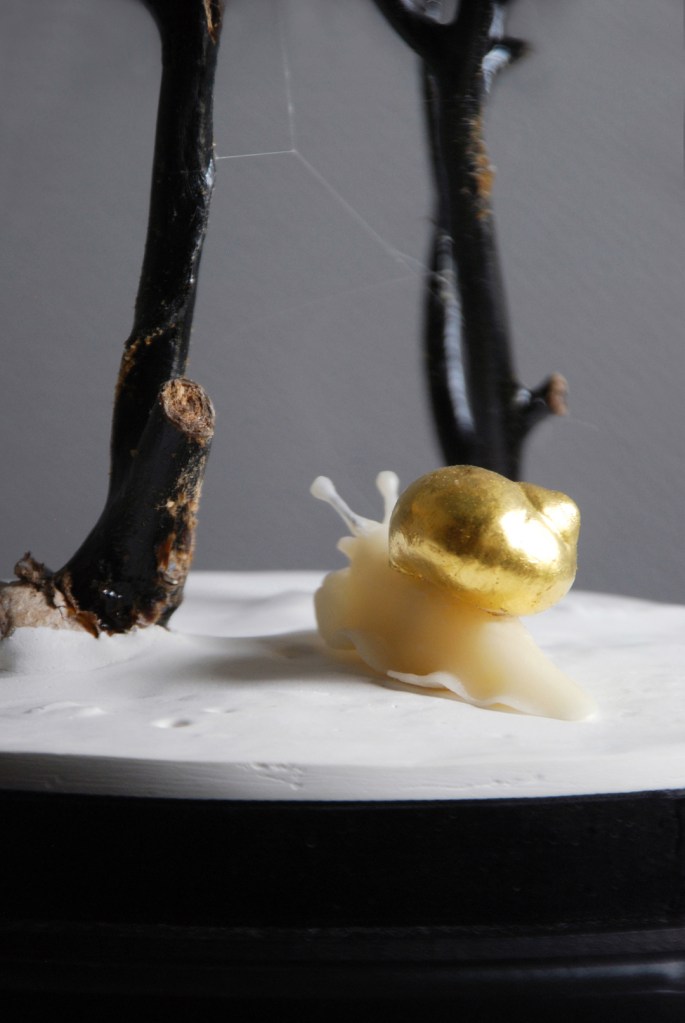
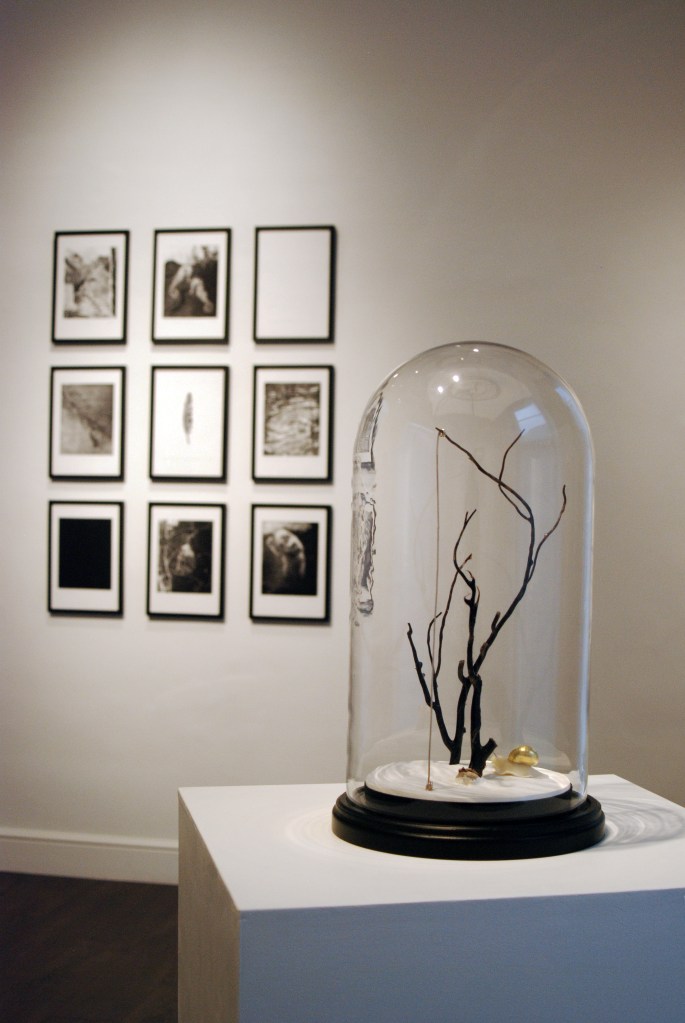
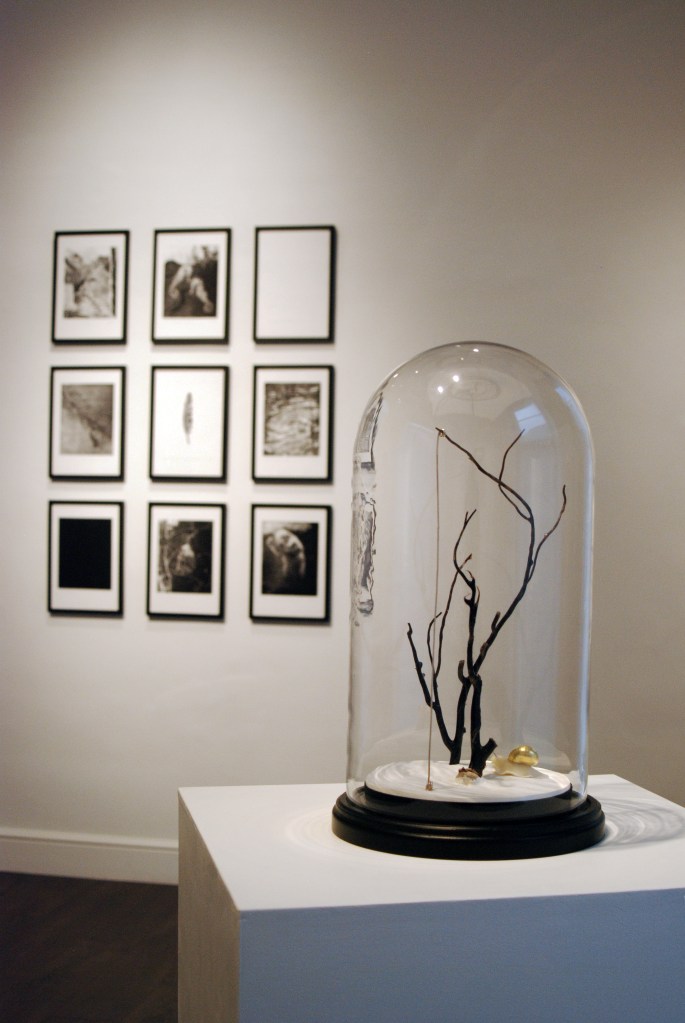
Pieces of detritus, a snail shell, black coral that washed up on a beach and white human hair are repurposed to form a new narrative. Two skeleton trees grow out of white earth. A hand carved wax snail with a gold shell is frozen in time as it glides between the miniature trees. A spider’s web stretches between branches in the desolate landscape; the glass dome creates an isolated ecosystem or maybe a specimen of one.
Mysterious Times, 2023. Seaweed or coral collected from Miami Beach after a storm with silver plated copper wire. Snail – shell water gilded with 24ct gold and carved wax body. Spiders web – white hair. White earth – plaster of Paris mounted with black velvet ribbon and secured with stainless steel screws, under glass dome with black wooden base. 48h x 26w x 26d cm £3000
I wish the hand was silver…
Often when you make a piece it’s hard to articulate completely what you are trying to say, but then things in the world happen and its relevance becomes clearer.
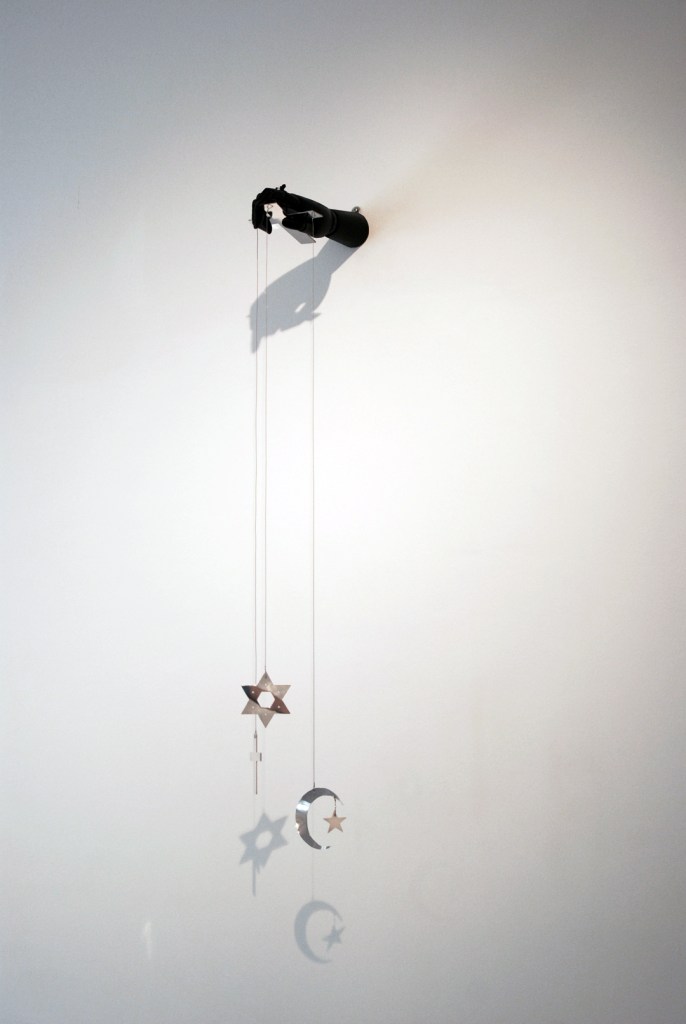

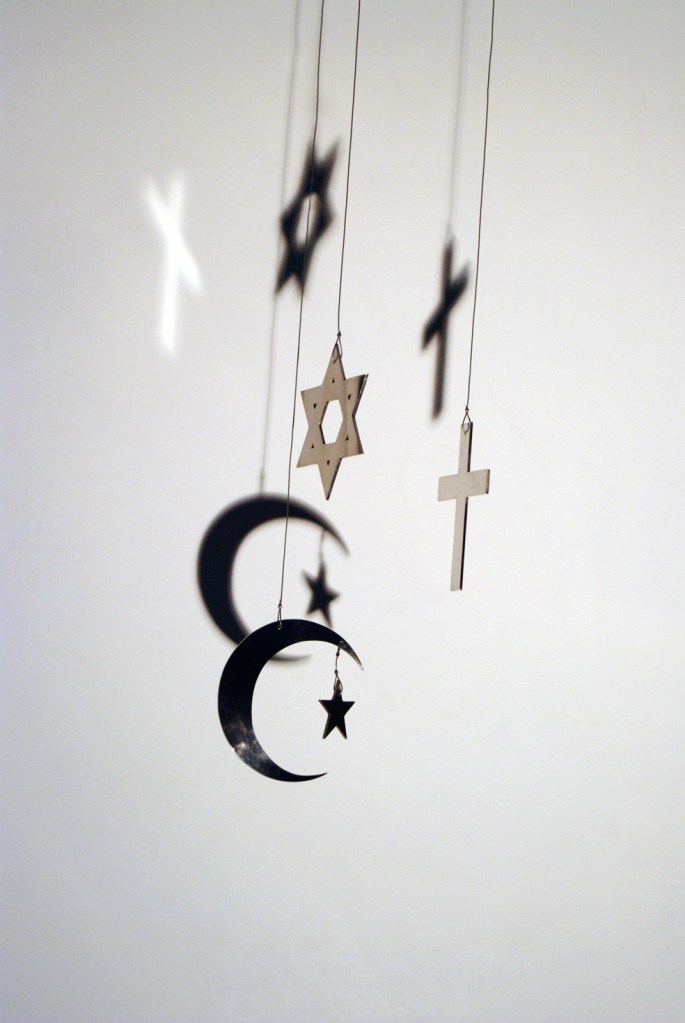
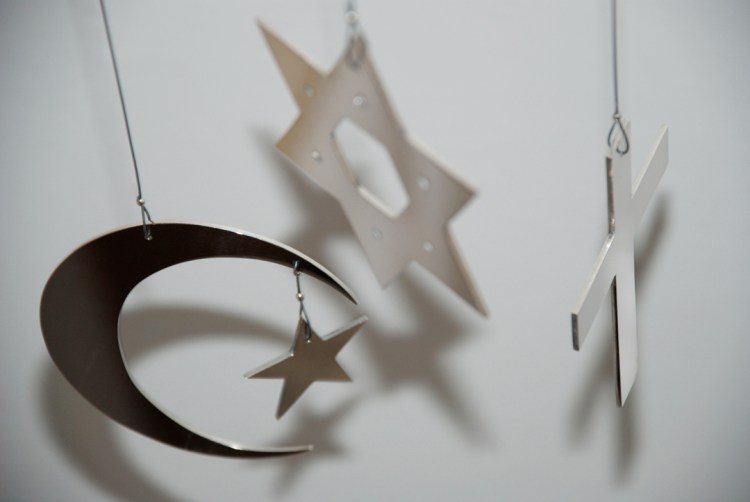

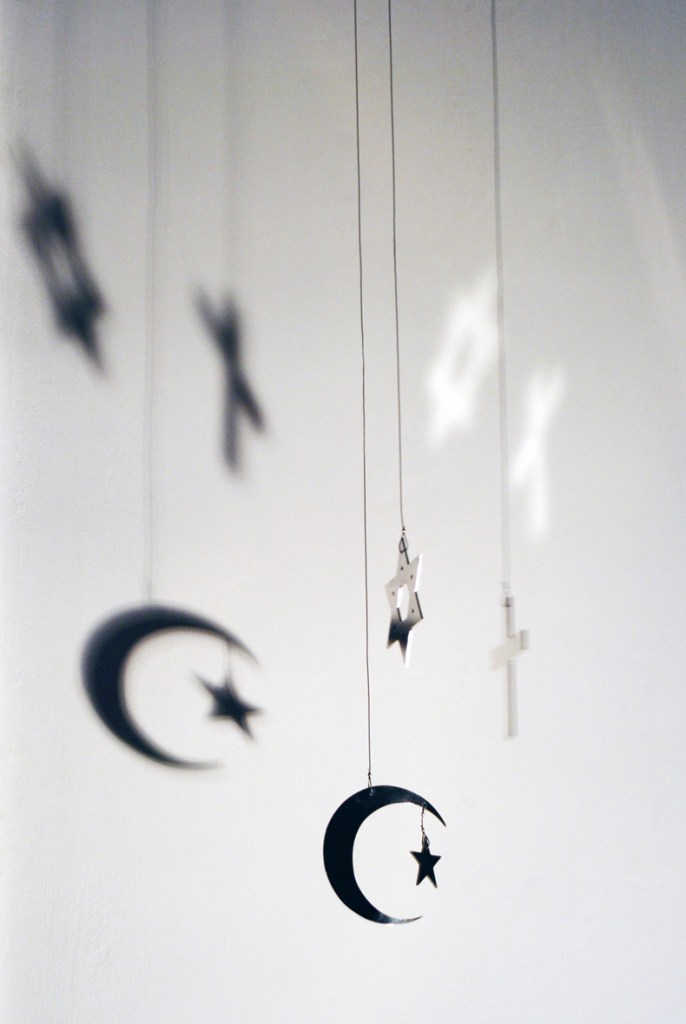


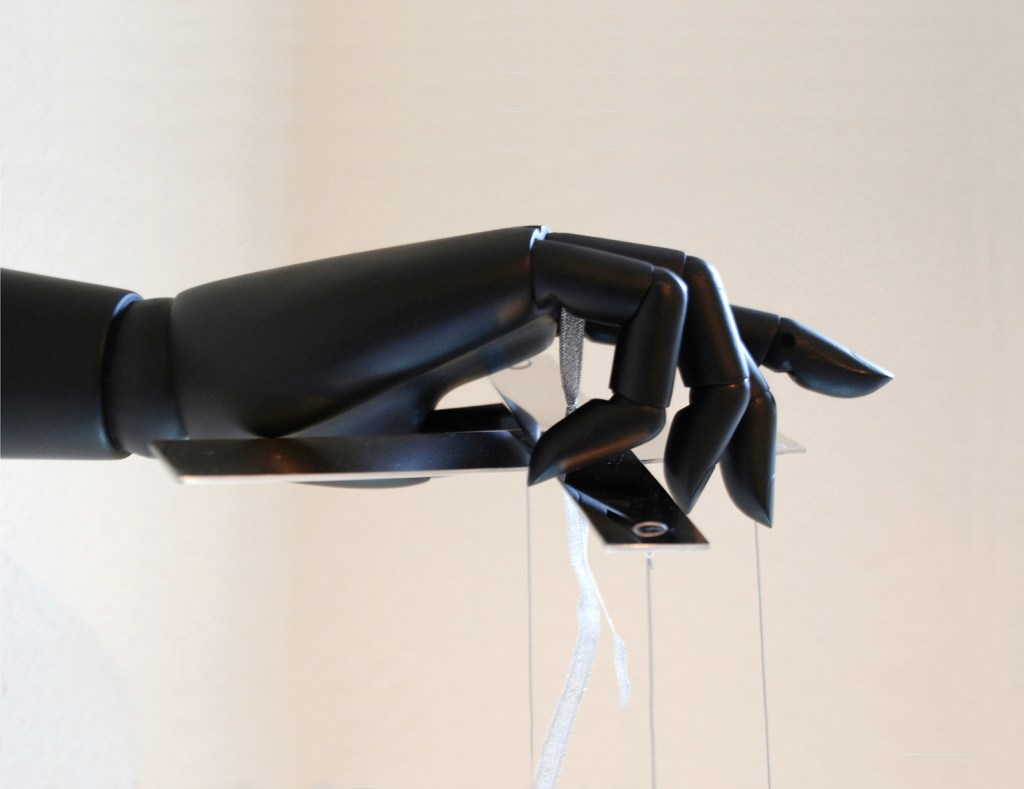
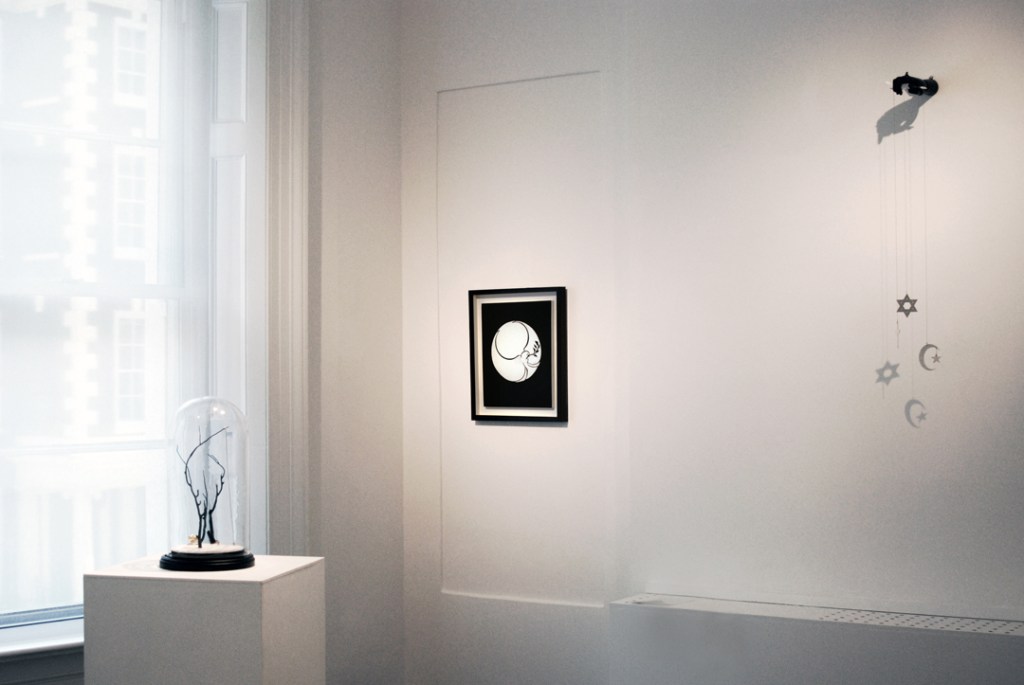
A black wooden hand is hung high on the wall and holds a silver marionette puppet with the three symbols of Abrahamic religions. The silver pieces hang elegantly on long wires and act as fragmented mirrors, reflecting elements of the surroundings (and the the viewers reflection) but not the whole context. Light spots and shadows of the symbols are cast around the room, sometimes motionless other times moving.
I wish the hand was silver, 2014. Mobile 106h x 15w x 28d cm Wooden hand painted black, sterling silver, jewellery grade wire and silver crimps. £2700
Tea Towel Wars – Origin of the Sun and the Moon
Tea Towel Wars reflects on wisdom from the worlds longest living civilisation (Australian Aboriginals) on gender roles at the front line of domestic feminist debate ie are we all doing our fair share of the washing up?
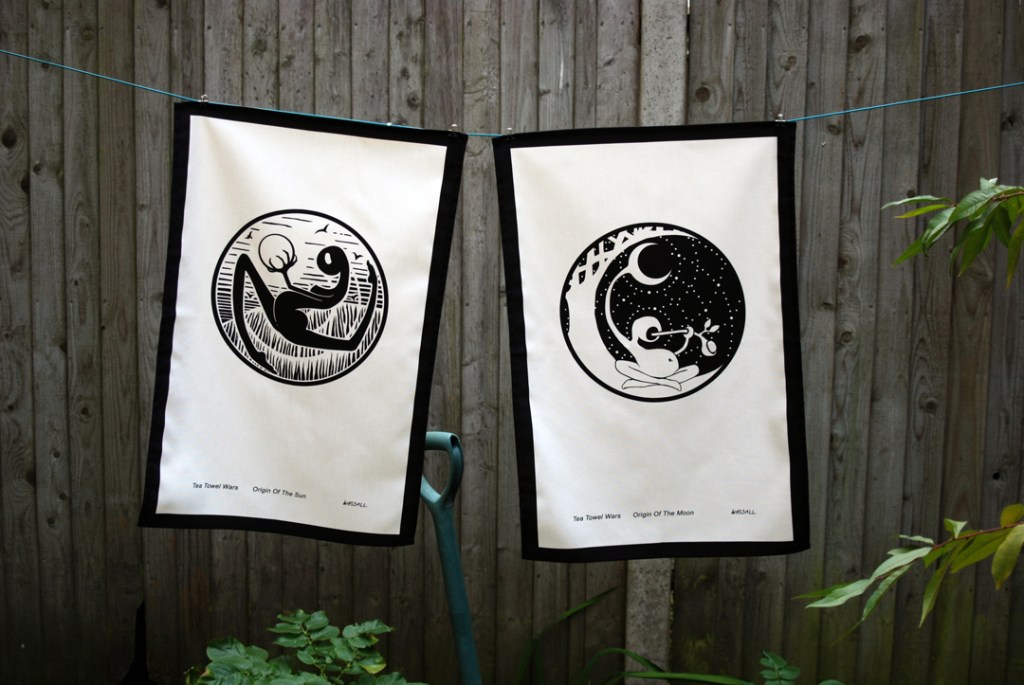
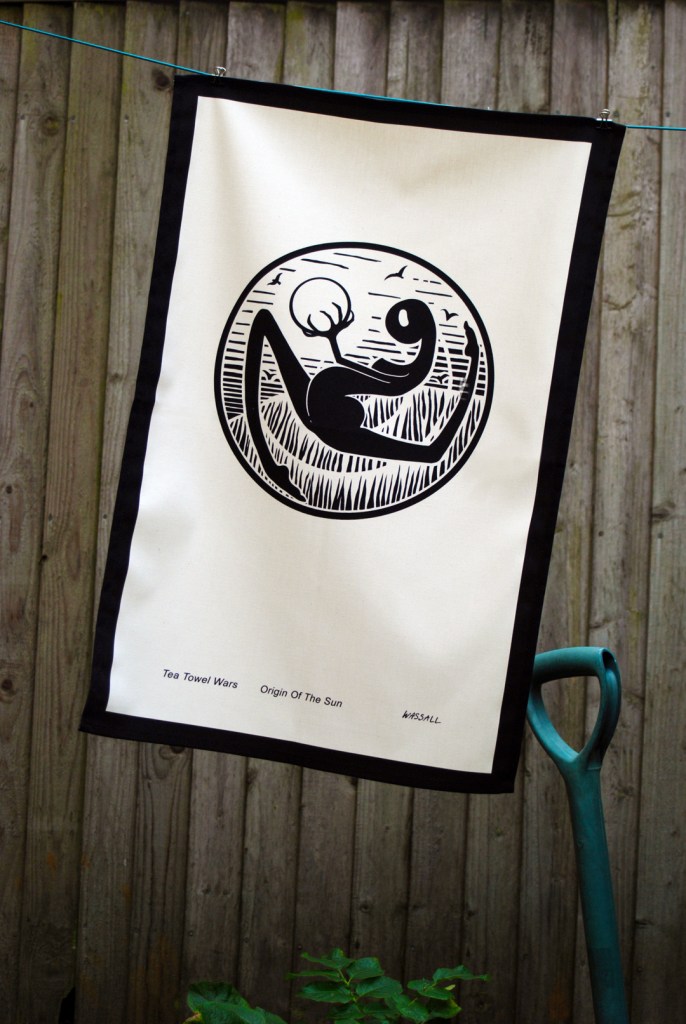
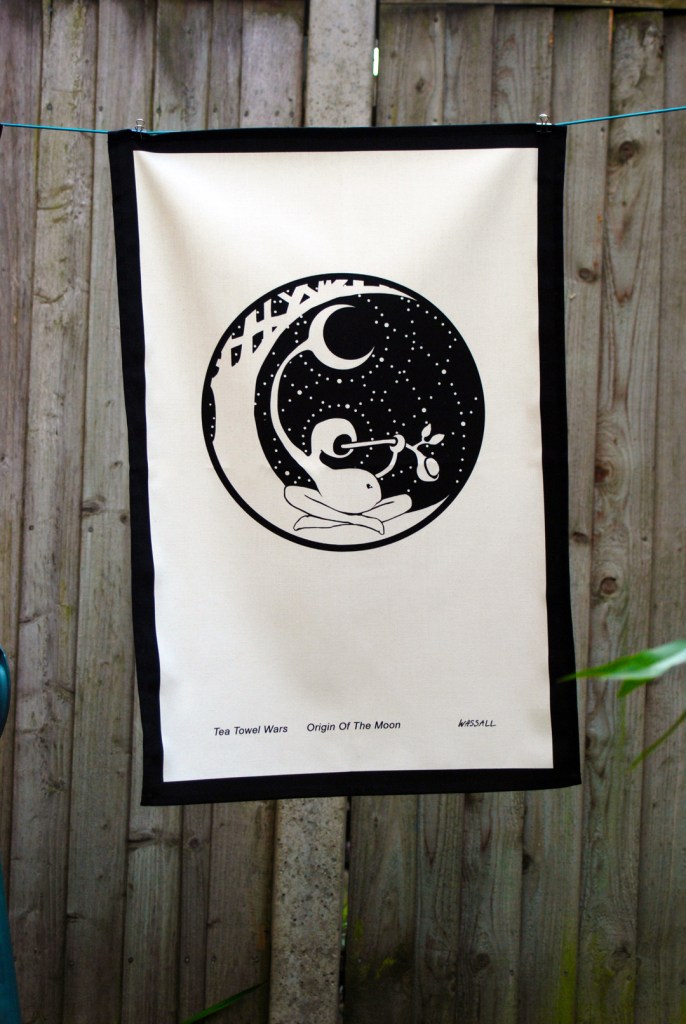


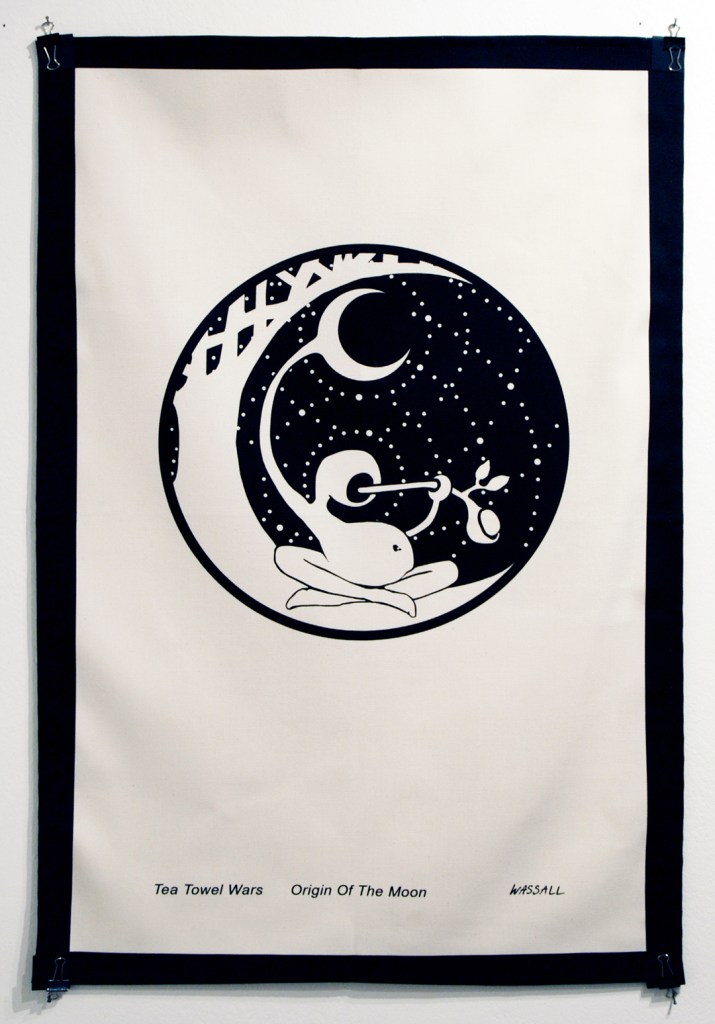

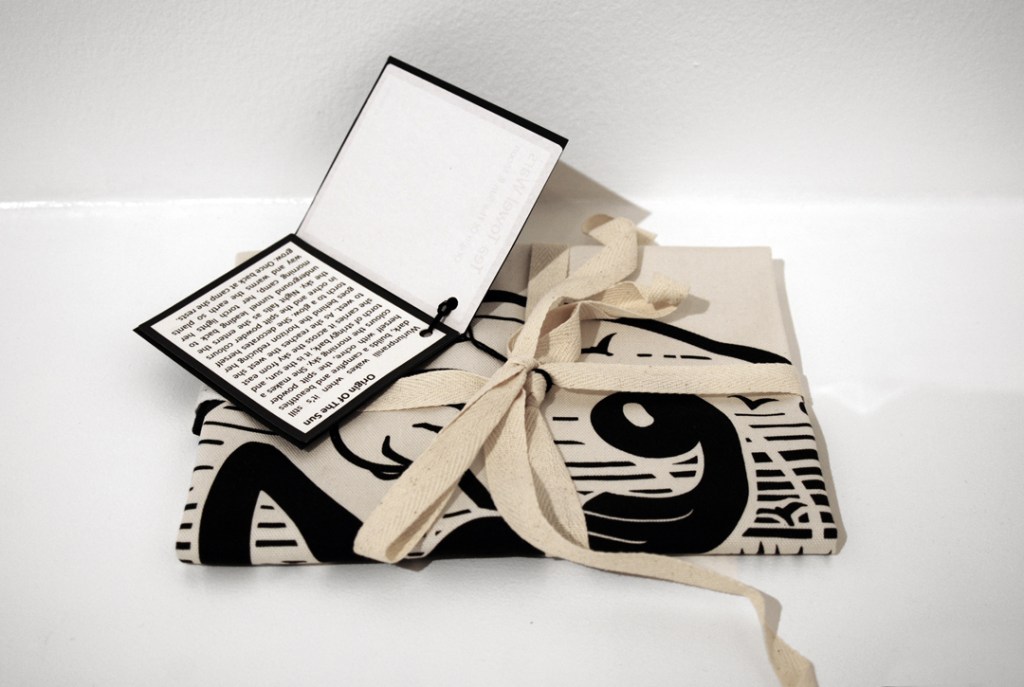
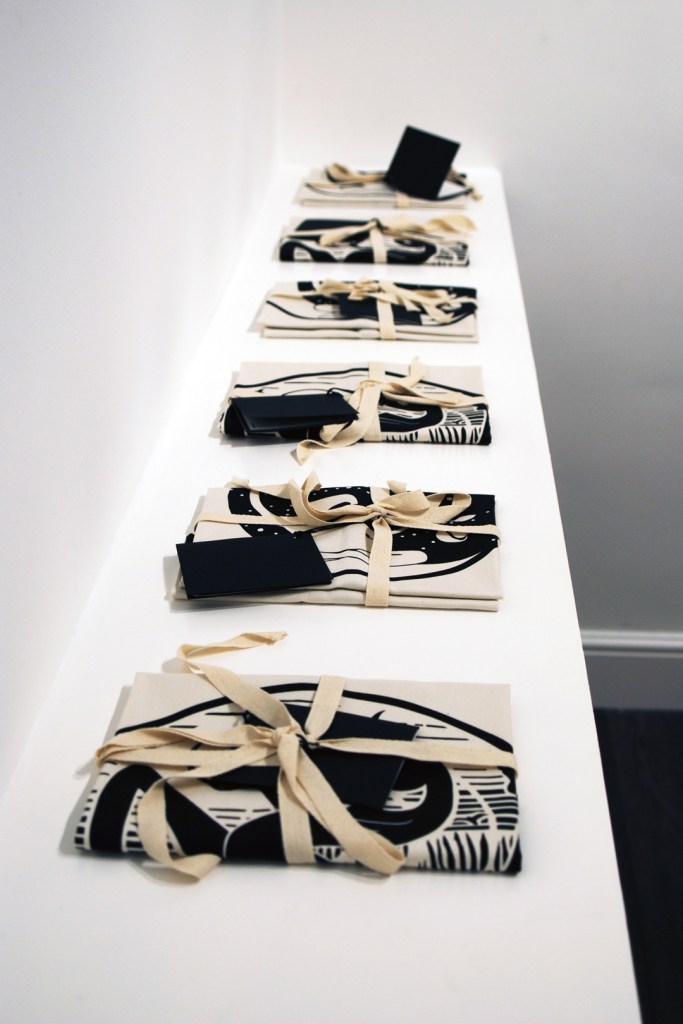
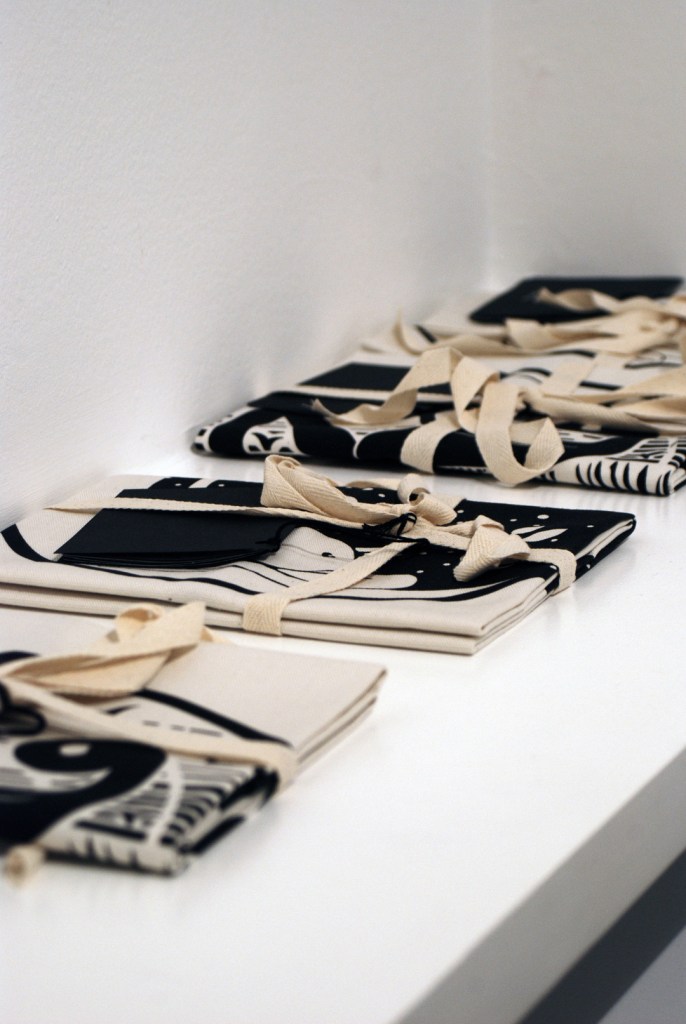
Origin of the Sun and Moon tea towels draw from Australian Aboriginal Dreamtime Stories. These stories are from the Yolngu people of Northern Australia. In making these pieces I acknowledge the First Nations people’s as the original storytellers. I pay my respect to Aboriginal cultures; and to Elders past and present. I recommend researching Aboriginal Dream Time stories, they are full of great wisdom and I am proud that they are part of my Australian heritage.
This artwork is on 100% natural unbleached cotton 309gsm and printed with reactive inks, for superior rub/wash fastness and because it’s better for the planet.
They are hand stitched by elves in Stafford and a black loop has been added to the back, because loopy things are more fun. These are currently SOLD OUT
All tea towels are supplied with ribbon and a tag with the corresponding Tea Towel Wars Origin of the Sun or Origin of the Moon story.
This tea towel reflects on the story that is the Origin of the Sun. Wuriunpranili wakes when it’s still dark, builds a campfire and beautifies herself with ochre, the spilt powder colours the morning sky and creates the sunrise. She makes a torch of stringy bark, it is the sun, and she carries it across the sky from east to west. As she reaches the west she goes behind the horizon reducing her torch to a glow. She decorates herself in ochre and the spilt powder colours the sky creating the sunset. Night falls as she enters the underground tunnel leading back to morning camp, her torch lights her way and warms the earth so plants grow. Once back at camp she rests, so tomorrow she can do the same.

This is the story of the Origin of the Moon. Ngalindi was lazy and greedy, he ate and did nothing until he was round and fat. This made his wives angry and they threw axes to slice bits of him off. He tried to escape, by climbing a gum tree, but was fatally wounded. As he died he cursed all animals and people so they would no longer be immortal, but he would live forever. Each month he is reborn as the waxing moon, he eats until he is round and fat and his wives throw axes so he becomes the waning moon. With the final blow he dies and remains dead for three days before he’s reborn into the new cycle.
Dove Moon
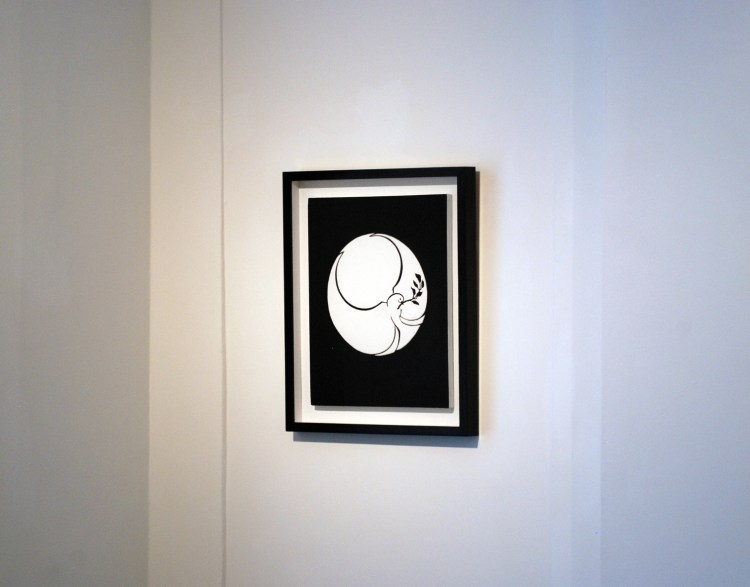
Experimenting with poetry as a form of sketching, I wrote a poem called ‘Royal Moon and a Dove’. What surprised me was that as I edited the poem it seemingly disappeared and reappeared and disappeared. The only element of the poem I am left with is:
“…Beauty in a sphere at night
Peace the most beautiful light”
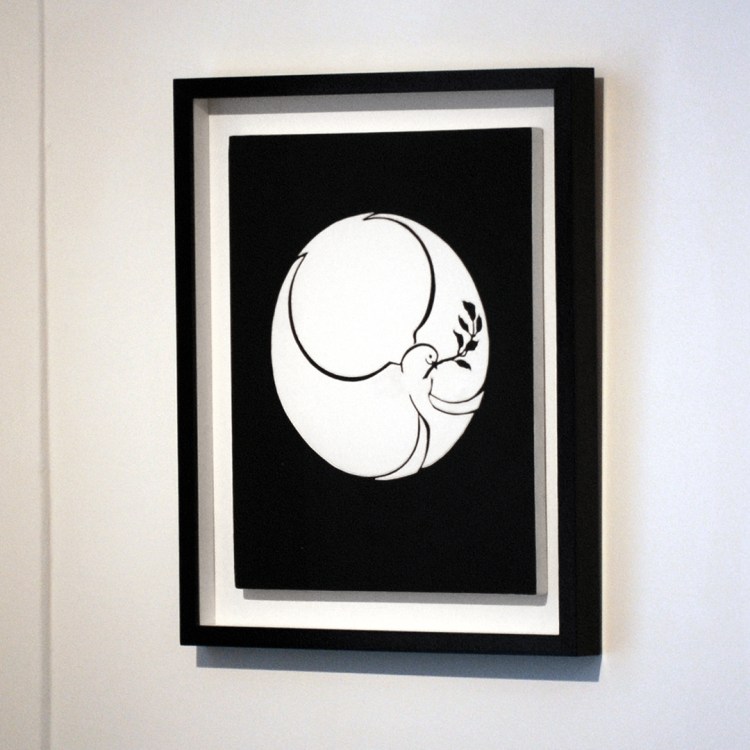
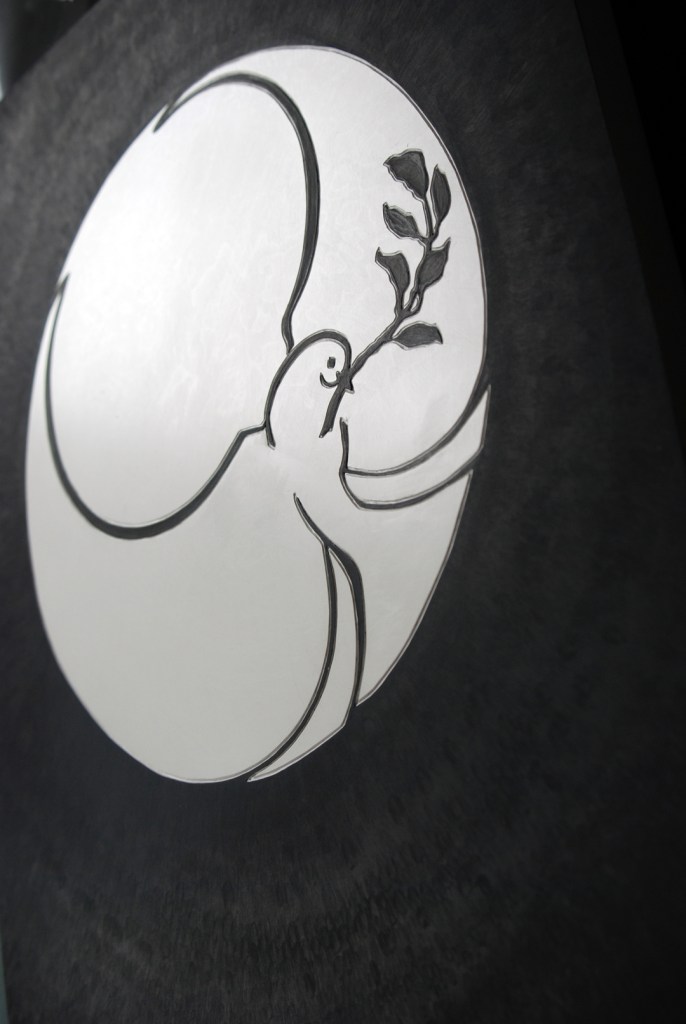

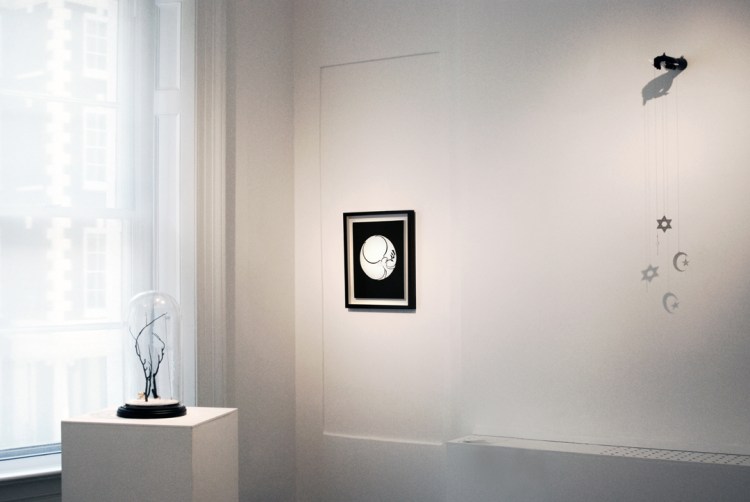

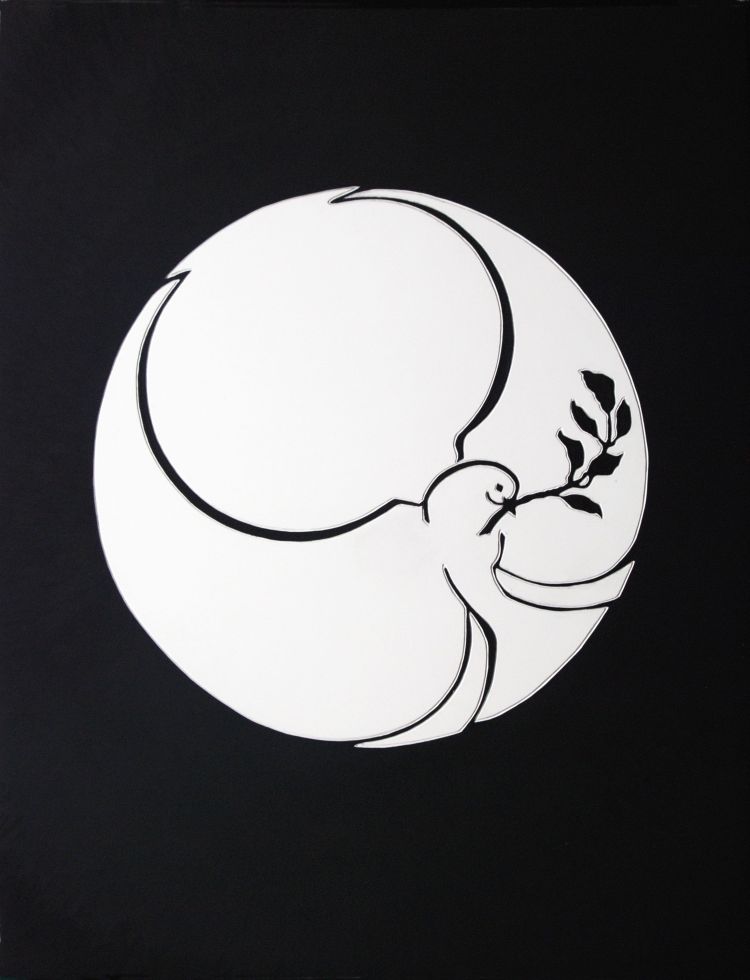
A black and white painting of a peace dove with an olive branch and the moon. The outline of the dove and the moon are engraved into polished gesso, which reads a little like ivory. The black sky is tempera paint, the black is a coloured pigment, so when you look closely you can see many colours in the black and the brush strokes present as rings of light around the moon.
Dove Moon, 2023. Gesso & black tempera painted on marine plywood, mounted on gessoed MDF and framed with black painted tulip wood frame 53h x 44w x 4d cm (approx) with Tru Vue non reflective glass £4500
The Point of No Return
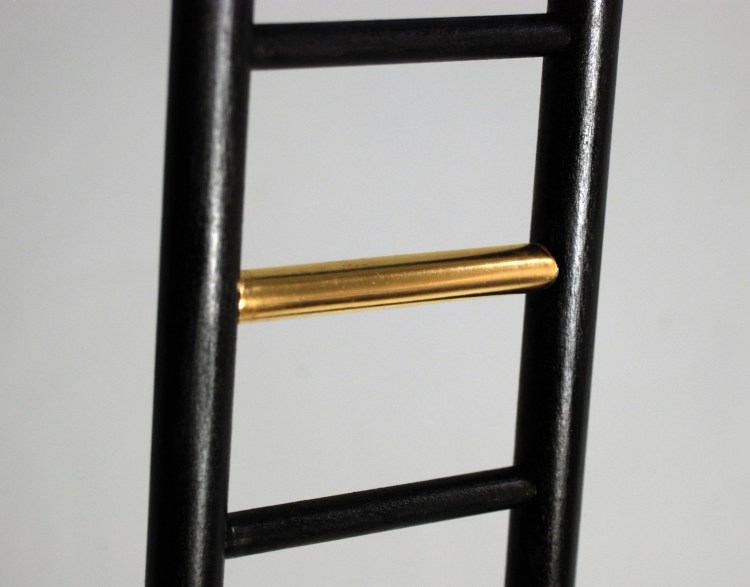
A ladder with one gold rung balances impossibly on one leg.
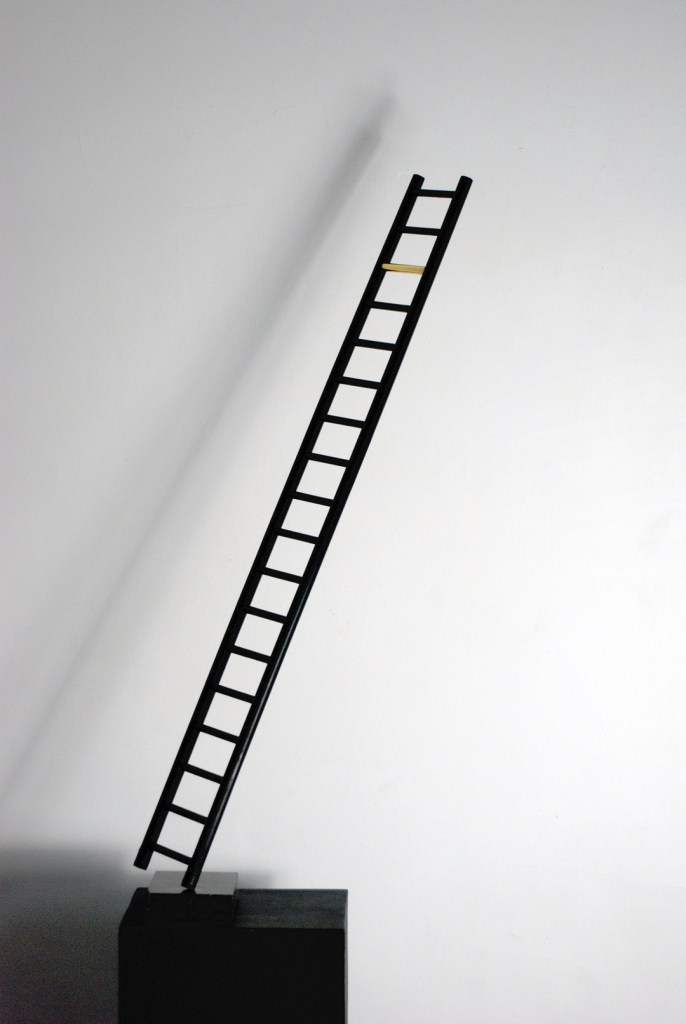


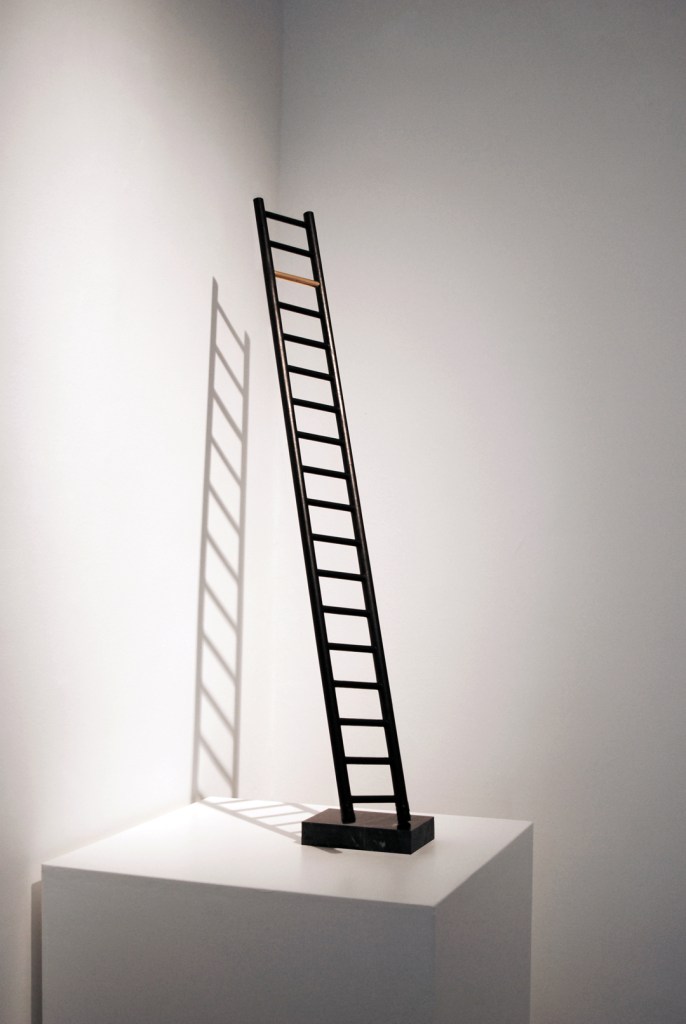
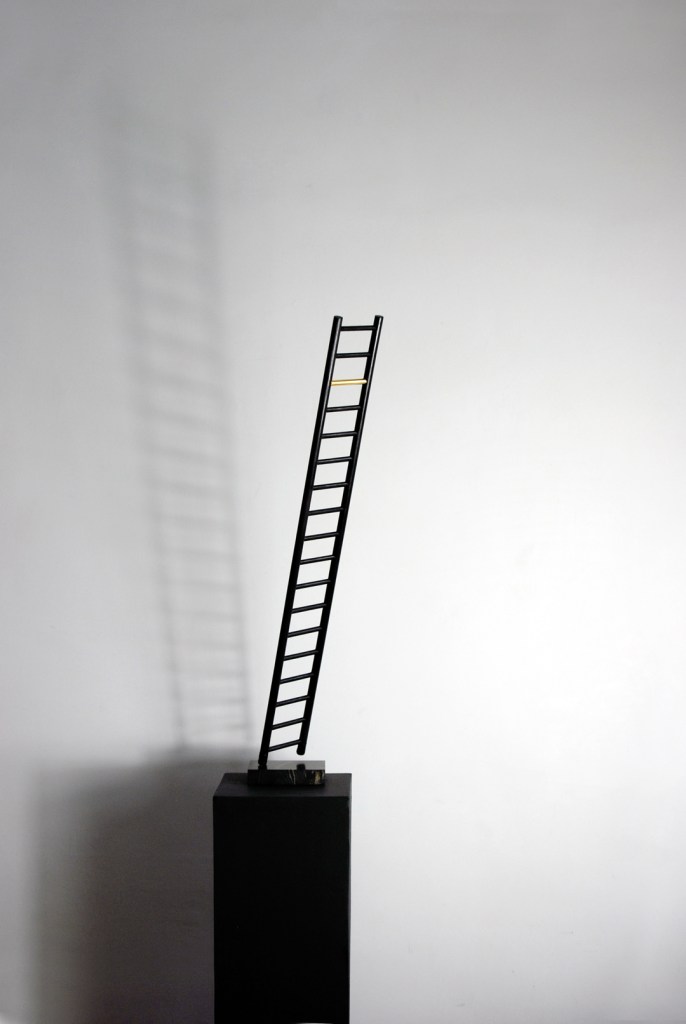
A black ladder with a single golden rung balances precariously on one foot on a black marble base. The eye is drawn to the reflective rung that has been water gilded giving the illusion that it’s sold gold. It would make more sense, in terms of gravity, if the ladder had both feet on the ground and it was propped up against a wall.
Ladders have been used symbolically across cultures for millennia. Some scholars argue the ladder reflects ancient knowledge of DNA, whilst for others it’s a symbol of the connection between heaven and earth. In the modern era ladders have become complicated symbols tied into our innermost thoughts. Carl Jung (1875 -1961), the Swiss psychologist and psychiatrist, believed that dreams of ladders were connected to our collective unconscious and psychic development. Austrian psychoanalyst Sigmund Freud (1856 -1939) stated ‘Staircases, ladders, and flights of stairs, or climbing on these, either upwards or downwards, are symbolic representations of the sexual act.’ So how do we read a ladder that is stands precariously on one leg, where its shadows emphasise its impossibility? What do we believe is going on?
The Point of no Return, 2023. Wood, black tempera, Indian ink, marble 90h x 30w x 30d cm £1750
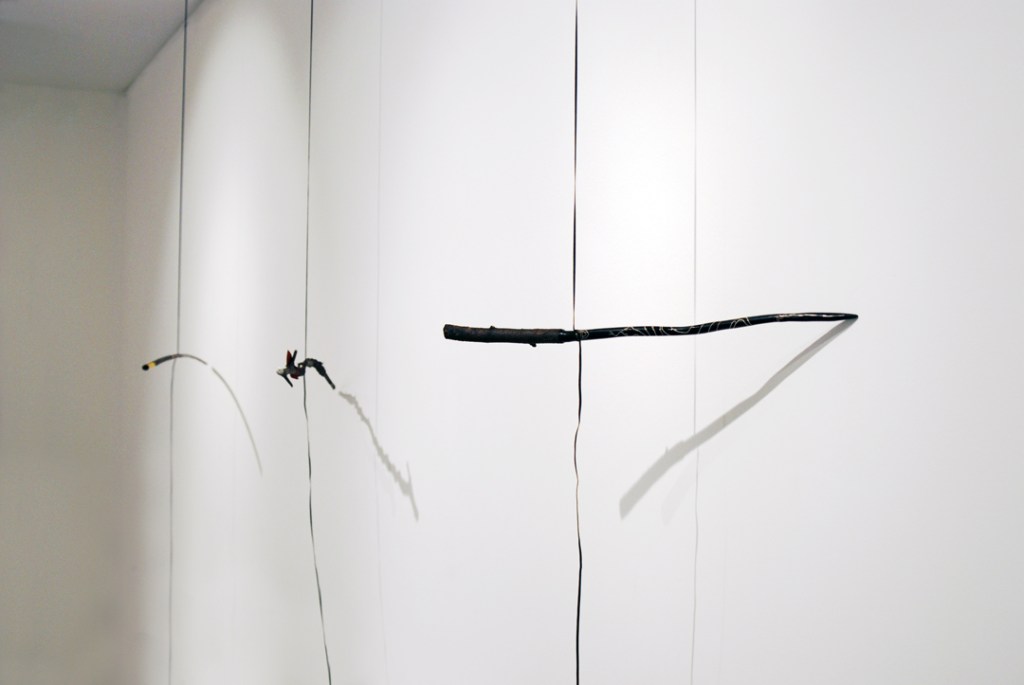
A selection of ‘Magical Wands’
During a residency in Devon I selected pieces of wood and branches I felt drawn to. Once the ‘wand’ was selected I whittled it for a while and researched the wood, this process determined the wands significance and tendencies.
Moving Stones Wand
This wand is about trickery, and when it was first exhibited (in New York) I was bemused to learn, from the gallerist, that his co-curator screamed when she saw it. Something to do with Catholic heritage and fearing magic, which is interesting, because apparently she’s not that religious. But I do enjoy the idea that the wands are magical.
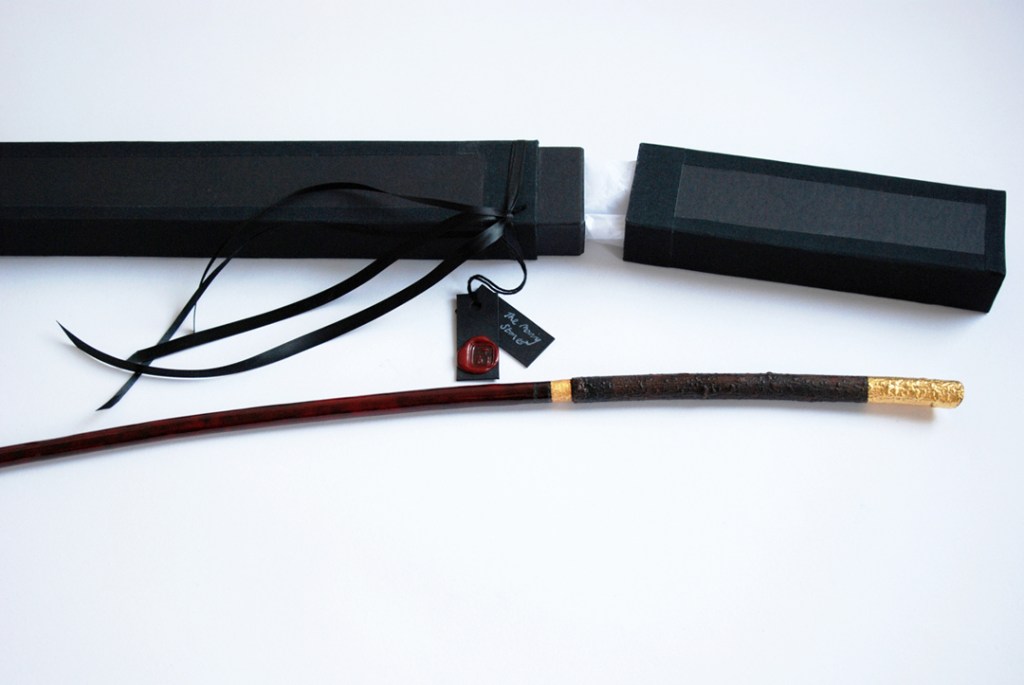

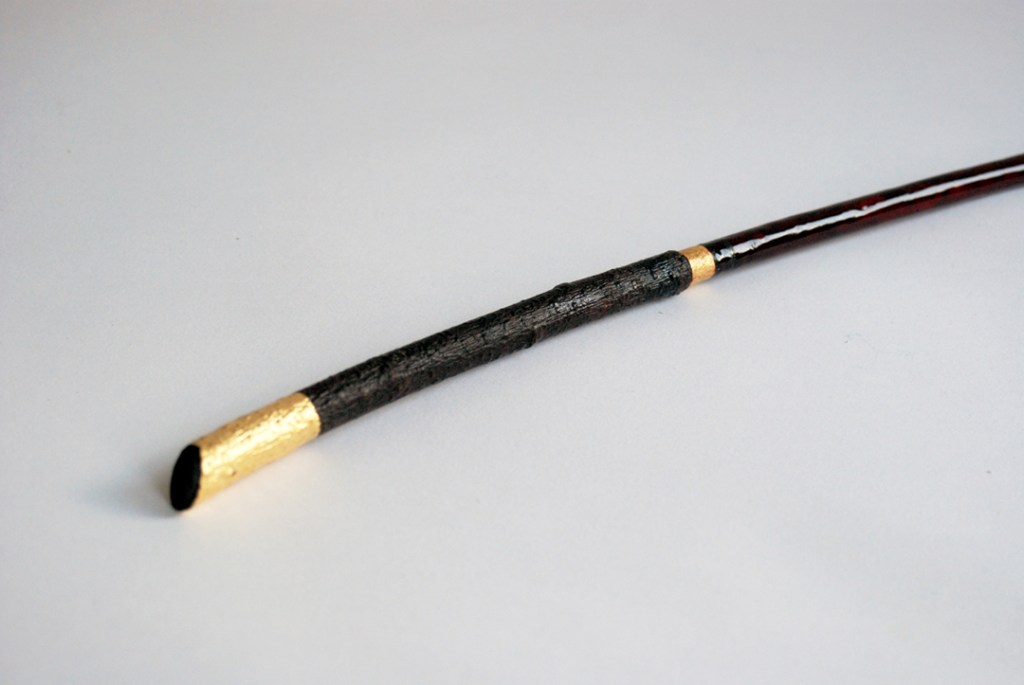
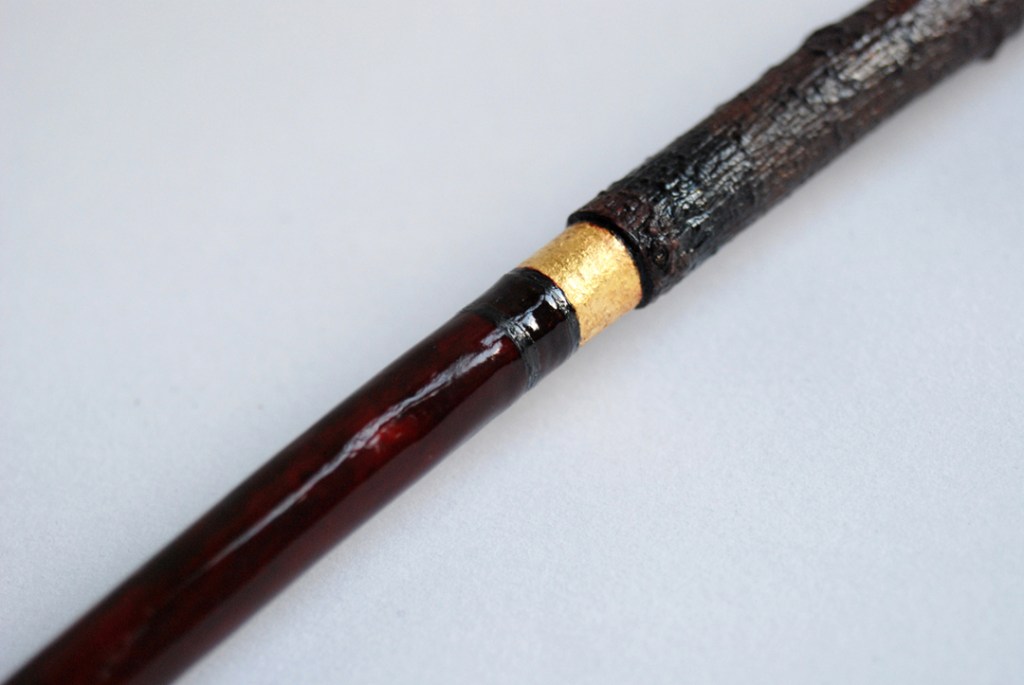
A hazel wand decorated with gold and shellac inks. The wand’s handle resembles emu skin and is tipped in gold. The main portion of the wand is red with black and gold.
It’s inspired by the story of Walcollinessa, a blue-eyed cockatoo from the Aboriginal Eora Nation. One day the mischievious bird made a bet with a boy that she was as smart as him and could prove it. She made a plan with the other birds, but the boy cheated and got his little brother to hide in the bushes so he could report back on their ruse.
A kookaburra saw this, so whilst the little brother was running to tell tales and ruin the trick the birds moved the stones on the path and he got lost. The boy’s mother heard the kookaburra laugh and asked what had happened. She was angry with her older boy and said ‘you shouldn’t have cheated the birds’ and sobbed for her youngest child.
Gawarrgay, the creator sky spirit emu, felt sorry for the mother and thought maybe the little boy was too young to know better. So he plucked a magic stick from another land and threw it down to the path making the stones move back, so the little boy could find his way home and the Emu told the boys:
“You can cheat the birds, but if you do it again, I’ll not move the stones back.”
Moving Stones Wand, 2021. Hazel + gold, shellac red ink and black Indian ink Custom made black box. Wand 66 cm long £1750
The Jailbird
Despite this wand being about seeing good and evil, it became known as the naughty wand, during an exhibition in London. We hung it from its balancing point with a single ribbon. To find this point I tried to balance it on my finger, but my finger started wagging uncontrollably, this hadn’t happened with the other wands! We laughed, apparently it meant ‘maybe’ the NY curator had a point. Additionally, the wand seemingly pointed at some visitors, following them round the gallery. The very cool gallerist widened her eyes and said to the visitors ‘it only does that with some people’.


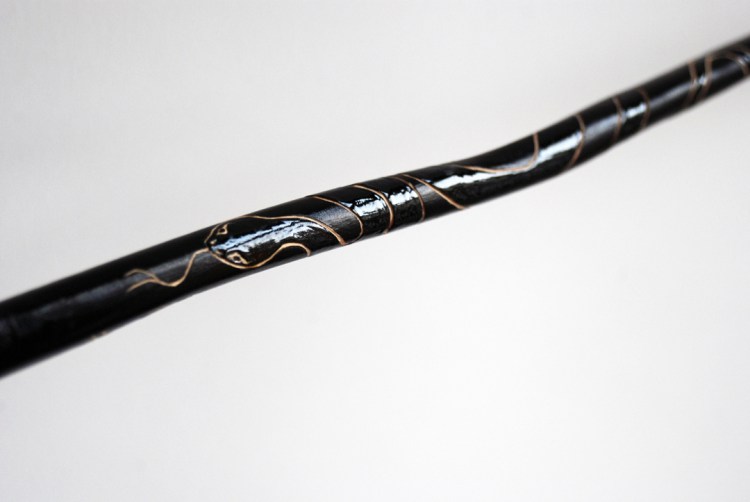
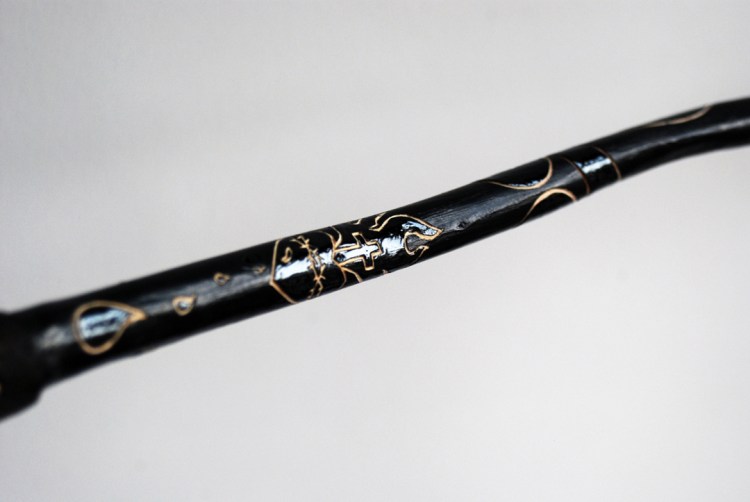
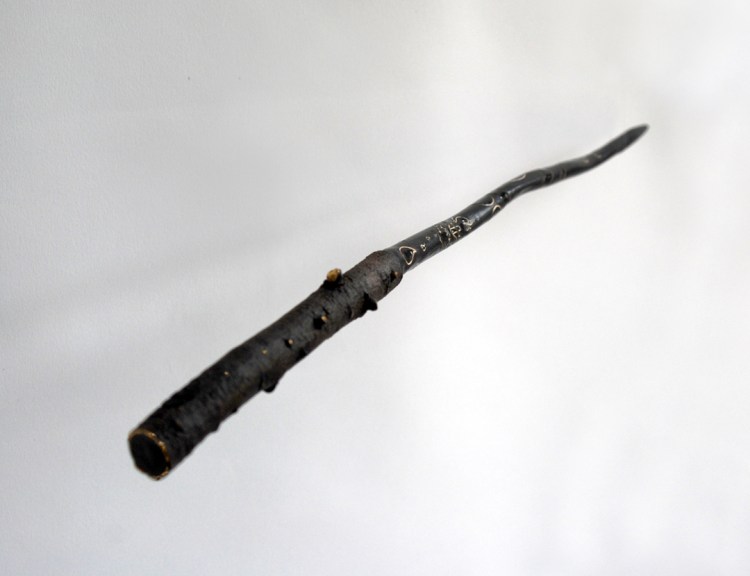

A cedar wand is engraved and decorated with black ink and gold. On the handle small scars, from removed twigs, are enhanced with gold and the butt of the wand is polish burnt and trimmed with gold. The bark is treated with frankincense and myrrh, bringing out the richness of texture and warmth of colour through a wash of black ink. The wand is black and engraved with prison style Christian tattoo designs, which are spot varnished and reveal a light wood underneath.
I saw the most beautiful tree, green and lush with wonderful cones. It was the Lebanon Cedar, known as the ‘tree of the gods’ in Sanskrit and worshiped as a divine tree in the Hindu religion, Cedar was one of the three woods used in Christ’s cross: cedar, pine and cypress. This beautiful tree was growing in the grounds of Channings Wood Prison.
The Jailbird, 2021. Lebanon Cedar from Channings Wood Prison (Devon England) + gold, black Indian ink and shellac on detail. Custom made black box lined with hand made paper and ribbon, ends of box covered with Lino prints of the Peace dove against a moon on washi paper. Wand 53cm long £1600
The Black Pearl
This wand is about love.
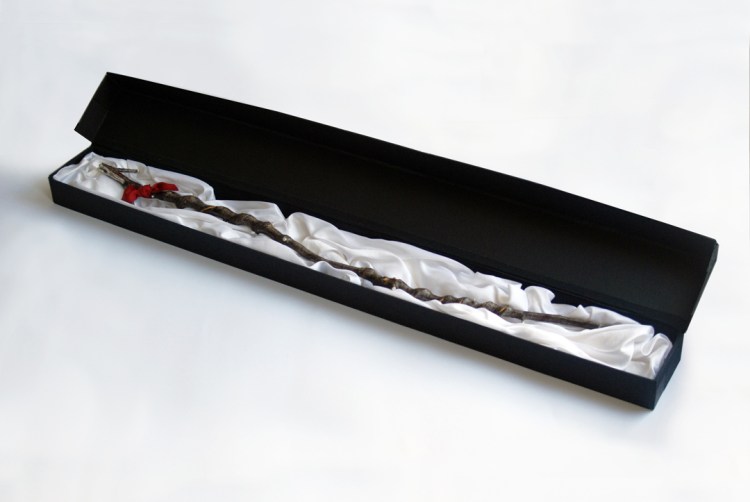


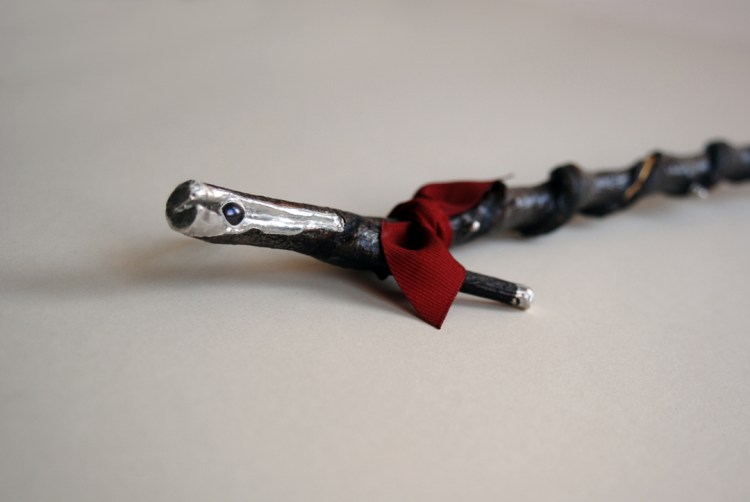
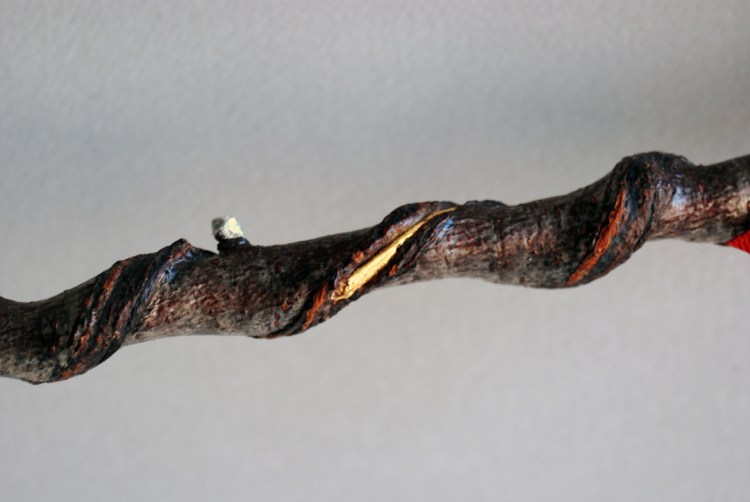

A Silver Birch wand, naturally aged by weather and time. Its bark has deep red undertones and a natural silver sheen. It’s texture and shape holds the spiralling scars of honeysuckle’s embrace. The remnants of honeysuckle are decorated with gold and small branches are trimmed and finished to look like small silver (palladium) buds. A red ribbon is tied around the handle and a black pearl is embedded in palladium.
Birch is used in haunted houses to banish fears from within. Russians tie a red ribbon around birch to get rid of the evil eye. Birch, a feminine tree, is associated with the planet Venus and powers of protection and purity. Where as Honeysuckle is all about adding sweetness, love, sexuality, luck and the essence of all things that bring pleasure and joy. A honey suckle that twines around another stem is a sign of fidelity and long lasting desire.
The black pearl is a symbol of hope for wounded hearts, as it carries healing powers and wards off negative energy. There are many legends about black pearls, in Ceylon there is one where Adam and Eve cried a lake of tears, Eve’s were white pearls and Adam’s black.
The Black Pearl, 2021. Silver Birch, Honeysuckle, palladium, gold & black pearl. Custom made black box lined with white silk. Wand 66 cm long £2700
Mirror, Mirror
This piece changes considerably dependent on light and muted reflections. It’s concerned with ideas beyond a specific context, to find a different type of truth, one where the insights can feel specific to multiple contexts, like love, protest, war, even skimming stones…


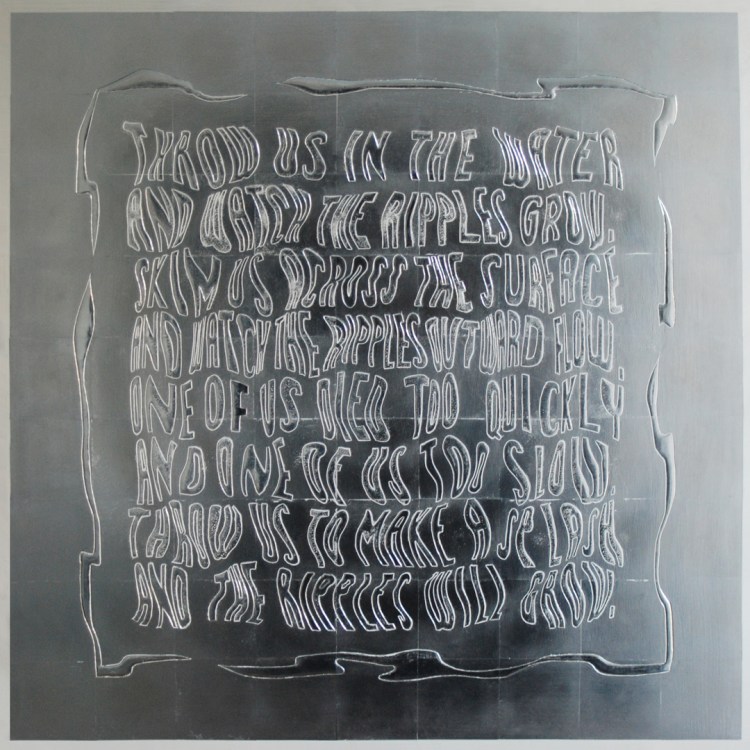
The reflective water ripple effect places the viewer in the piece and reflects the surroundings (via the mirror quality of the metal), the name of the piece (Mirror, Mirror), and the ambiguity as to whether we should read it as if we are the stone or the stone thrower, work together to add depth to the multiple meanings or ripples of the piece. Yet, the poem is as much about skimming stones as it is about the catalyst for the law of unplanned consequence. The text reads:
THROW US IN THE WATER
AND WATCH THE RIPPLES GROW.
SKIM US ACROSS THE SURFACE
AND WATCH THE RIPPLES OUTWARD FLOW.
ONE OF US DIED TOO QUICKLY
AND ONE OF US TOO SLOW.
THROW US TO MAKE A SPLASH
AND THE RIPPLES WILL GROW.
Using traditional skills and techniques from icon painting the piece takes a contemporary twist. Gold is exchanged for palladium, a metal named after the Greek Goddess Pallas Athena (goddess of virtue in wisdom and war). The religious icon requirements of ‘theology, doctrine and history’ are replaced by the mythological undertones ascribed in the choice of metal. Yet the piece maintains the feeling of life, from the reflections of changing light, which are believed to reflect the spirit embedded in traditional icons.
Over 50 layers and processes make up this simple looking piece, from writing the poem, preparing the board, layering the gesso and bole, designing, engraving and building text, to applying and burnishing the palladium for both mat and mirror effect.
Mirror Miror, 2019. A Contemporary non-religious icon style painting on wooden board, water gilded with gesso, Antique White bole, a little gin and palladium. 73h x 73w x 1.7d cm £13500
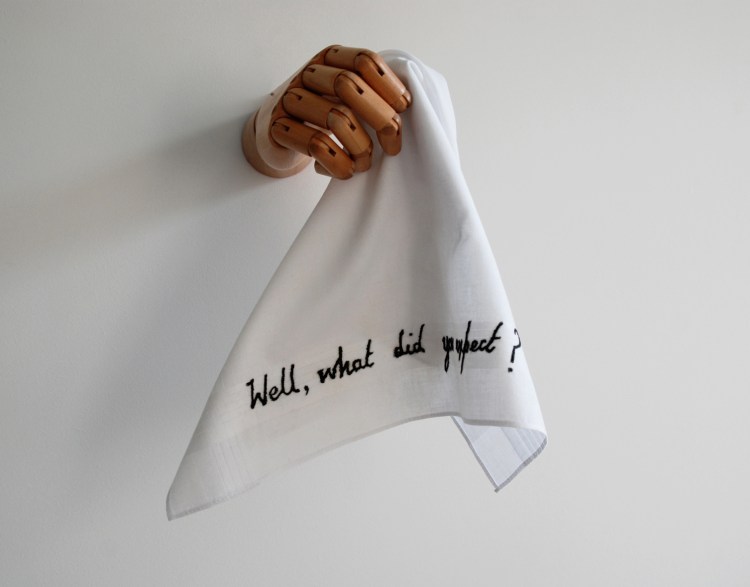
Well, what did you expect?
The handkerchief is held in a position that denotes elements of surrender, comforter, and farewell, but it’s also cold, disembodied and stiff, whilst the fabric is soft and flowing and the is text intimately stitched; satisfyingly contradictory and natural all at the same time.
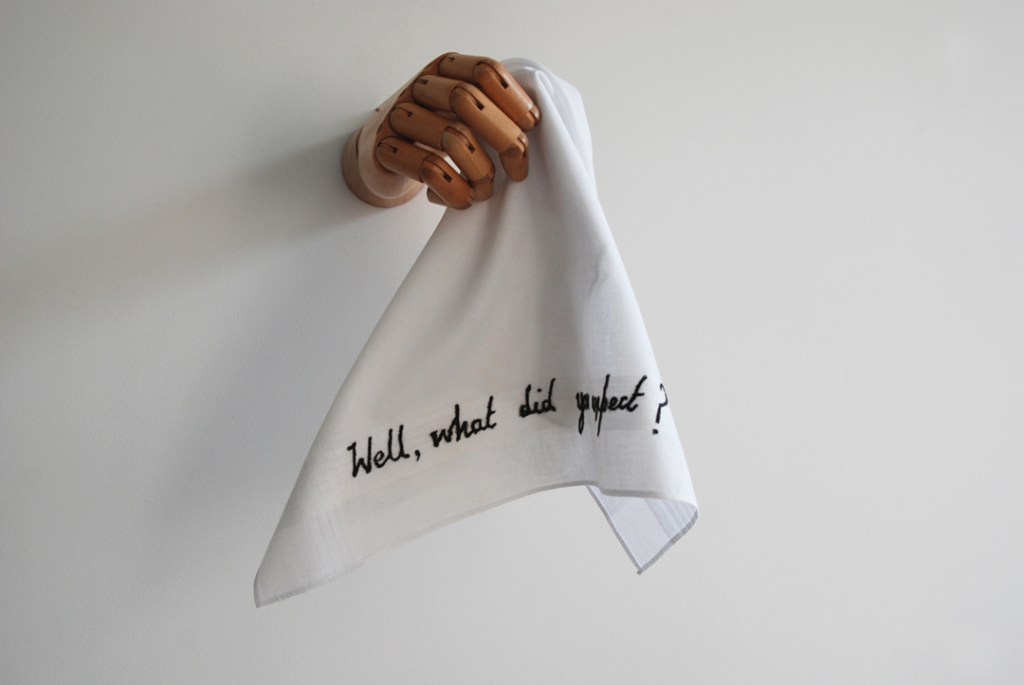


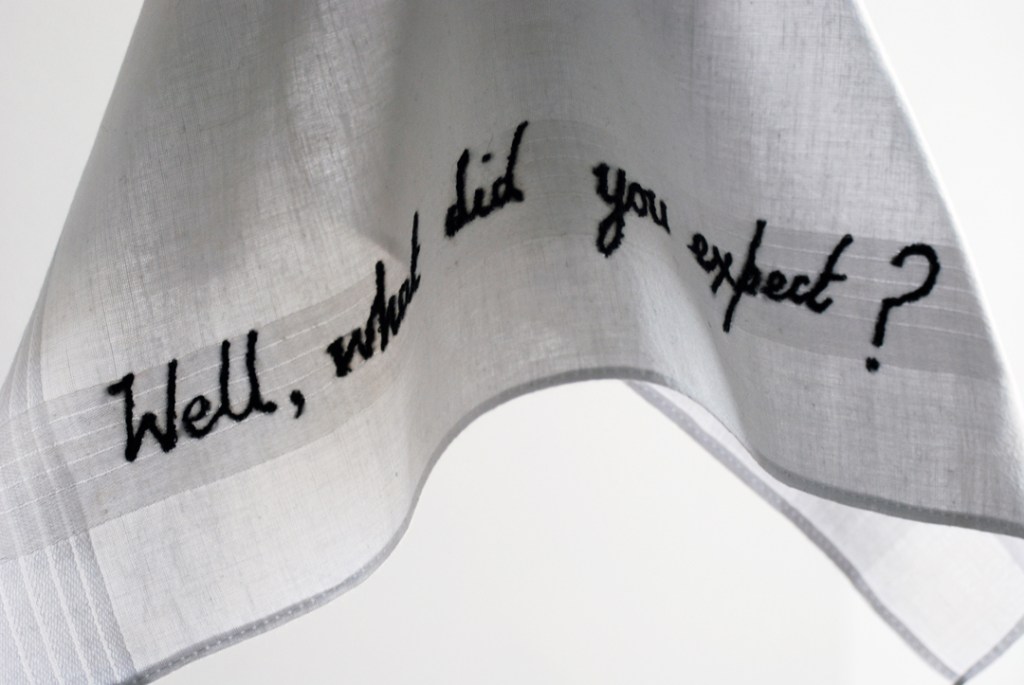
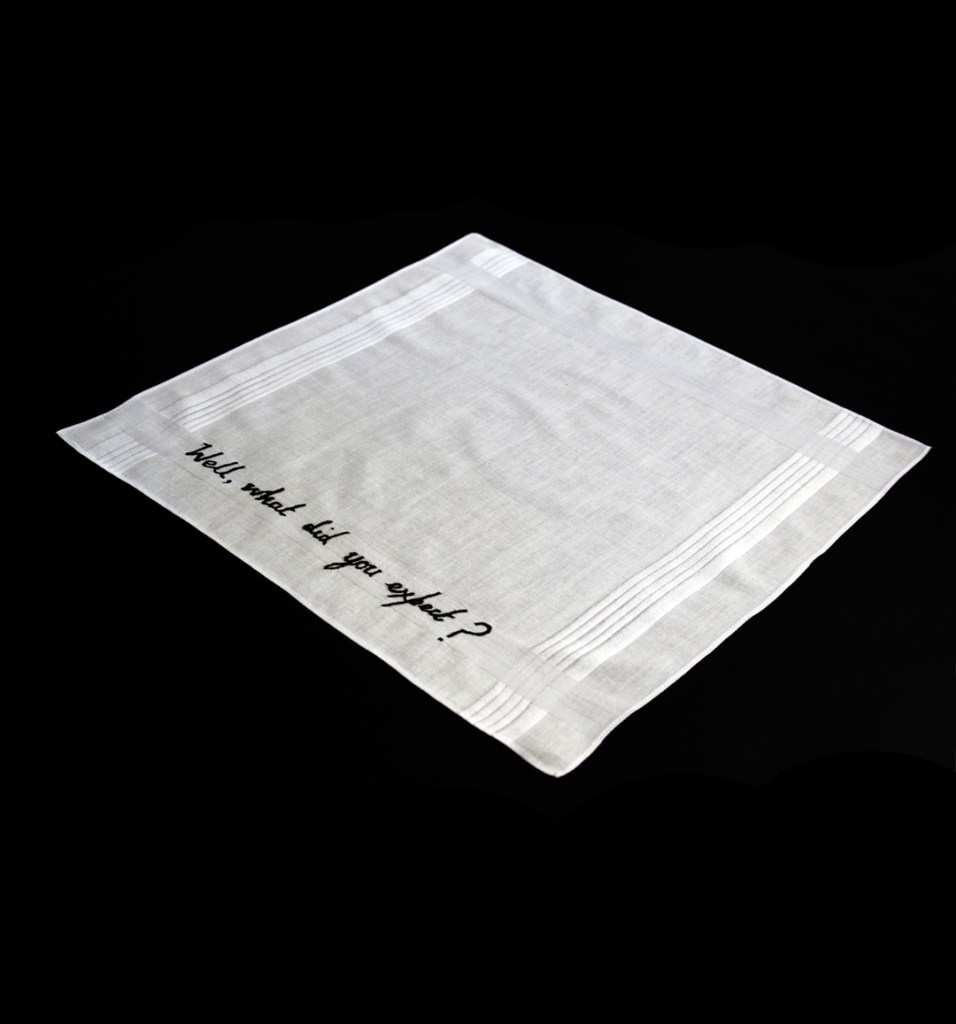
A wooden hand holds a white handkerchief embroidered with the words ‘Well, what did you expect?’ The fine black thread, the ‘hand writing’ style and the way the handkerchief is held gives the piece the countenance of the everyday, a natural intimacy.
The black embroidered text is visible, or partially visible, depending on how the handkerchief falls or the wind blows. Multiple meaningful but incomplete readings are revealed, as the text wraps around the folds before you see the full message.
Unlike the samplers that came before it, this is less about technique and more about ingraining an idea into the fabric. The piece both embraces and moves on from feminist sentiments, as laid out on the flat handkerchiefs of the likes of Louise Bougeois (‘I have been to Hell and back. And let me tell you it was wonderful.’) and the original ‘Suffragette Handkerchief’ (with sixty-six signatures and two sets of initials from the women held at Holloway prison for their part in the window smashing protest of March 1912). However, this piece also speaks to common narratives, when calling out toxic behaviour and the internal voice of self-criticism.
Well, what did you expect? 2021. White cotton handkerchief, embroidered with black stitching thread and held in wooden hand. 40h x 30w x 30d cm £1350
DIY God
The oldest piece in this collection; an indication that my concerns about belief are more ingrained than I had realised.

A faux DIY GOD kit, complete with golden calf and papier-mâché calf moulds, using fake gold and shredded paper from the New Testament.
When Moses left his people for a long time they made a new god to worship, using their gold jewellery. By taking a seemingly foolish and literal interpretation of making ones own god, the piece questions the literal meaning of the parable. Revisiting the story from an adults perspective to open broader ideas relating to belief. The golden calf – Exodus 32, the Bible.
DIY God, 2009. New Testament papier-mâché, fake gold leaf and dried clay in Perspex box. £550
Installation images

 nicolewassall.com