
A project based on confronting vulnerability; emotionally honest and sometimes humorous. Techniques range from water gilding, jewellery metal smithing, video and installation, to photography and sculpture.


And somehow we’re meant to be perfect…
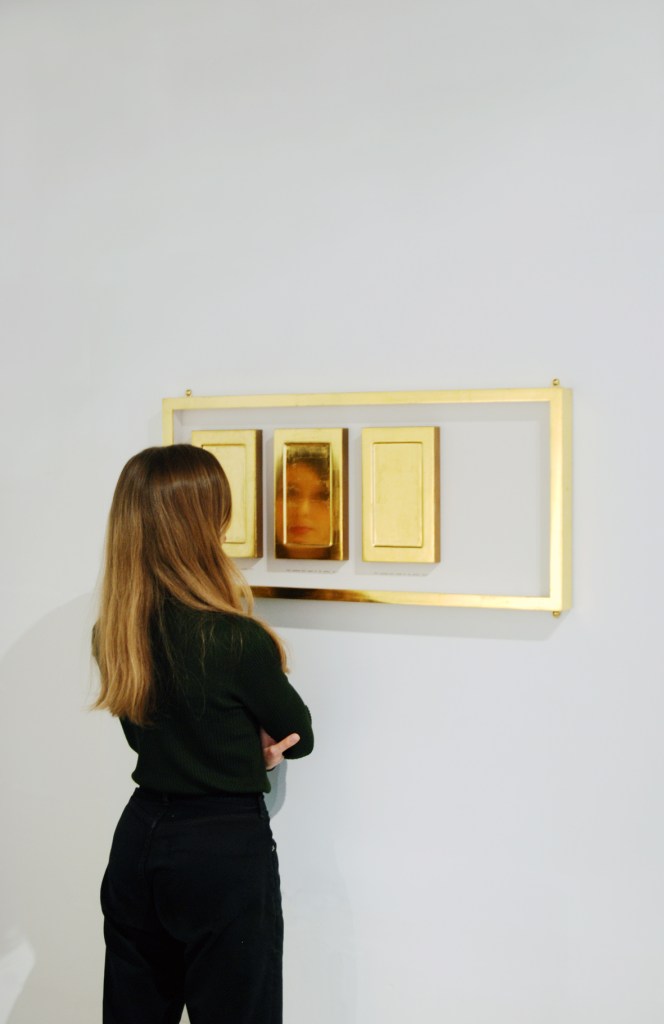

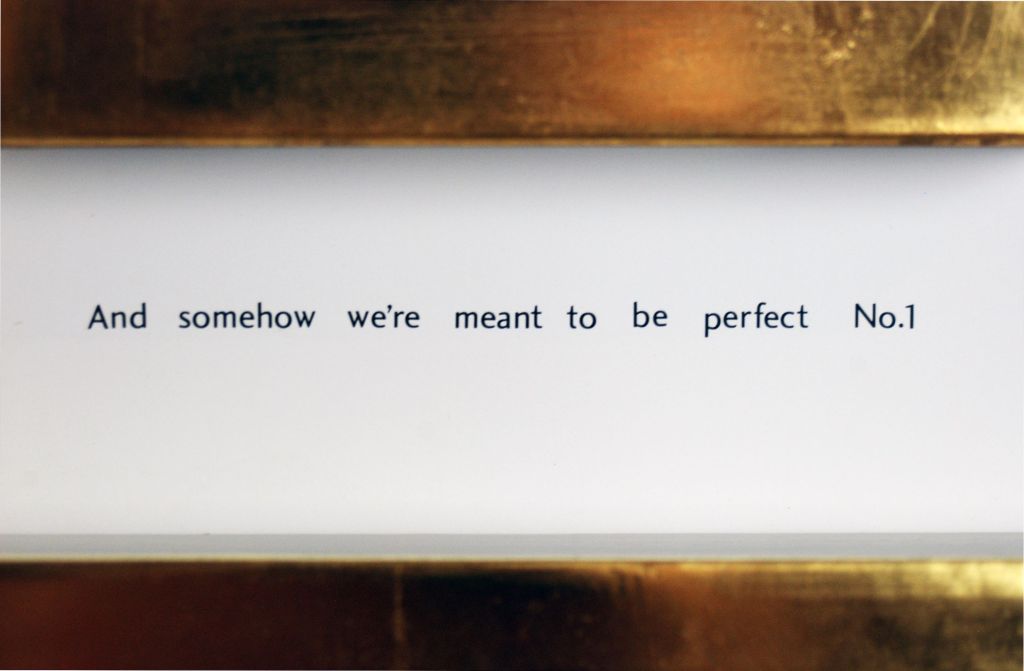
Using the process of water gilding as a metaphor for the process of becoming skilful at life. The ancient technique (leaf metal applied to wood with a substrate of gesso and clay) takes 7 years to become competent at and 21 years to master.
The process piece documents skill development from 1st attempt to 3rd, in the form of icon paintings. Traditionally these capture the story and spirit of a saint. Here the icons function as gold mirrors and the viewer takes the position of ‘saint’. Each board is unique, with imperfect surfaces. As the technique improves life lessons can be taken from the process and visual results of each mirror, their imperfections become points of interest.
The three icon boards are framed together, with an uncomfortable space left for a fourth.
40cm x 85cm x 5cm. Icon boards, water gilded with 24ct gold, mounted on Gessoed board with text under each. Box frame double water gilding on front, with intelaggio corners and double oil gilded on sides. Non reflective art glass and mounted with mirror plates. £9000
Equality
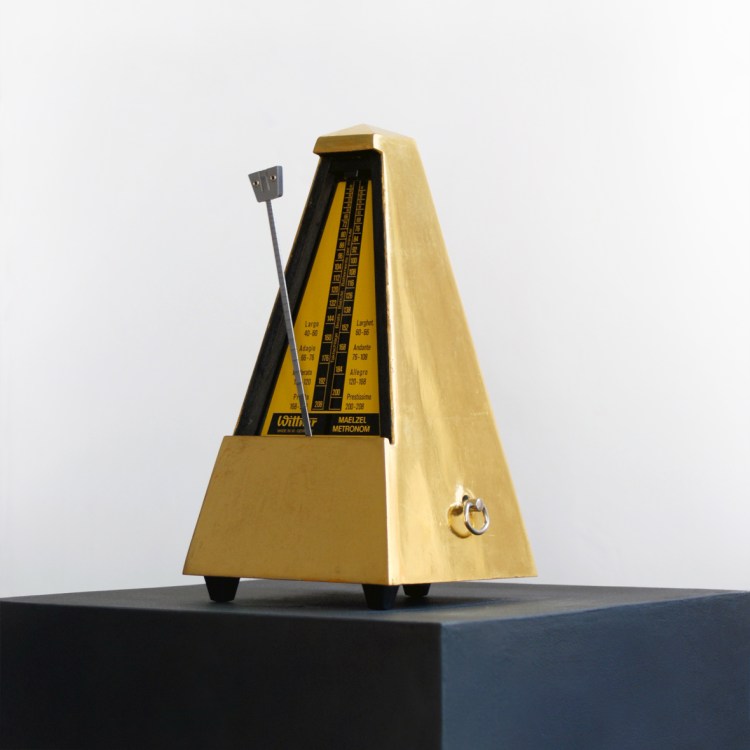
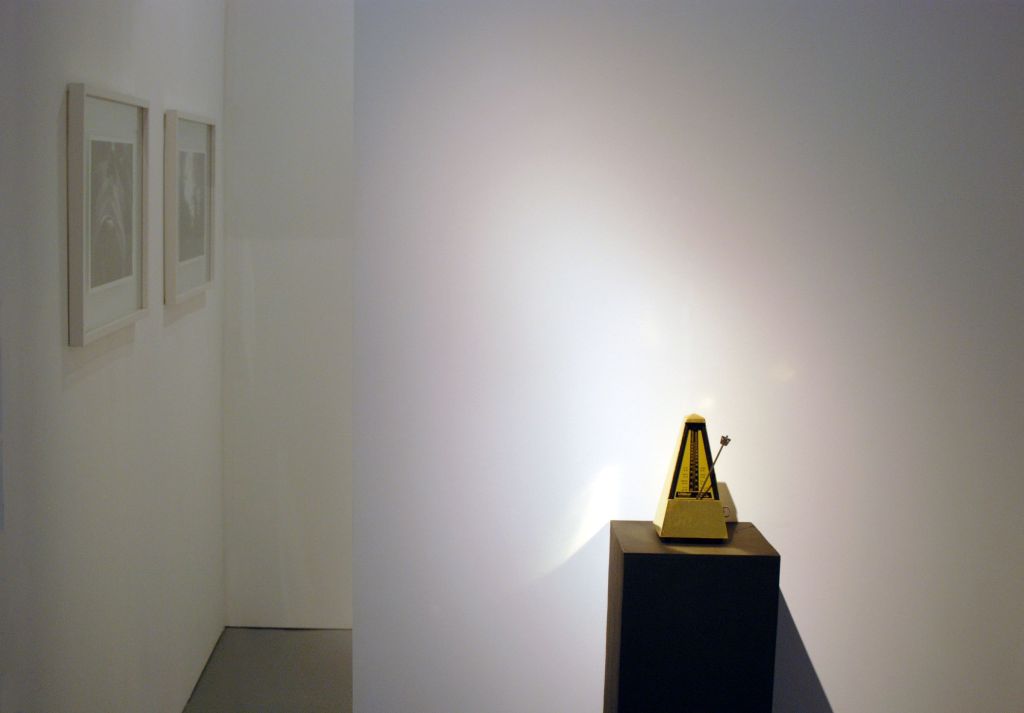
The piece is wound up and the weight extended to its outer limit, so the arm swings uncomfortably slowly. The clicking disappears surprisingly easily into background noise. The viewer sees their reflection in the golden mirror surface, which references the precious nature of the material and time.
The metronome is water gilded in 24 carat gold; a technique dating back to ancient Egypt that involves applying gold to wooden objects to create a reflecive surface. Exhibited in Fiumano Clase London and Studio 3 Gallery Canterbury.
23cm x 12cm x12cm Wooden metronome, water gilded with white gesso, Ligurian Yellow bole and 24ct gold leaf. £2600
My tree is not your tree

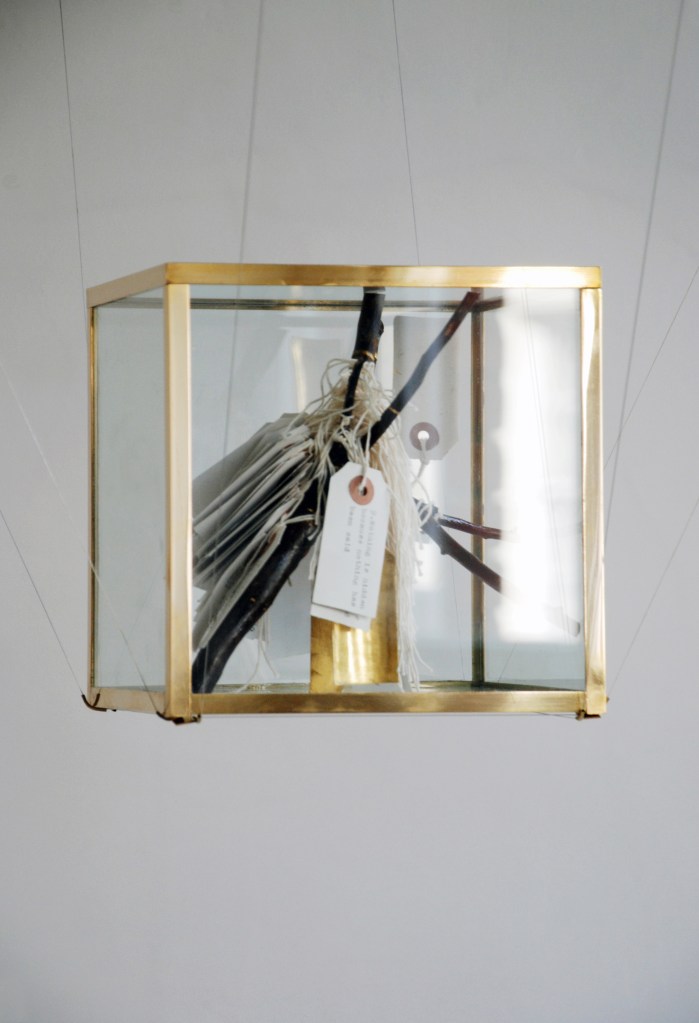
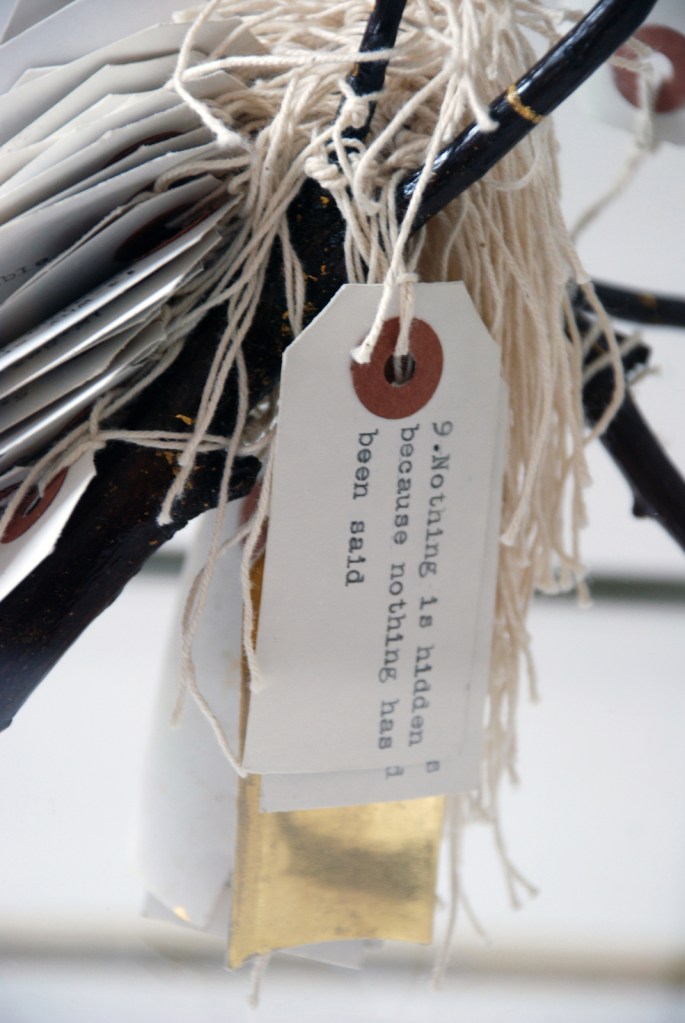
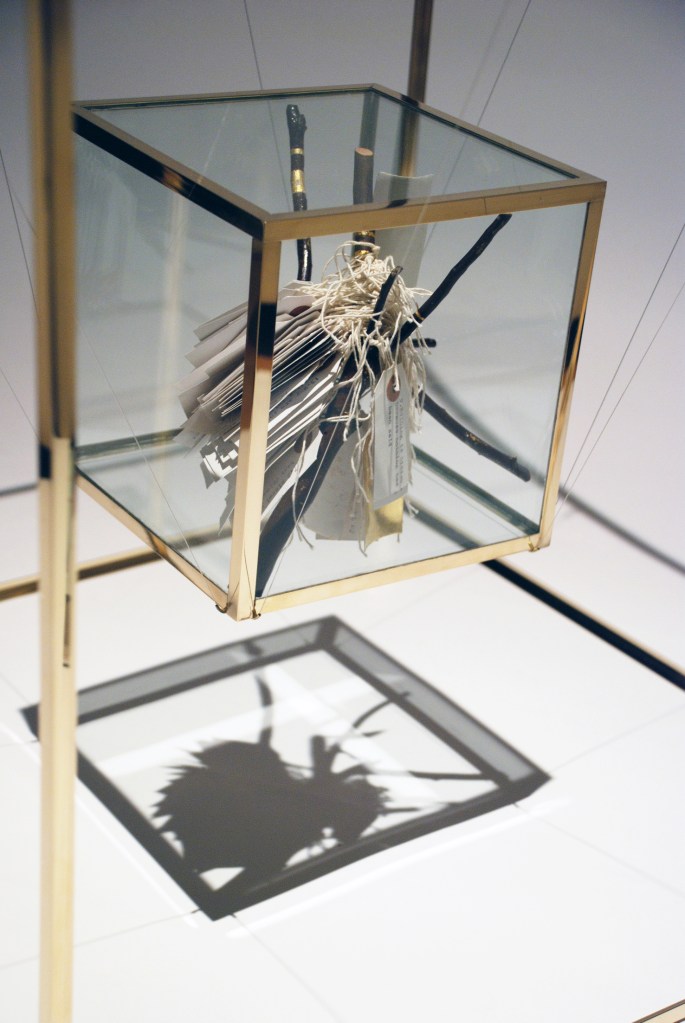
From a distance the inner box is levitaing within the delicate outer brass frame. On closer inspection, the inner box is suspended on gold wires. The balance is delicate, as thoughts float on a golden thread. The outer brass frame creates the illusion of a glass barrier to the inner box (but it’s just a frame).
The inner box is sealed in glass. Some tags are water gilded with 24ct gold, at some level there is alchemy within the box; one tag floats upwards against gravity. Thoughts are typed on each paper tag, they are not hidden, they are just not visible; we cannot share all our thoughts, even if we wish to.
The piece reflects both the emotional boundaries we hope people will respect and the impossibility of revealing all that is inside. When lit from above a shadow is cast from the thoughts and an organic heart shape is revealed beneath the sculpture. Exhibited in Pulse Miami, RWFA New York and Fiumano Clase London.
60cm x 60cm x 60cm Outer brass frame (soldered) with wire (49 strand) 24ct gold plated. Inner box, brass frame with glass sides (5mm) and epoxy resin. Contents of inner box, white paper tags – some typed with thoughts and some water gilded with 24ct gold And a cherry tree branch with shellac varnish and gold leaf decoration. £17500
I wish the hand was silver
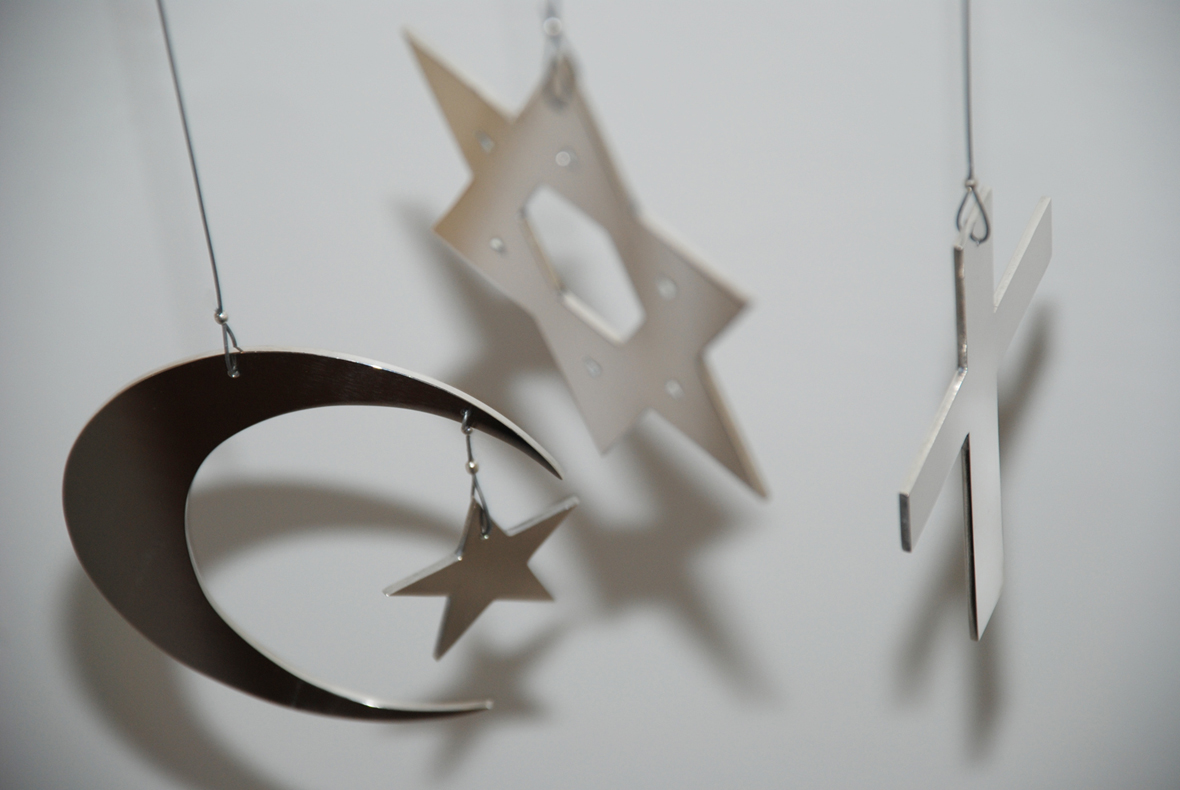

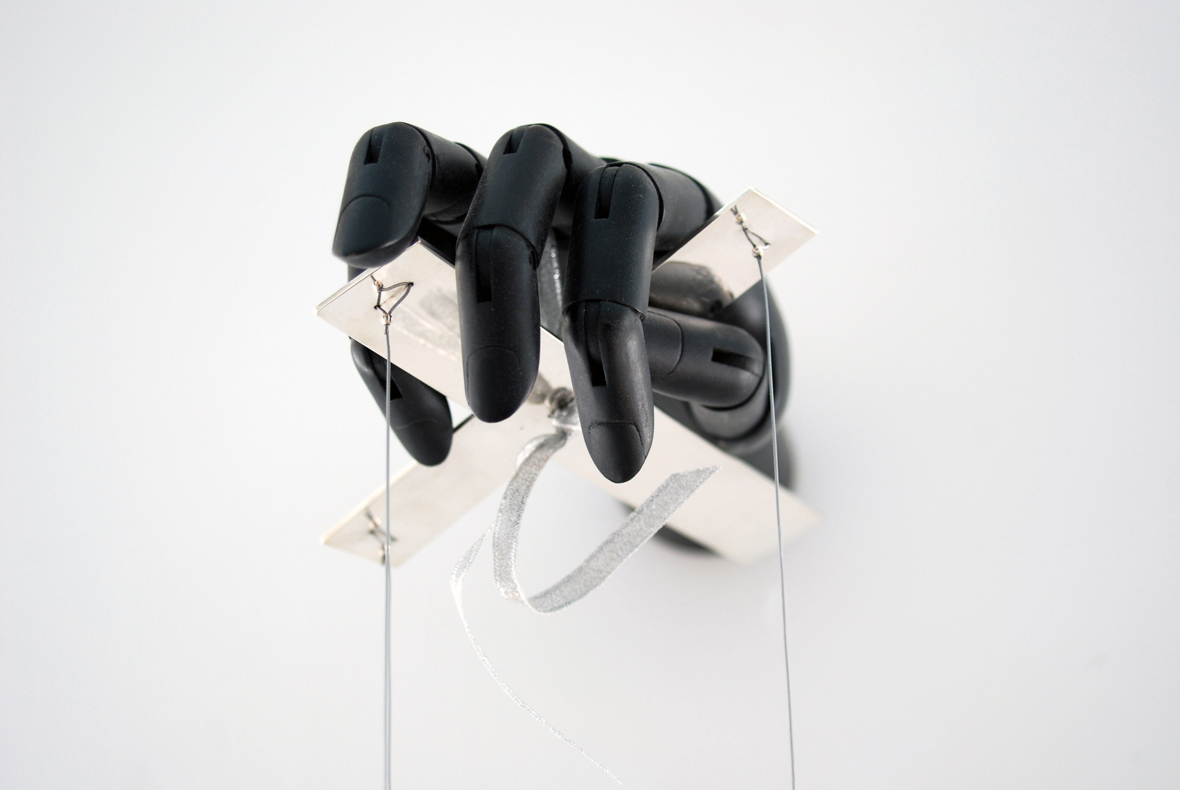

A wooden hand is hung high on the wall and holds a silver marionette puppet with the three symbols of Abrahamic religions. The solid silver pieces reflect light spots of the symbols as well as their shadows, as they move on their long strings.
Using religion as a metaphor, the piece opens up questions on faith and social structures, as it embodies the inevitable light and shade of life.
105cm x 15cm x28cm. Wooden hand painted black, sterling silver, jewellery grade wire and silver crimps. £2700
Thank you

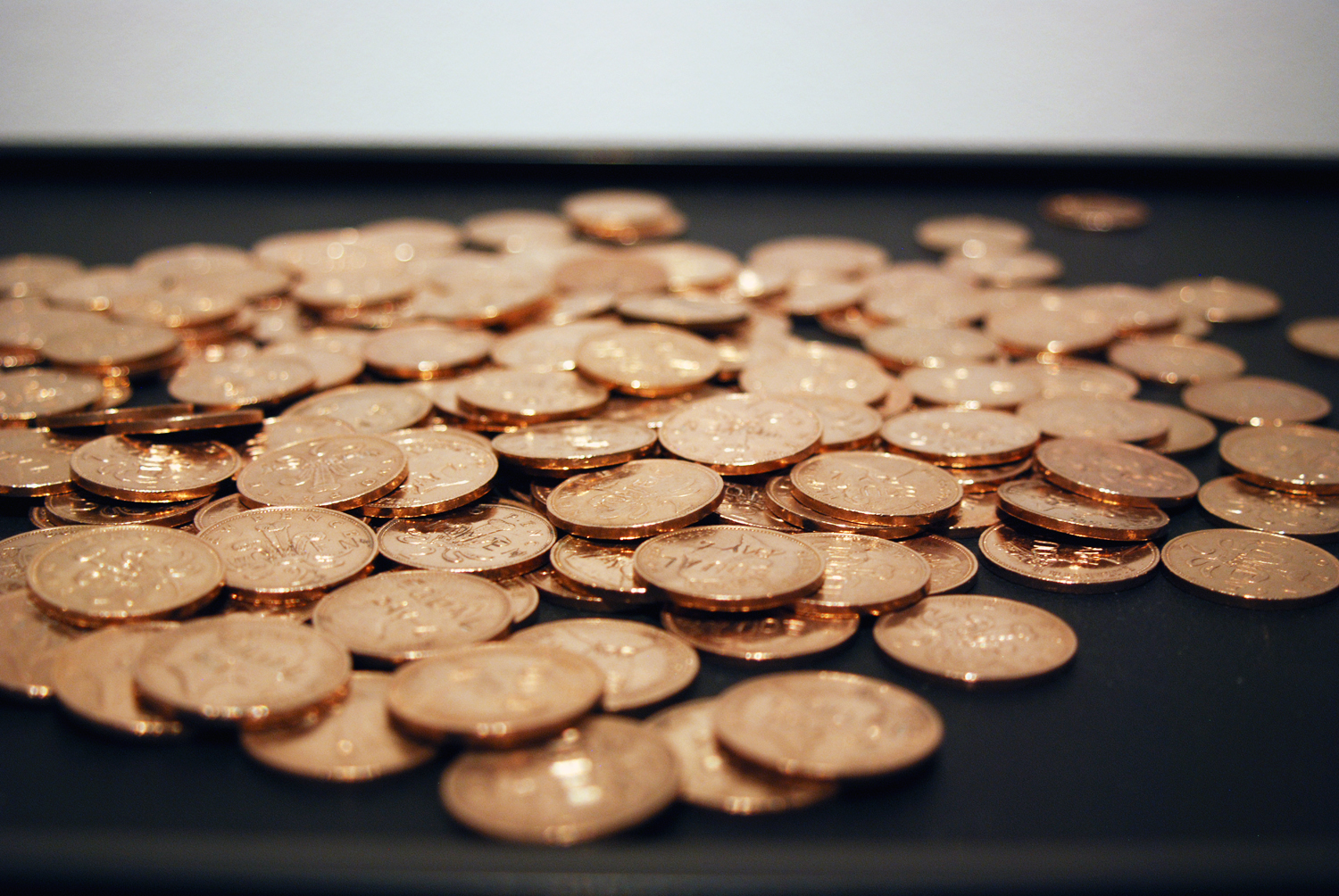
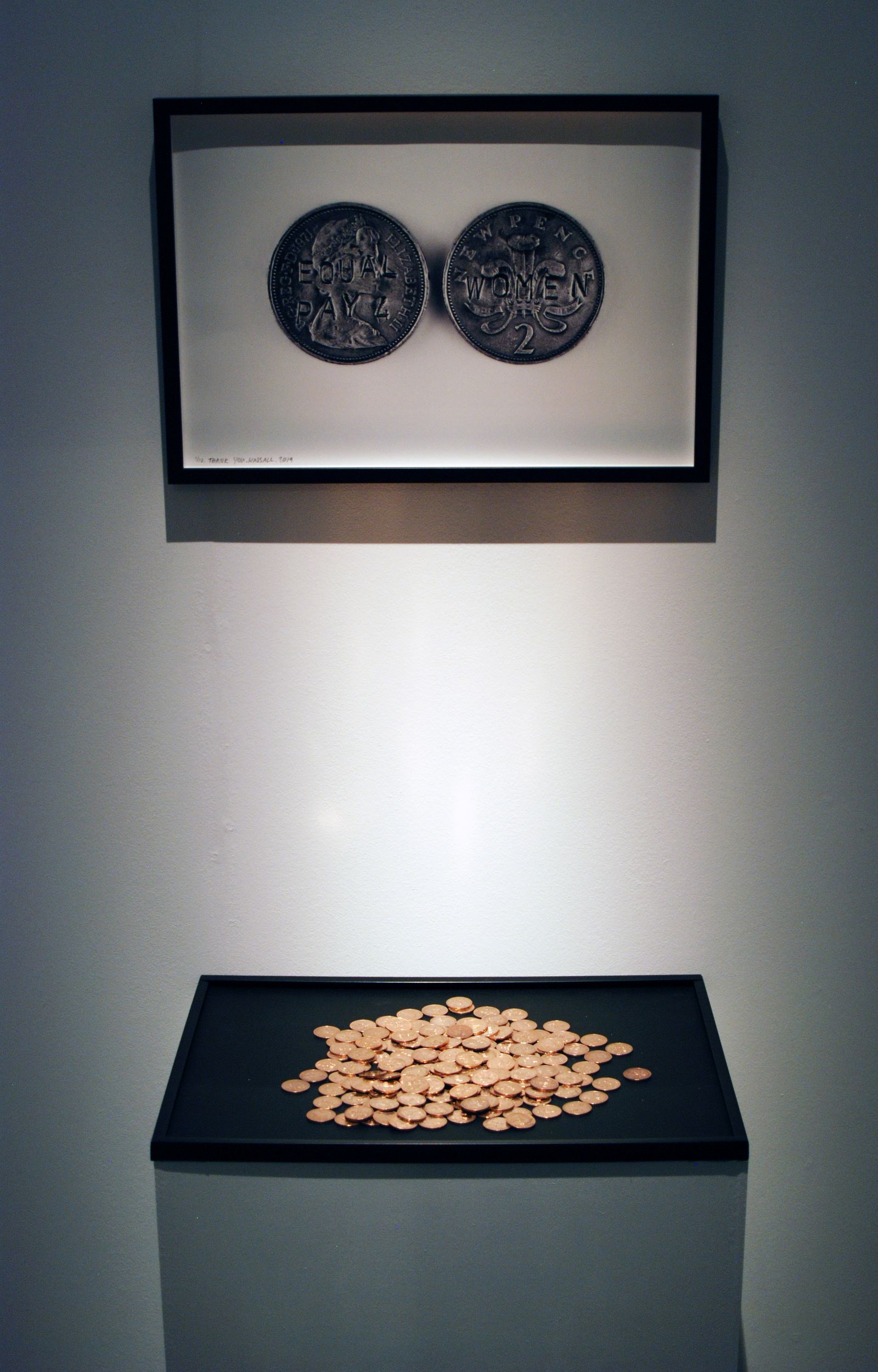
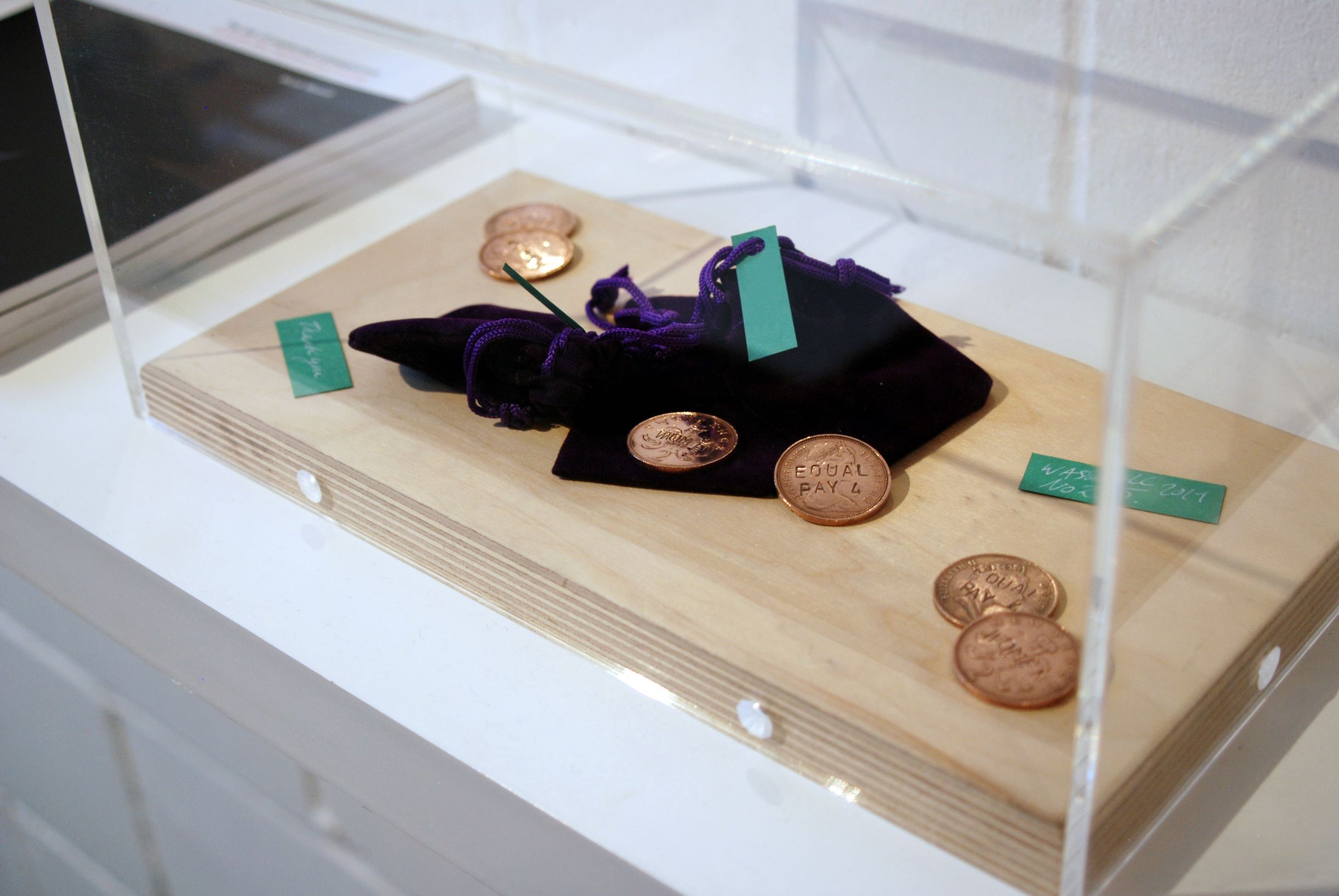
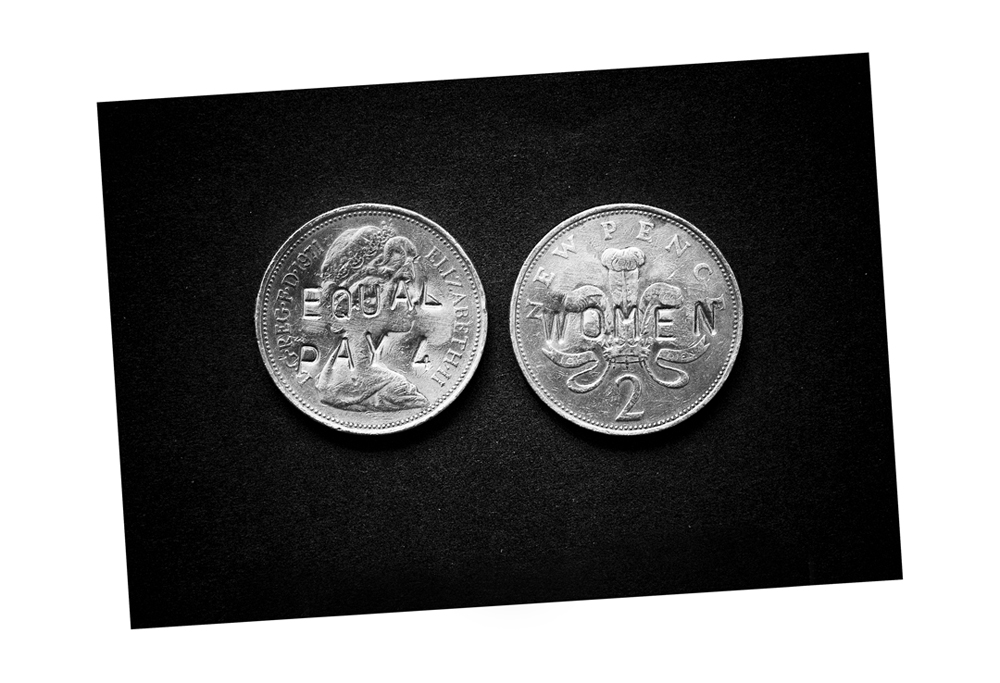
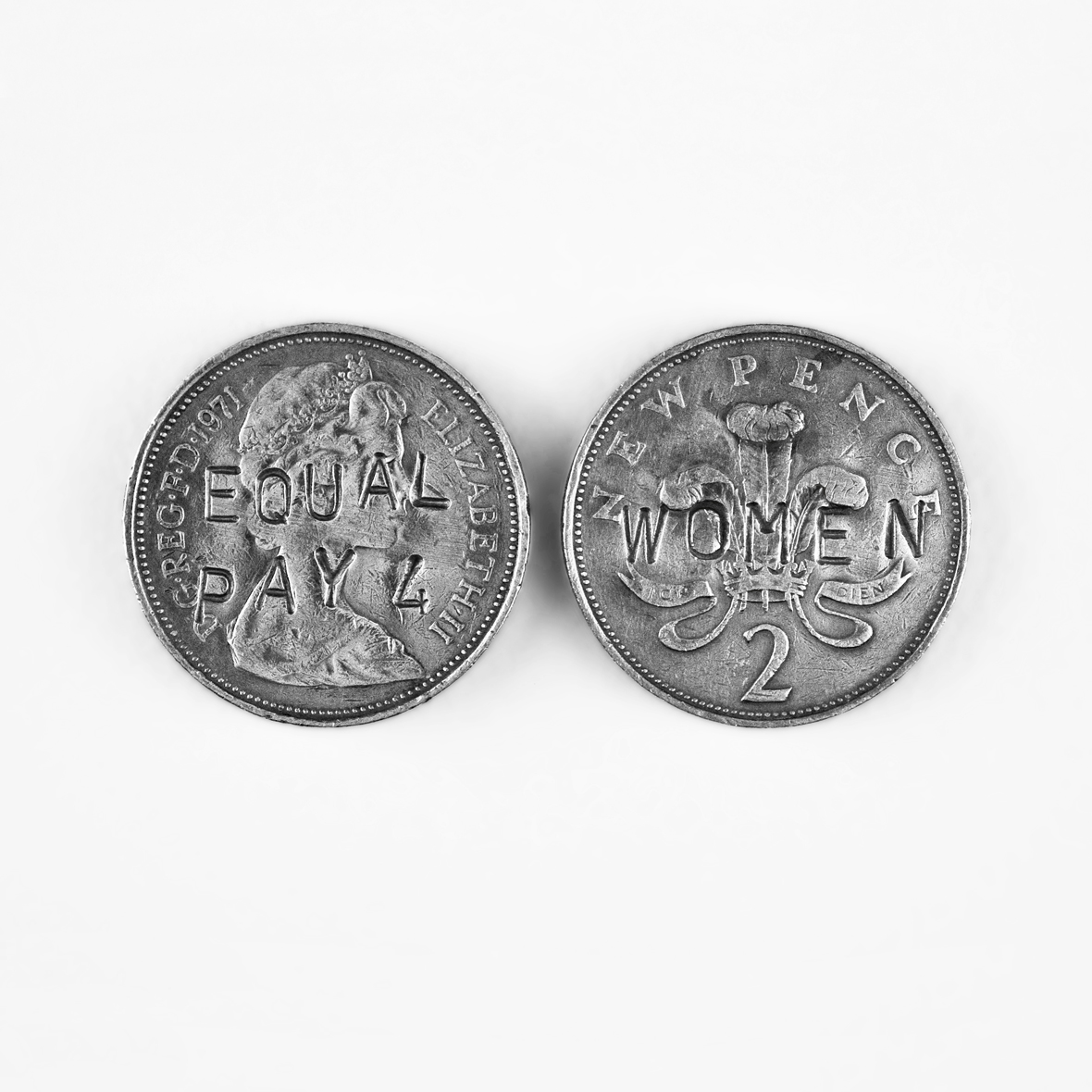
Circa 1912 one penny coins with a crudely stamped ‘VOTES FOR WOMEN’, across King Edward VII’s head started to appear. Little is known about who stamped the coins, nor how many were stamped. They were regarded as a Suffragette action targeIng patriarchy.
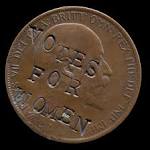
Thank you riffs off the original suffragette coins as a new tuppence is thrown into the mix.
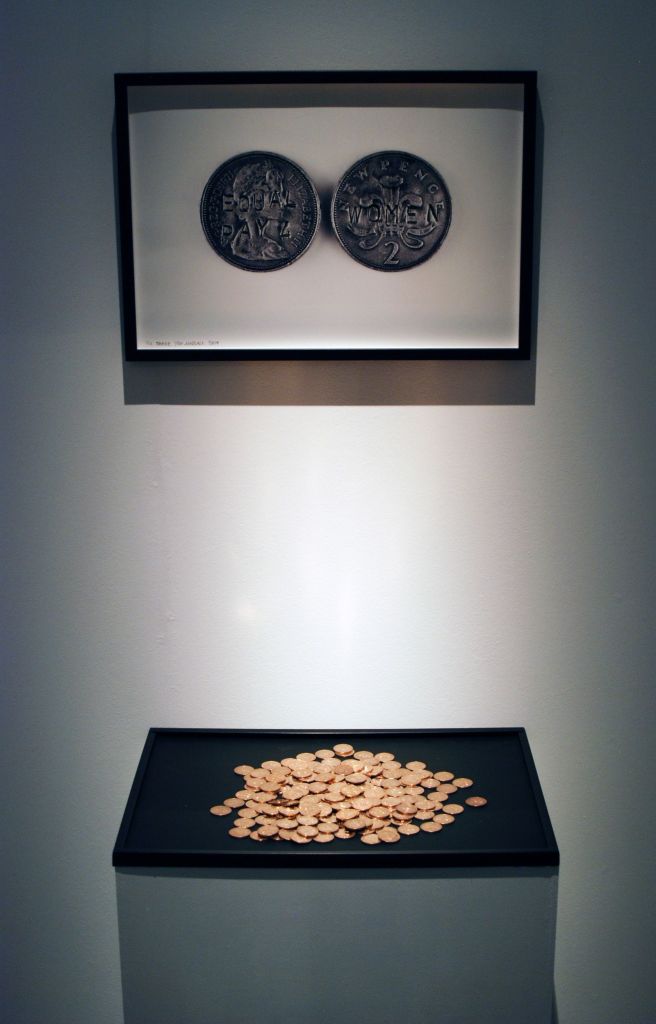
Part one is a print, showing detail of a 1971 two pence coin stamped with ‘EQUAL PAY 4 WOMEN’. Part two is a pile of two pence coins, each stamped with the ’EQUAL PAY 4 WOMEN’ across the two sides. Part three is a small purple pouch with a green card with ‘Thank you‘ and the coin edition number written on in white (the Suffragette colours).
‘EQUAL PAY 4’ is stamped across the Queen‘s head. The Equal Pay Act was introduced in 1970. In 1971 the ’New Pence’ decimal currency was introduced, and Queen Elizabeth II’s allowance was increased from £475000 to £980000.
‘WOMEN’ is stamped across the heraldic badge of the Prince of Wales, which features on the reverse side of the coin. This was originally adopted by Edward, the Black Prince (1330‐1376), as a sign of respect to his mother, Philippa of Hainault; her political savvy and compassion saved the Burghers of Calais. The three ostrich feathers emerge from a coronet, the ribbon below is inscribed with the German mediaeval motto, ‘Ich dien’, meaning ‘I serve’. These words are also a near homophone for the Welsh phrase ‘Eich Dyn’, meaning ‘Your Man’.
Part 1 33cm x 48cm Glicee print on Somerset Enhanced 100% cotton – no 1, 2 and 3 with collectors. 4-10 currently unframed but framing available. Professionally framed In black box frame with non reflective art glass £750 $US1040 €880 (Unframed £650 $US900 €765)
Part 2 unknown quantity of coins (to reflect the unknown quantity of coins stamped by Suffragettes) – POA
Part 3 2.5cm Stamped bronze coin in purple pouch (dating from 1971 – 1991) with green card. 10 with collectors 2 stolen. £44 US$60 €51
Thank you #metoo
Thank you and Thank you #metoo represent the two phases of this piece. The first part ‘Thank you’ is the set up of a social experiment. This includes various props presented as artworks that, by their nature, also function as a ruse with necessary historical references and artistic credibility in their own right – to ensure the ruse works.
The real piece is the behaviour of guests at the private view and the subsequent film documentation of the theft of feminist art works about equal pay, by a middle aged affluent white man. However, as per the nature of social experiments the piece lives on in the actions of those who are inclined to defend the position of the coin thief (see YouTube comments – although all but one defender has now deleted their comments – interesting in itself).
2 minute video available to see on YouTube
What’s left unsaid (Part 1) / Bouville
These images were part of the ‘feminist ruse’ to support ‘Thank you’ and are from a project called ‘What’s left unsaid’.
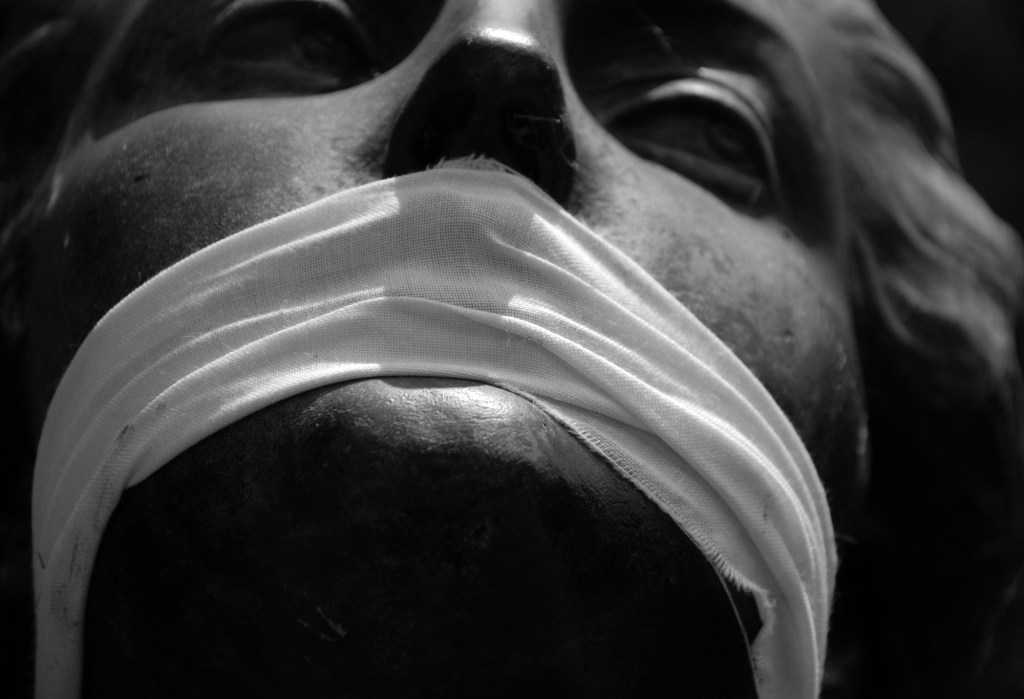
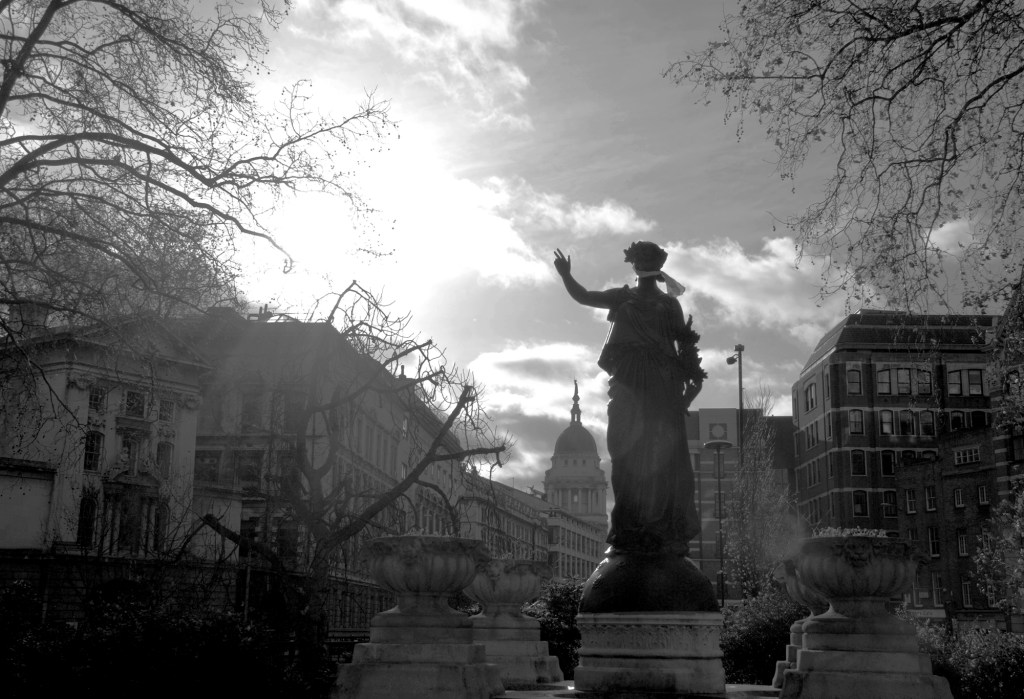
A lack of female statues/voices led to a feminist off shoot of this project called ‘Bouville’. ‘Bouville’ references an interaction between Simone de Beauvoir and Jean-Paul Sartre, which took place in a cafe near Euston Station. Sartre believed he could capture the essence of London in a sentence and she did not. Sartre later wrote a book (La Nausée) about Le Havre, which he called Bouville, in this instance Beauvoir believed he had managed to capture the essence of a place. The discussion between the two writers remains a point of contemplation for feminists. Did Sartre succeed in capturing the essence of Le Havre or did Simone de Beauvoir fall into a classic female trap?
The piece is an ongoing work and captures an open ended reflection of London.
33cm x 48cm Glicee print on Somerset Enhanced 100% cotton. Framed in discrete white exhibition frames (pictures on request) £650 $US900 €765
It’s not as superficial as it looks
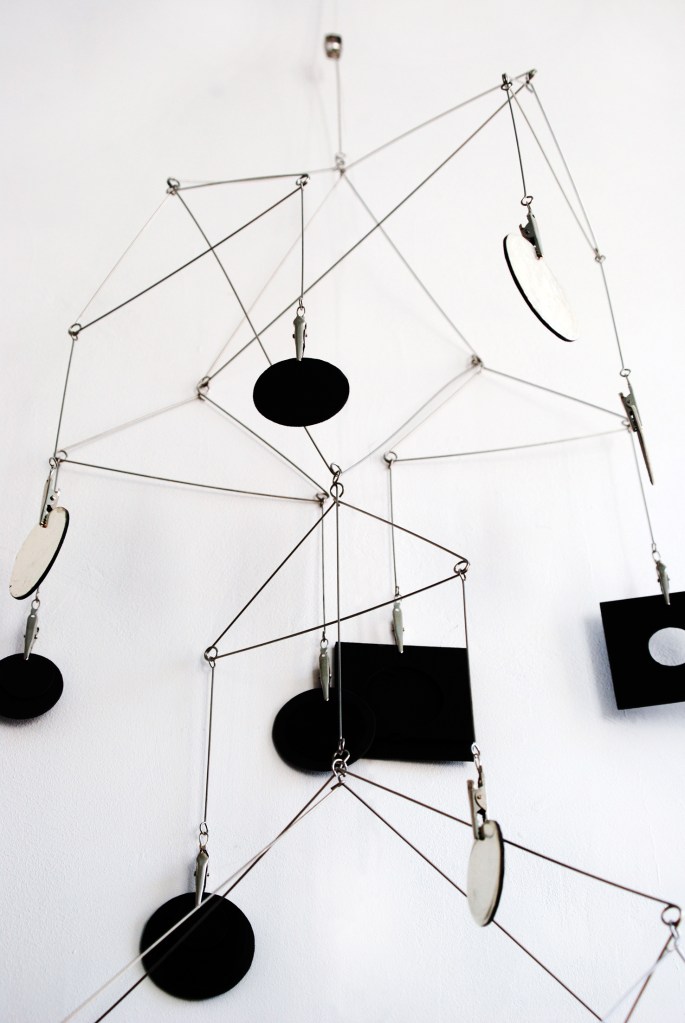


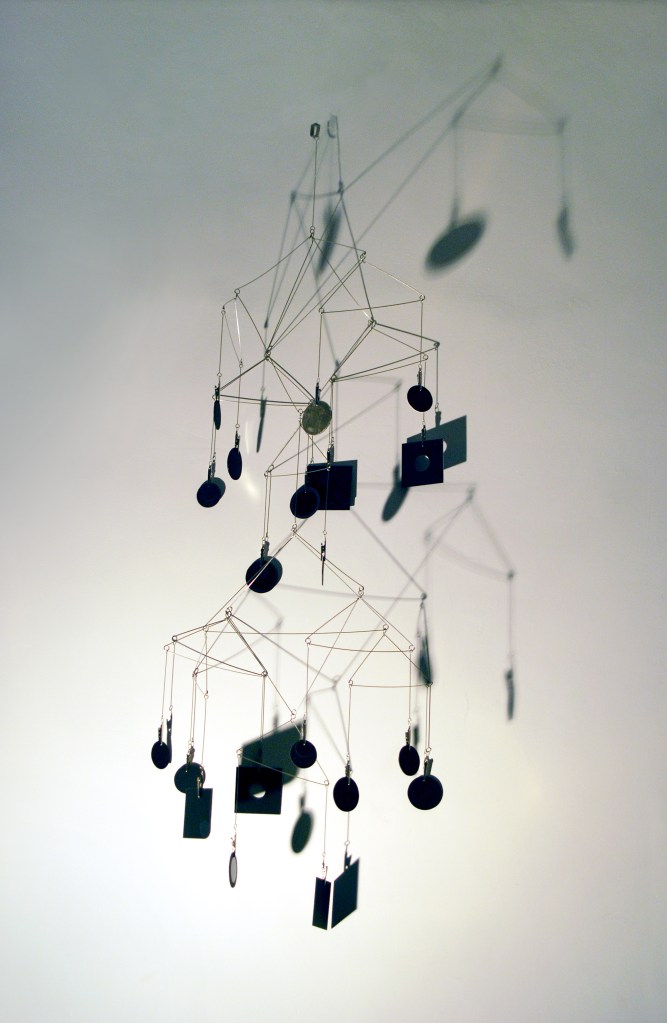
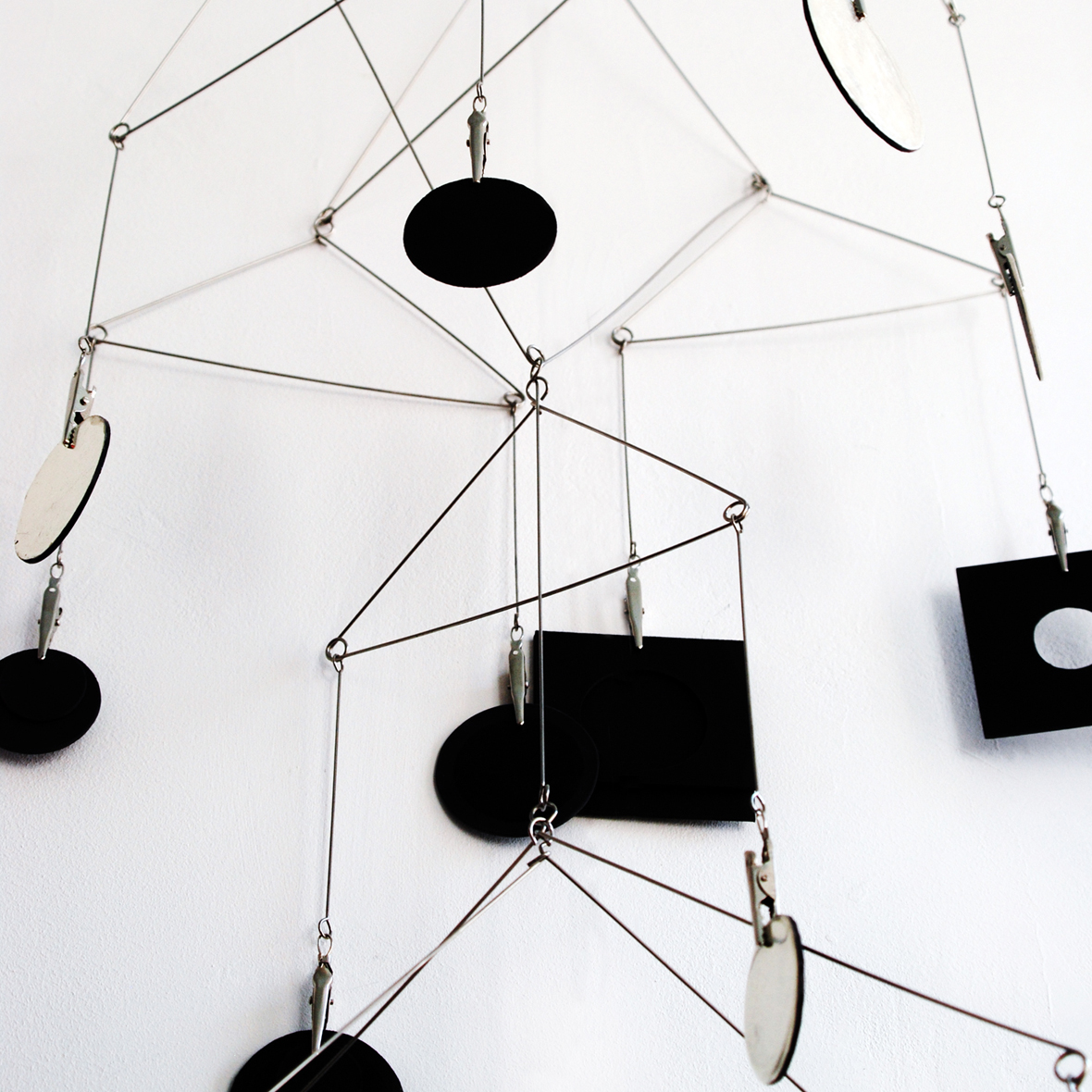
The mobile is hung on the wall, rather than the middle of the room, shirking the desire to be centre of attention. In this position the shadows create an optical illusion of an additional third dimension (or depth) on the wall.
Black card scraps from the studio are treated as precious material. Each element of the mobile is hand cut to make the aesthetic best of what is available. The card has been left bare, varnished, gessoed and / or water gilded with white gold.
Emphasising what we treasure and discard, whilst shadows create a transient extension of the piece. Acknowledging both the persona we present to the world and the hidden realities of life, fleetingly visible and ever moving.
Does this make me special?
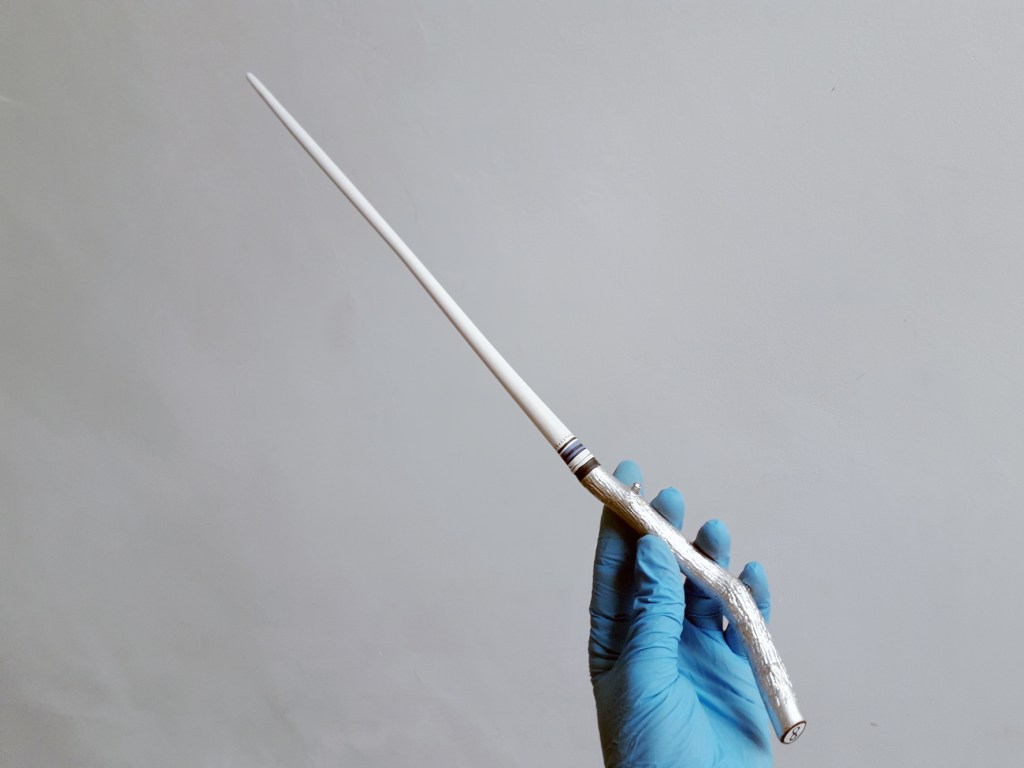


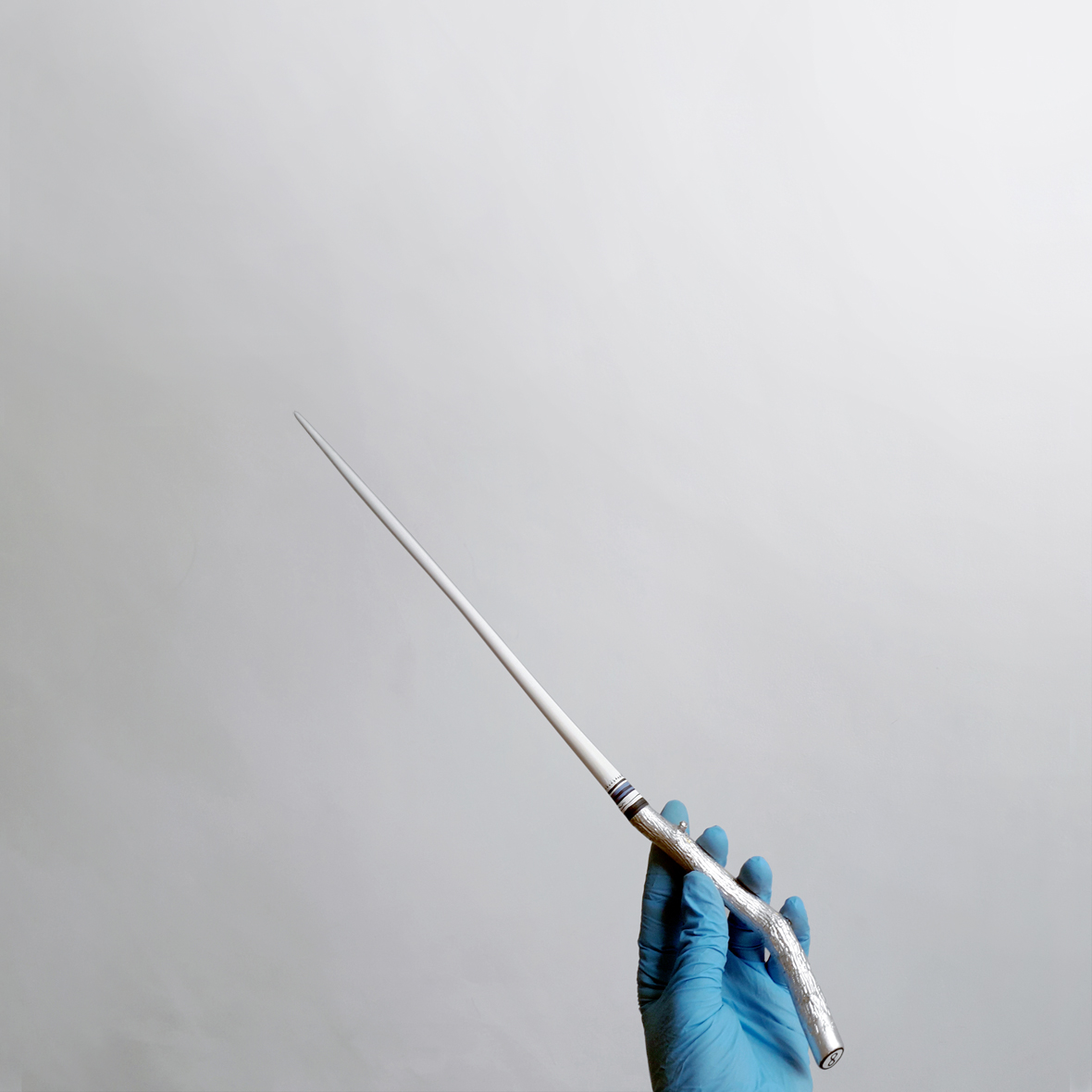
A wand should:
- Retain some of the aesthetic nature of the source material, to enhance its magical energy
- Resemble lightening to some extent and
- Have some element of the maker about it.
The wand is made from Medlar wood, the branch came from the orchard at the Imperial War Museum (which used to be Bethlem Hospital). Various parts of the tree are used for their healing properties. The French call the fruit ‘cul de chien’ but Miguel de Cervantes was kinder in Don Quixote when he wrote ‘time and straw make a medlar ripe’ as he referred to the sweetness of maturity, referencing the unusual nature of the medlar as it is eaten when the fruit has bletted – is extra soft because it is rotten.
The main shaft of the wand is white (gesso on wood), with minimal decoration near the handle (gesso and bole). The handle is oil gilded (directly onto the bark) with palladium and touches of 24ct gold. At the base of the handle is the symbol for infinity – a reoccurring theme in the artists work.
43cm Medlar wood gesso, oil gilded with palladium and gold – with collector in Singapore.
The point of no return
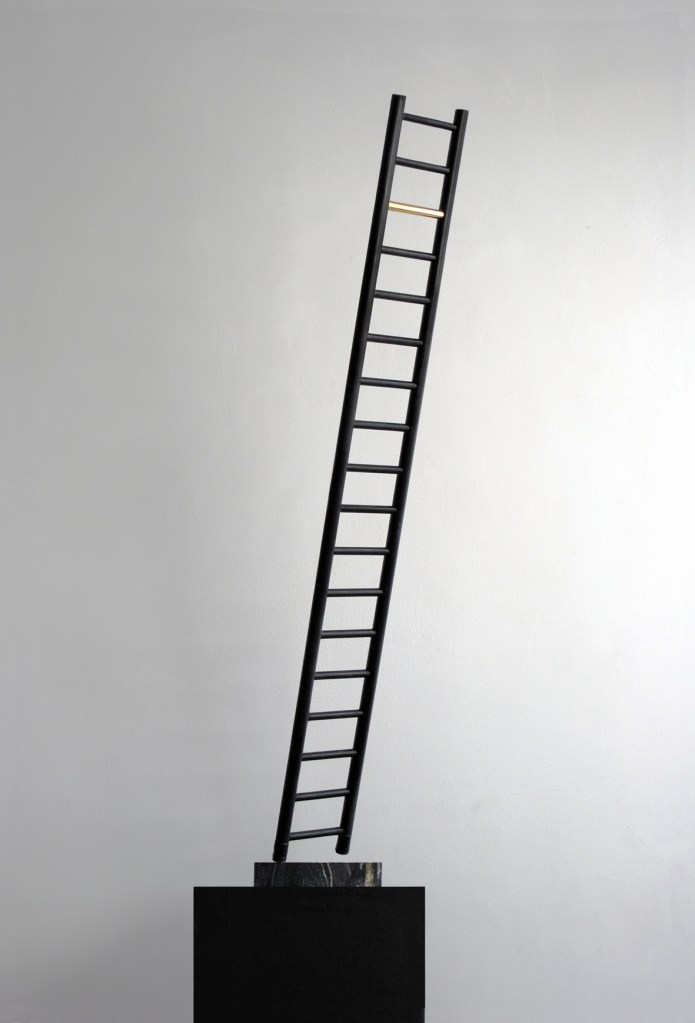
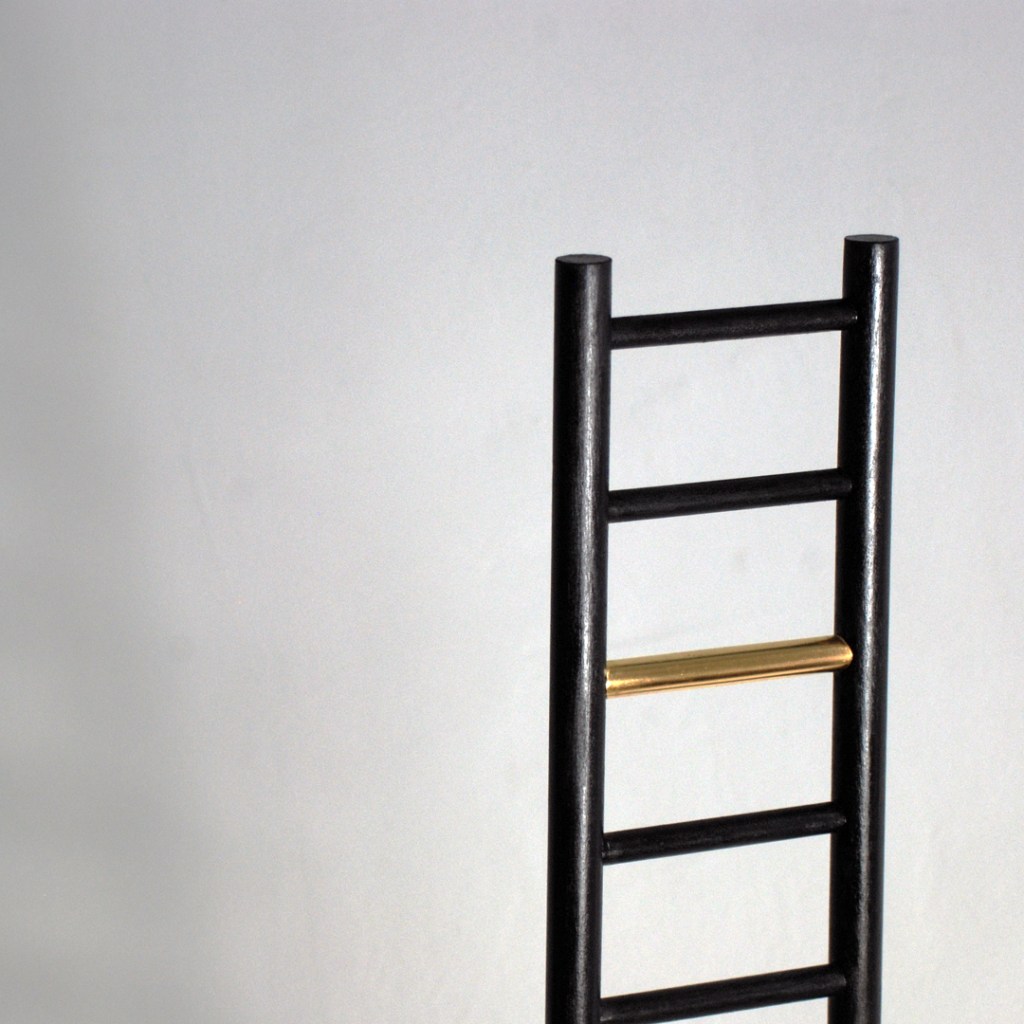


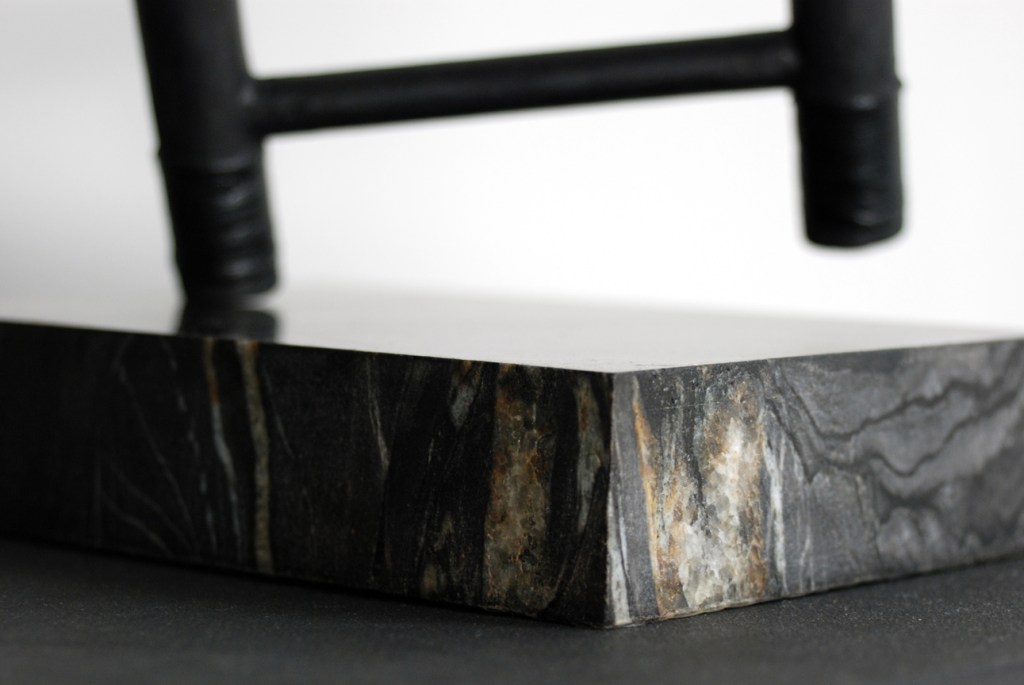
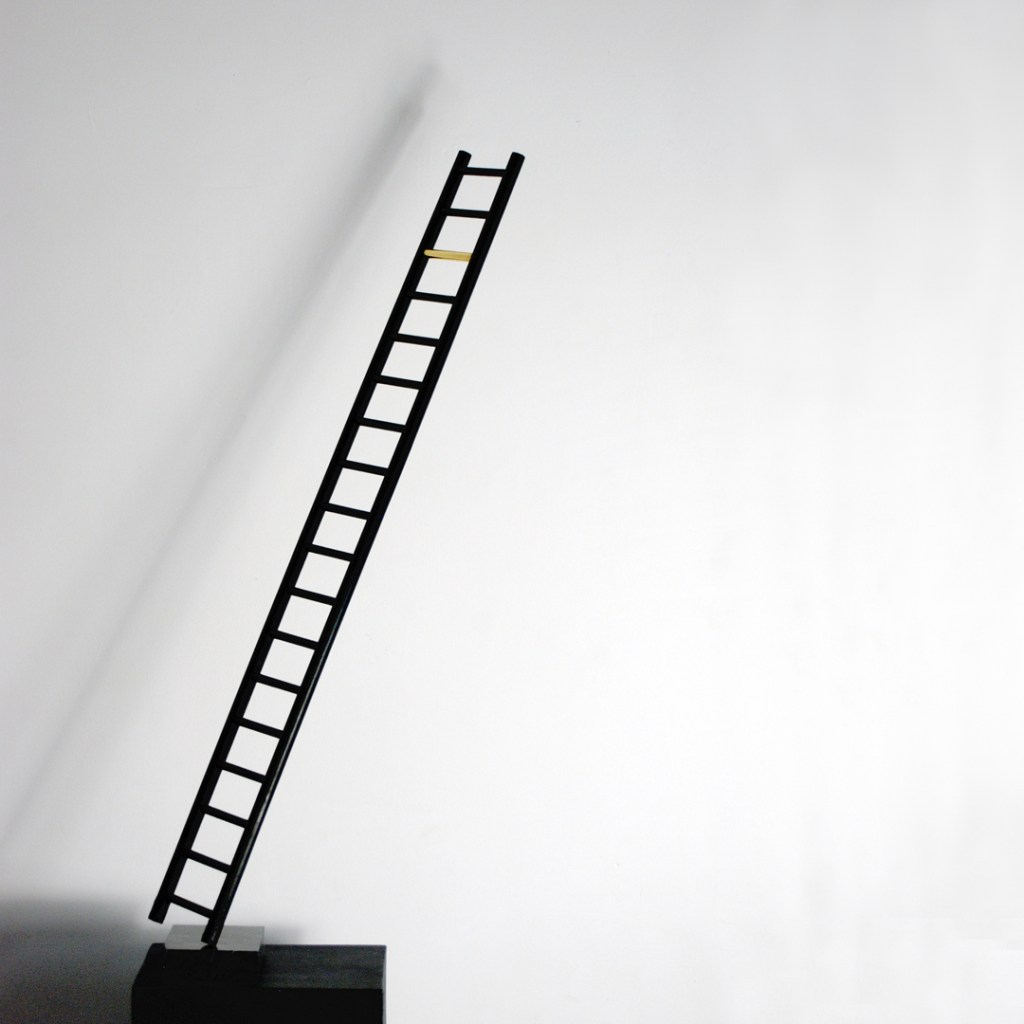

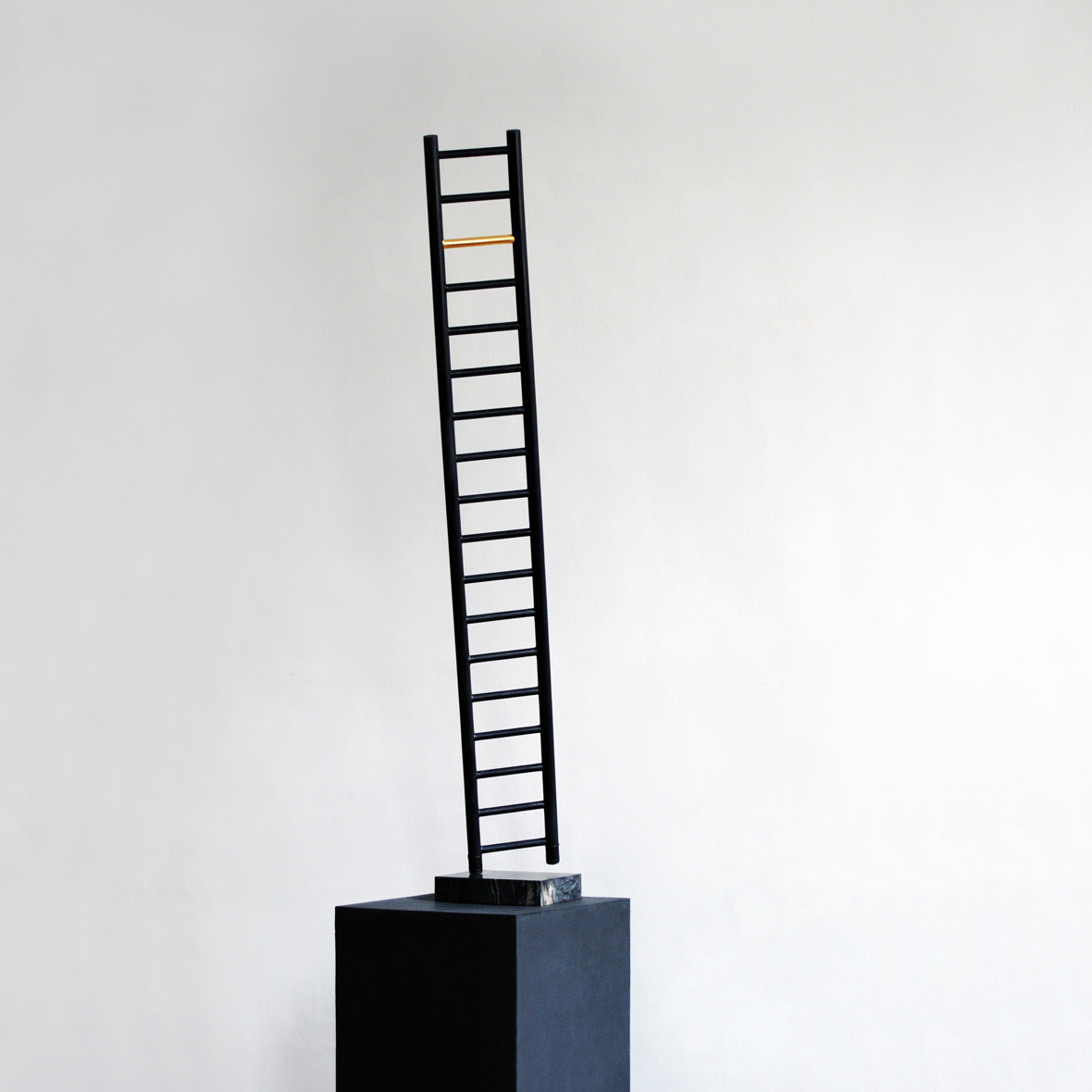
A precarious ladder balances against the odds. A metaphor for the uncertainty we face, as we take our next steps and reach for the golden rung, as a symbol of hope.
Will be exhibited for the first time in 2021 at Willesden Gallery, London (date to be confirmed)
90cm x 30cm x 30cm Wood black tempera paint and Indian ink, dark marble £1750
Rememberance

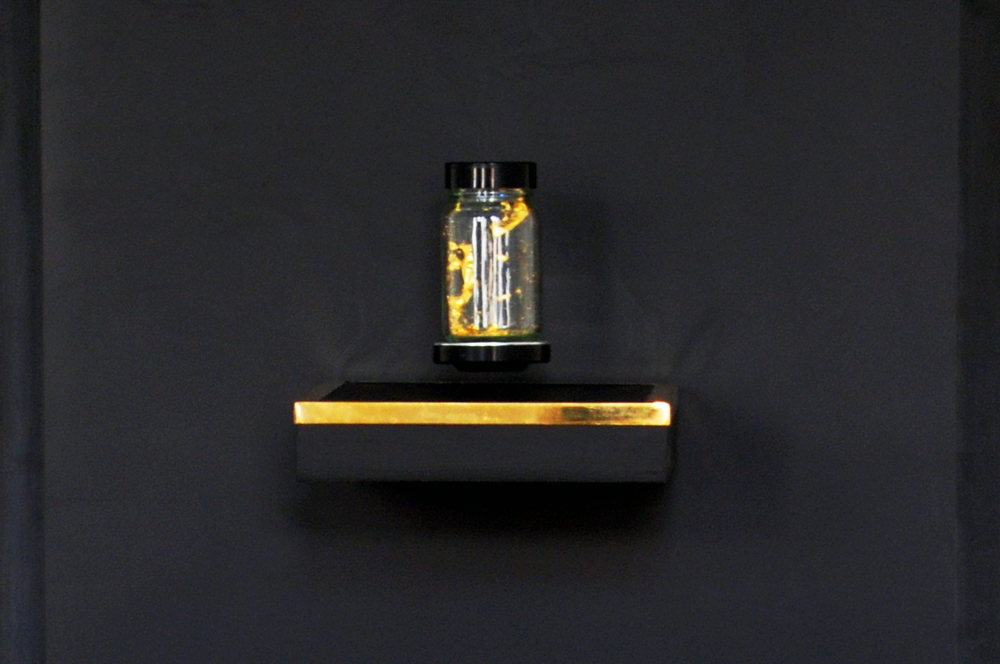
A revolving glass jar hovers like magic above the small shelf. Inside there is a sheet of gold leaf that has formed it’s own miniature sculpture. Over time, the Gold in the jar will re-shape, just like precious memories.
1.16m x .47m x .22m Wood painted black with shelf, magic, brass trimmings, glass jar and 24ct gold. £2400 $US3340 €2825
Why Moon
Developed as a prototype to perfect technique for Mirror, Mirror piece.
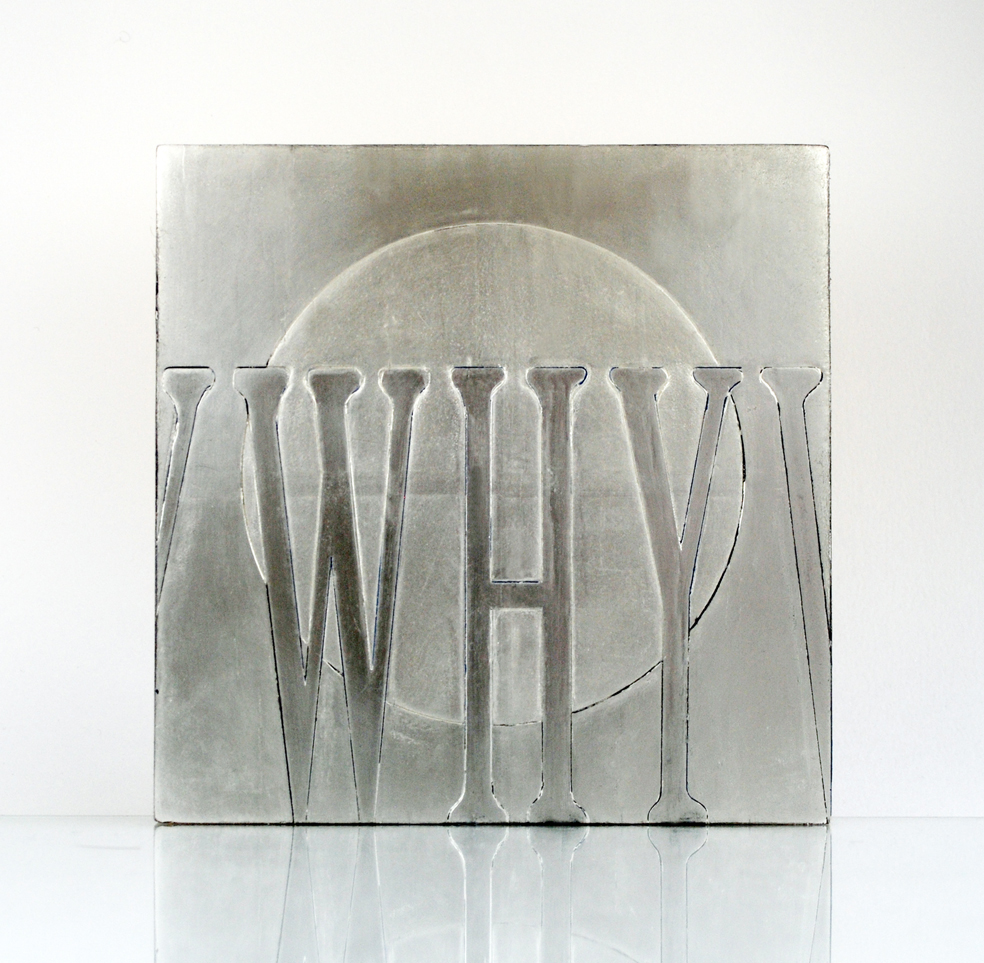
15.5cm X 15.5cm x 2.2cm wood board with gesso, water gilded with palladium. £450 $625 €530 with collector after studio visit.
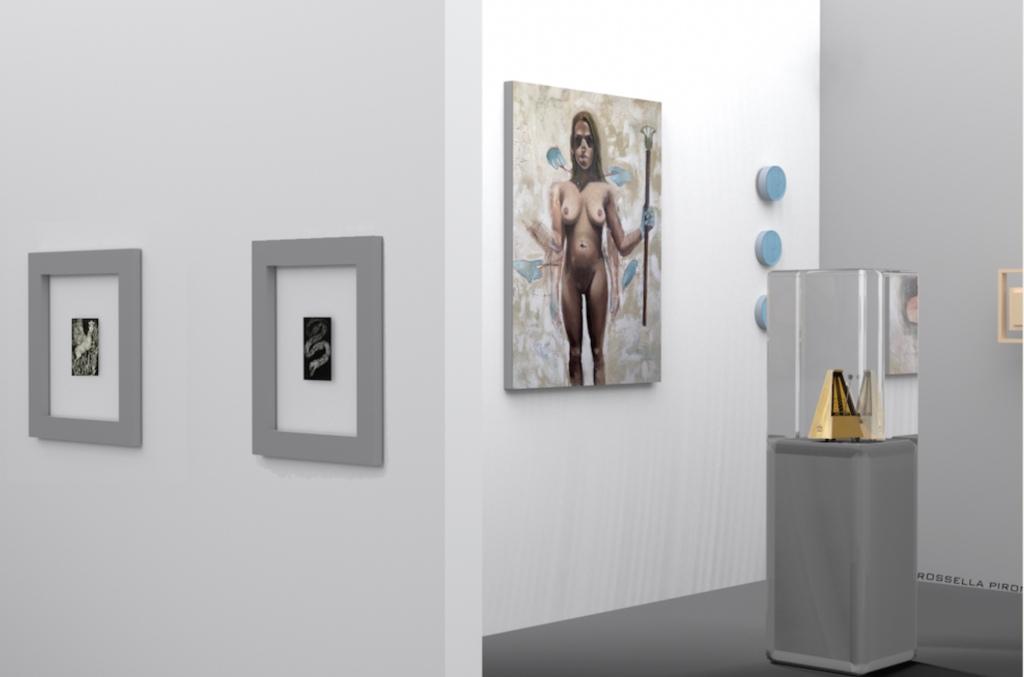
Installation images





 nicolewassall.com