
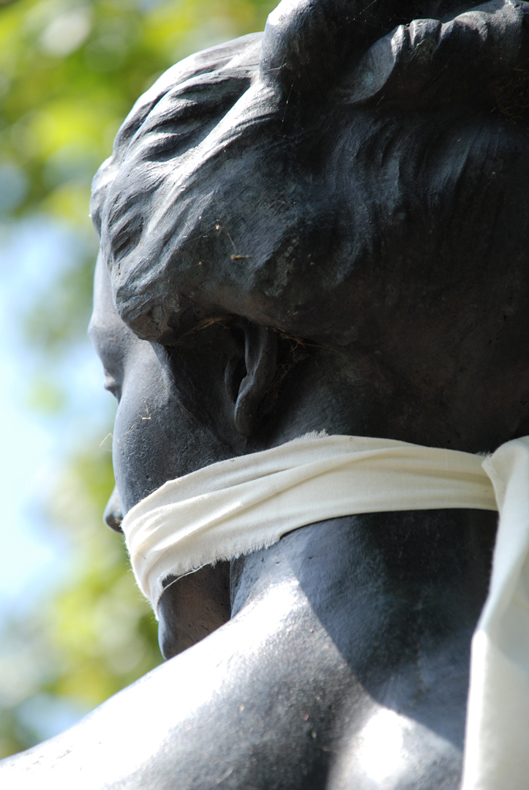
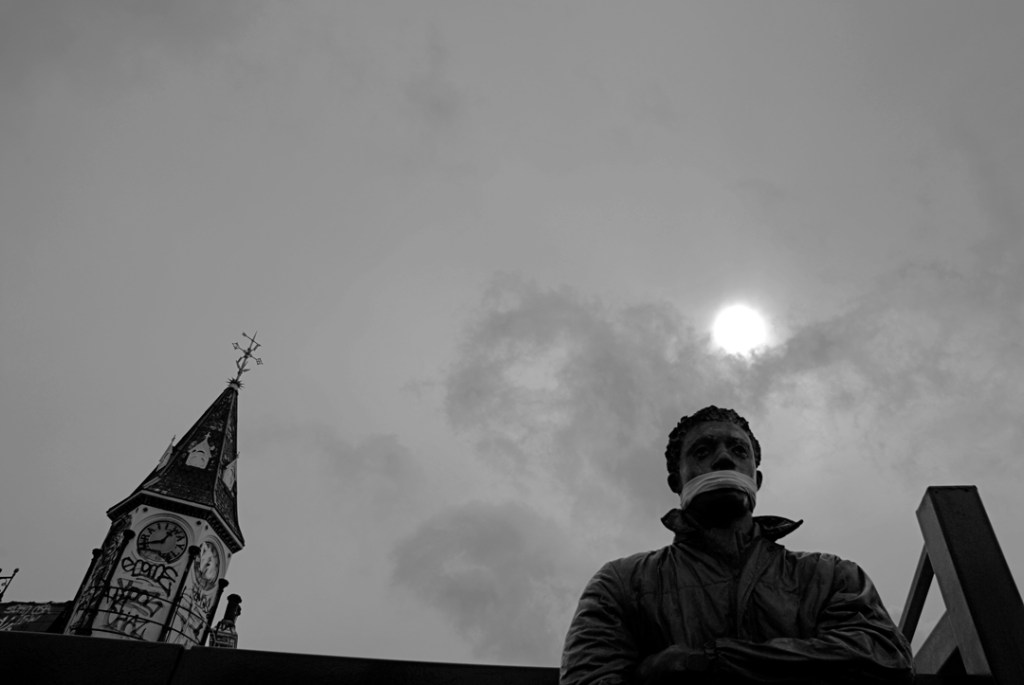
An ongoing project, where over 20 statues have been gagged and photographed in central London. It strikes me that there is something deliciously revealing about what society, at any particular time, feels it’s appropriate to celebrate with a bronze sculpture. I also found it interesting that these historic portals of social reflection were seemingly invisible, to the majority who passed them by.
Further, I had a suspicion that in the future, there would be less tolerance for artists in Lycra climbing and gagging statues. This project started around 2010.
By 2020 a statue of Edward Colston (in Bristol) was pulled down by demonstrators. By October 2025 Greenpeace placed prison bars around the statues of activists Mahatma Gandhi, Nelson Mandela, and Millicent Fawcett in London’s Parliament Square to protest the UK government’s crackdown on the right to protest. Greenpeace was highlighting how iconic protesters would be criminalized under new laws and labelled terrorists.
I haven’t gagged Millicent, yet, but the other two were gagged in around 2010, and whilst no statues were harmed in the making of this collection, people stopped, looked and asked who the characters were.
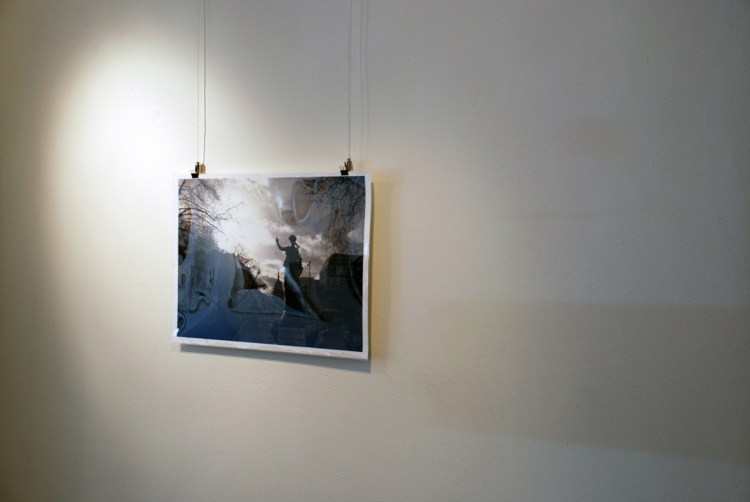
All black and white Giclée prints on Somerset enhanced 100% cotton paper 33cm x 48cm with archival ink. White exhibition frame with glass £650 (example at end of page)
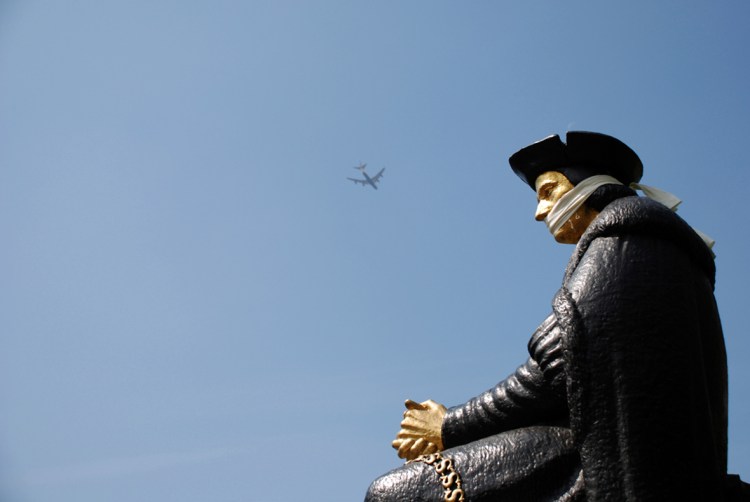
Thomas More
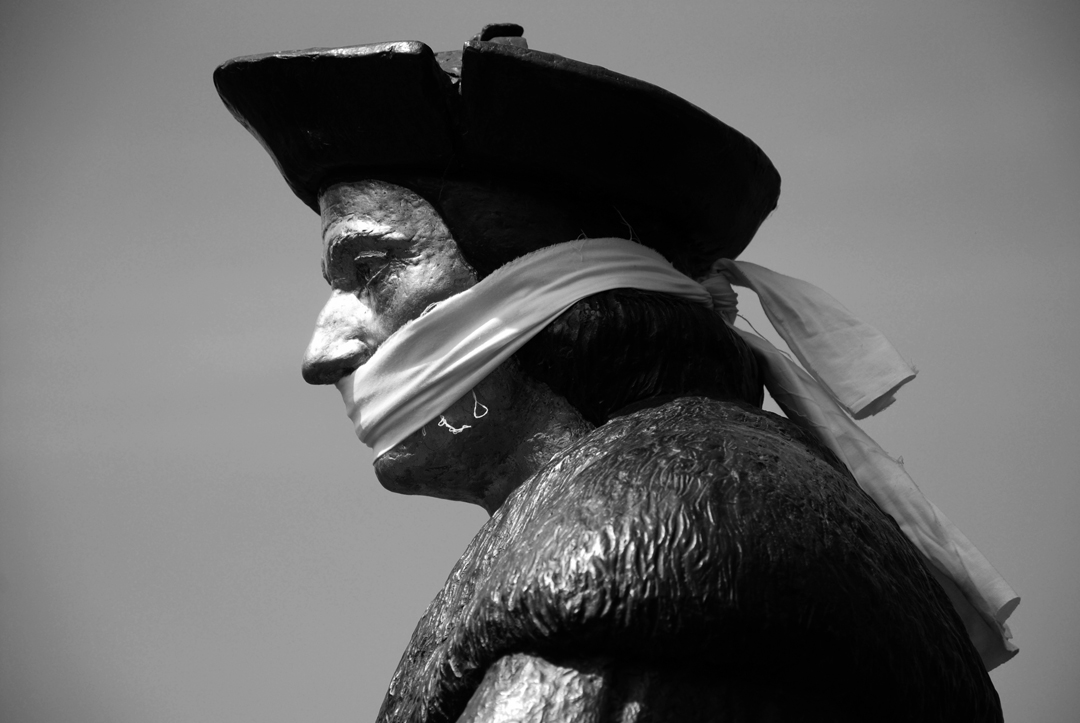

Thomas More, the inspiration for this project, sits in black robes with gold face and hands. More was killed for ‘treason’, in truth he was killed because he wouldn’t bend to indulge Henry VII. He believed his daughter as wise as any man, encouraging her education, and he coined the phrase Utopia with a book of that name.
Utopia (1516) depicts a pagan island governed by reason. It provided a cure for egoism; his reaction to a world he saw governed (and divided) by self interest and greed. The book covered ideas on punishment, education, multi-religion society, women’s rights and was the first in a new genre of books.

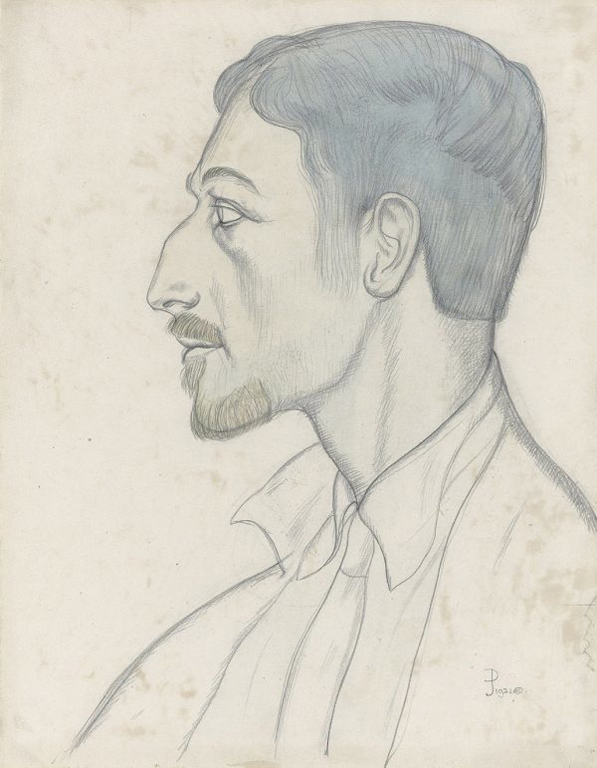
Atlanta (Apparently)
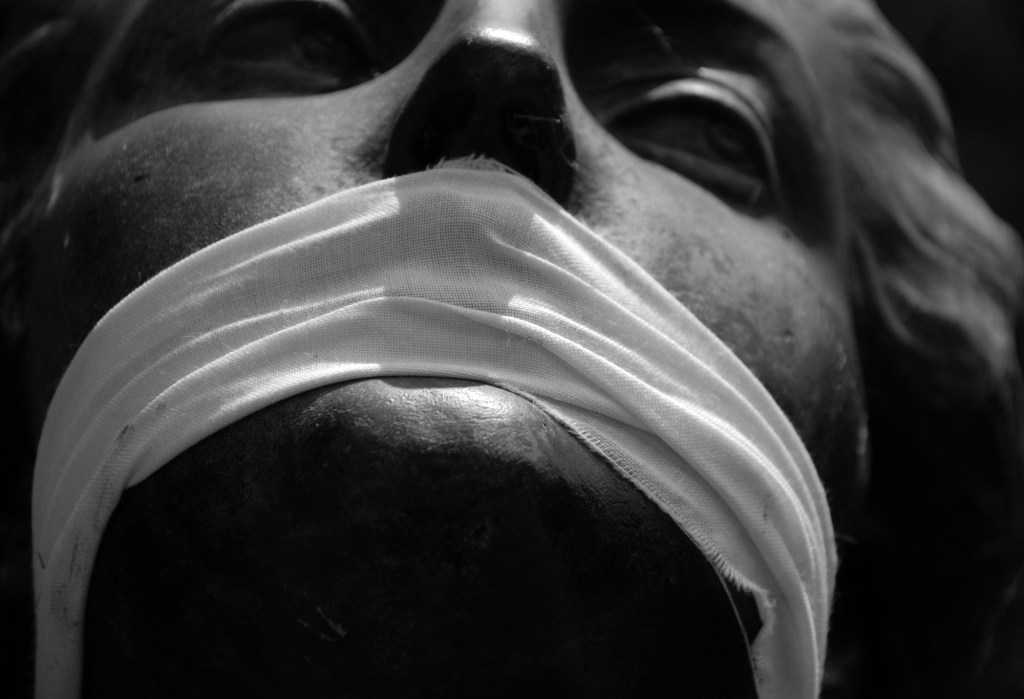


This statue is apparently a portrait of the huntress and fleet runner Atlanta. It’s based on the marble sculpture held at Manchester Museum by Derwent Wood. I can’t help but wonder if Mr Wood ever studied the classics.
Atlanta’s father abandoned her on Mount Parthenion; he wanted a son. Suckled by a bear and raised by hunters she modelling herself on Artemis. An extraordinary athlete and warrior, she wore a sleeveless tunic, lived in the wilderness and avoided men – the oracle warned marriage would be her undoing.
She sailed and fought alongside the Argonauts, although she was excluded from some adventures; Jason worried she’d cause trouble between the men. Atlanta appeared frequently in Greek art as a woman arm wrestling with hero King Peleus, a popular image because she beat him.

In another story, Artemis sent a wild boar to cause devastation. Atlanta with the Argonauts were sent to hunt it, she was first to injure the beast and was awarded the hide. However, she wasn’t allowed to keep her prize.
After the boar hunt Atlanta’s father decided having a daughter wasn’t so bad and started planning her marriage. Atlanta agreed, with a stipulation that her suitor would have to outrun her (an impossible feat) and if they failed they’d be killed. Several suitors died. Until Hippomenes cheated by getting magic apples off Aphrodite. Atlanta overtook him, so he threw a golden apple and she ran after it, which meant he won the race. But he forgot to thank Aphrodite, she waited until they were in a sanctuary for Zeus and then strategically zapped them with sexual passion. Zeus was not amused, and changed them into lions, because in those days lions could only mate with leopards. And so Atlanta was left sexually frustrated, and Zeus proved the oracle right.
Atalanta blended female and male attributes. A complex character, as she posed a threat to male order whilst being the subject of male desire (Barringer, 1996). As a character she offers insights into the tension of gender dynamics in Ancient Greek society. She exists as a feminist metaphor for the misrepresentation of women, from Ancient Greece to today. Ironically the sculpture captures none of this friction, yet captures a stereotypical view of femininity.
Barringer, J. M. (1996). Atalanta as Model: The Hunter and the Hunted. Classical Antiquity, 15 (1), pp. 48-76.
Selection of statues – central London
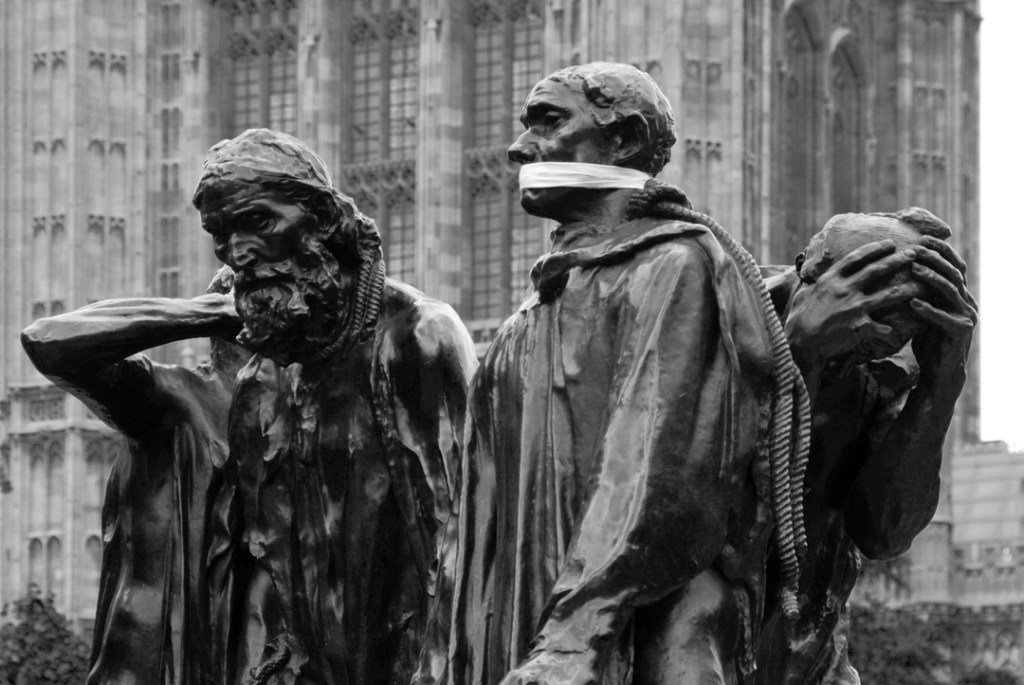


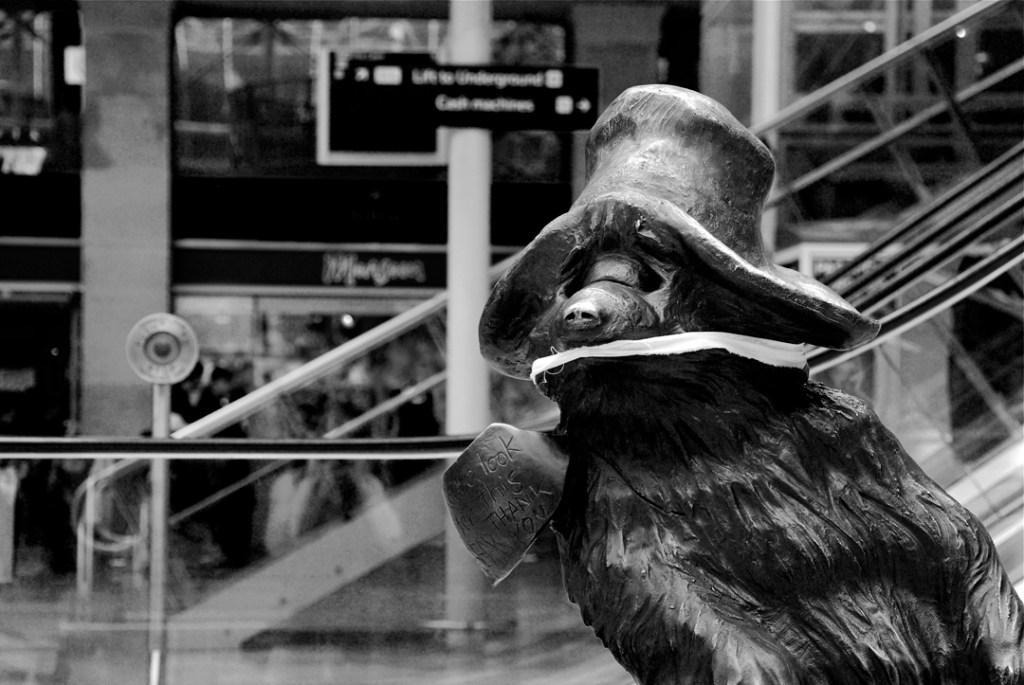
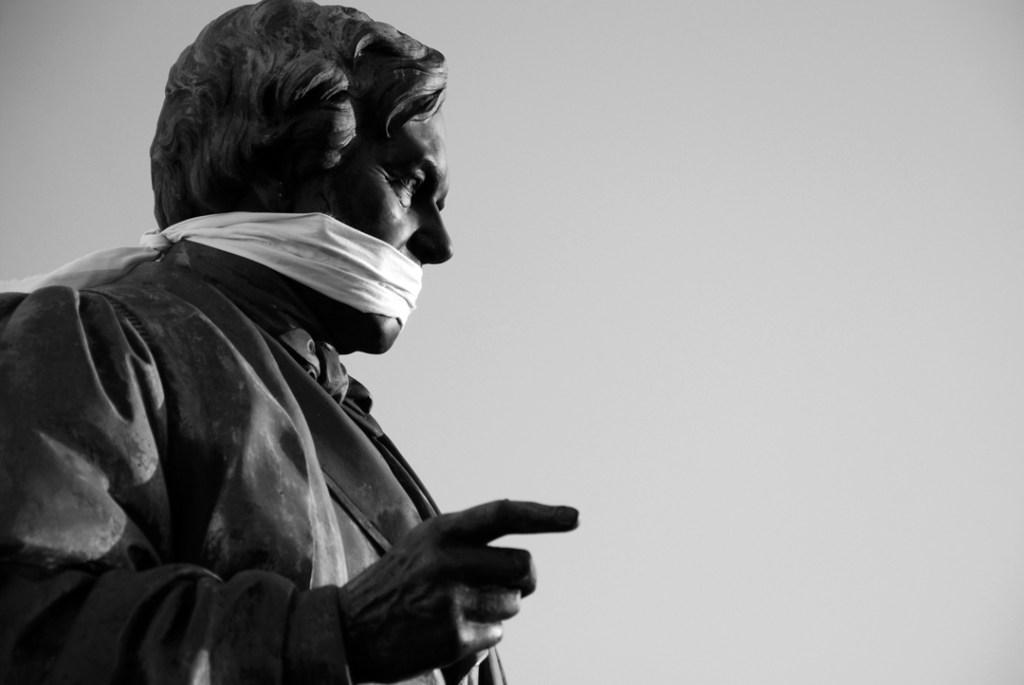

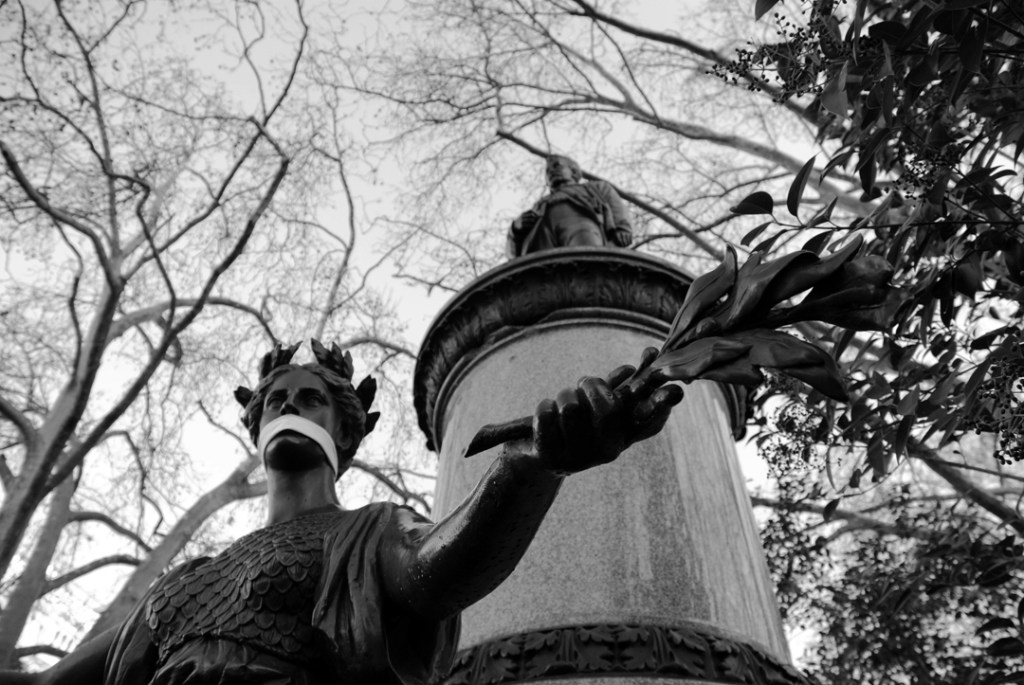

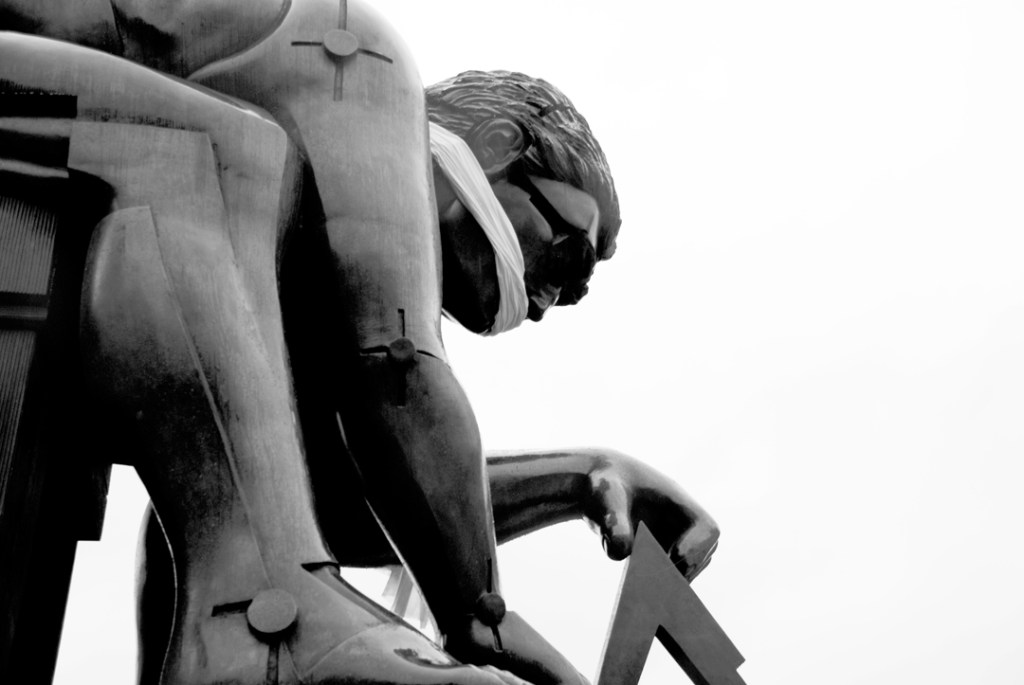
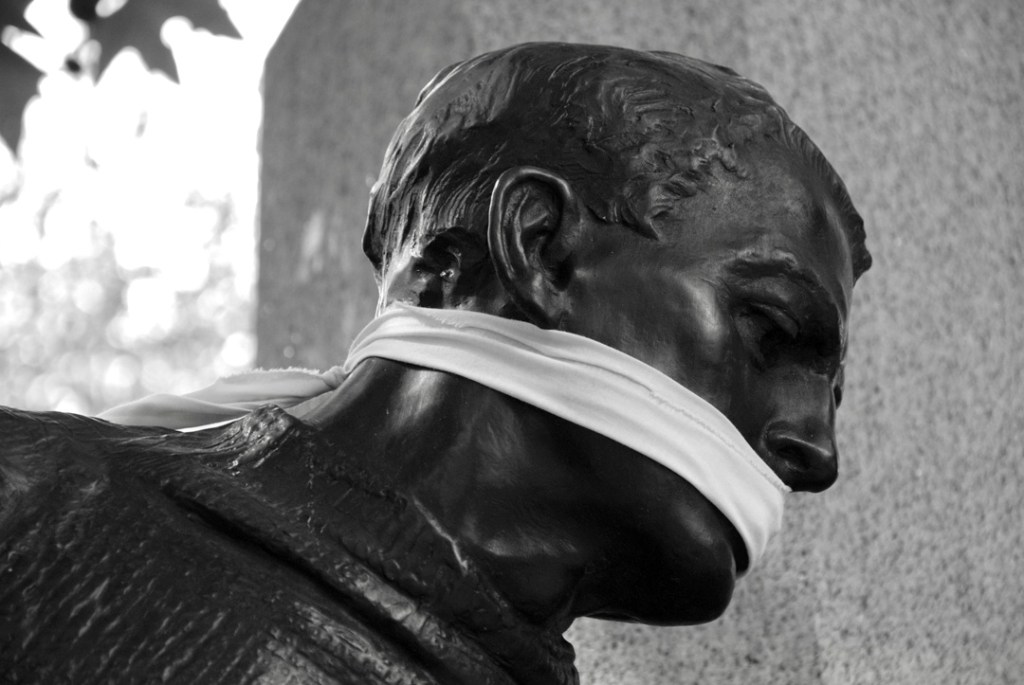
Burghers of Calais – This Rodin sculpture, in the garden next to the Houses of Parliament, formed inspiration for the later ‘Thank You’ piece.

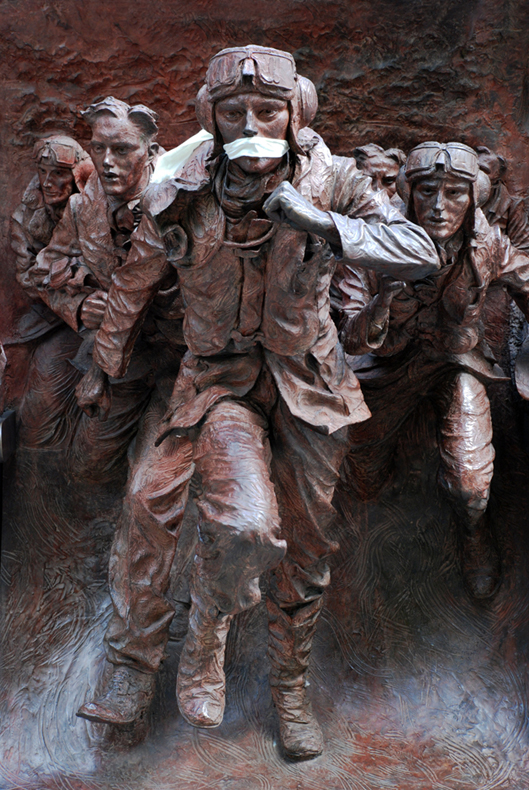
Battle of Britain – ‘The few’ that Churchill referred to were 3,000 RAF men. Mostly British but many from occupied Europe and the Commonwealth – Belgium, France, Poland, Czechoslovakia, New Zealand, Australia, Canada, South Africa, Rhodesia (now Zimbabwe), as well as from the neutral United States and Ireland.
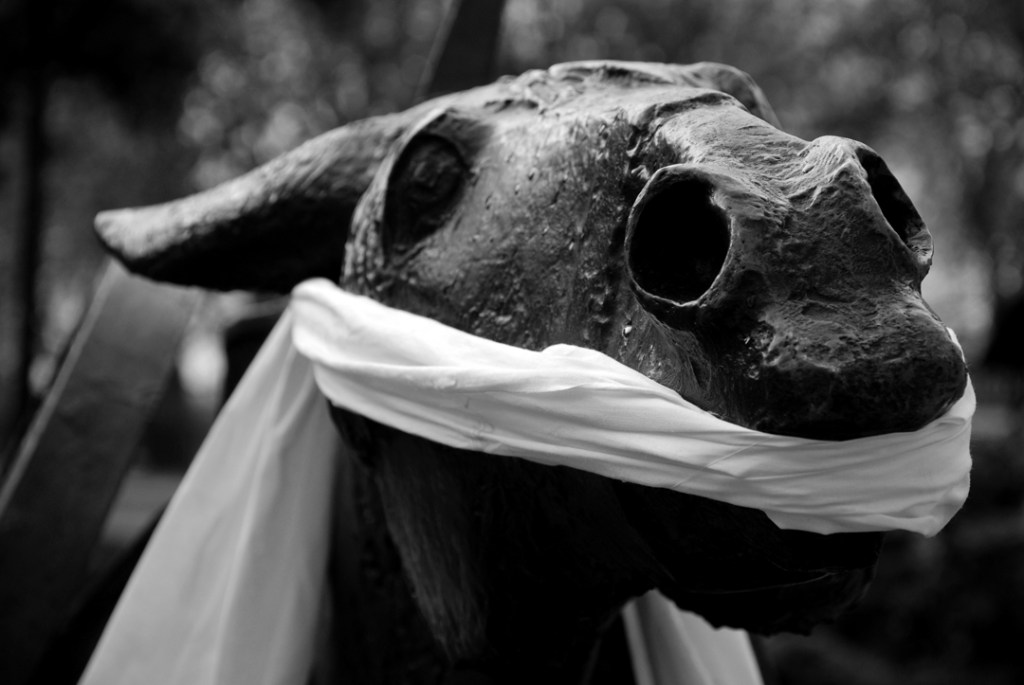
The Animals in War Memorial – located near Brook Gate (Hyde Park). The inscriptions read “This monument is dedicated to all the animals that served and died alongside British and Allied forces in wars and campaigns throughout time.”
The second, smaller inscription simply reads: “They had no choice.”
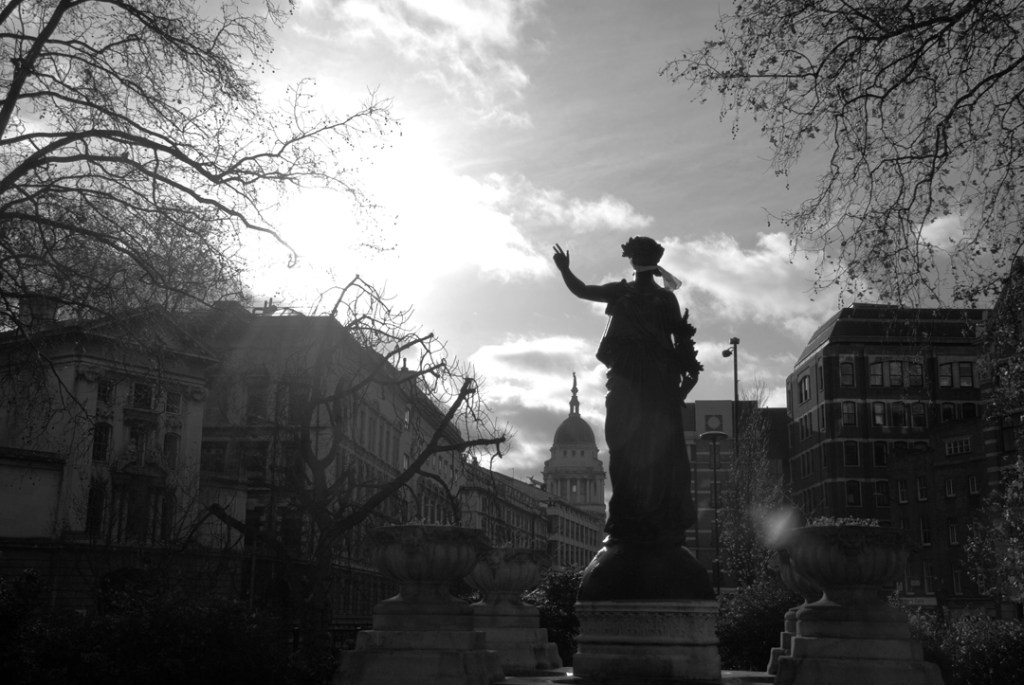
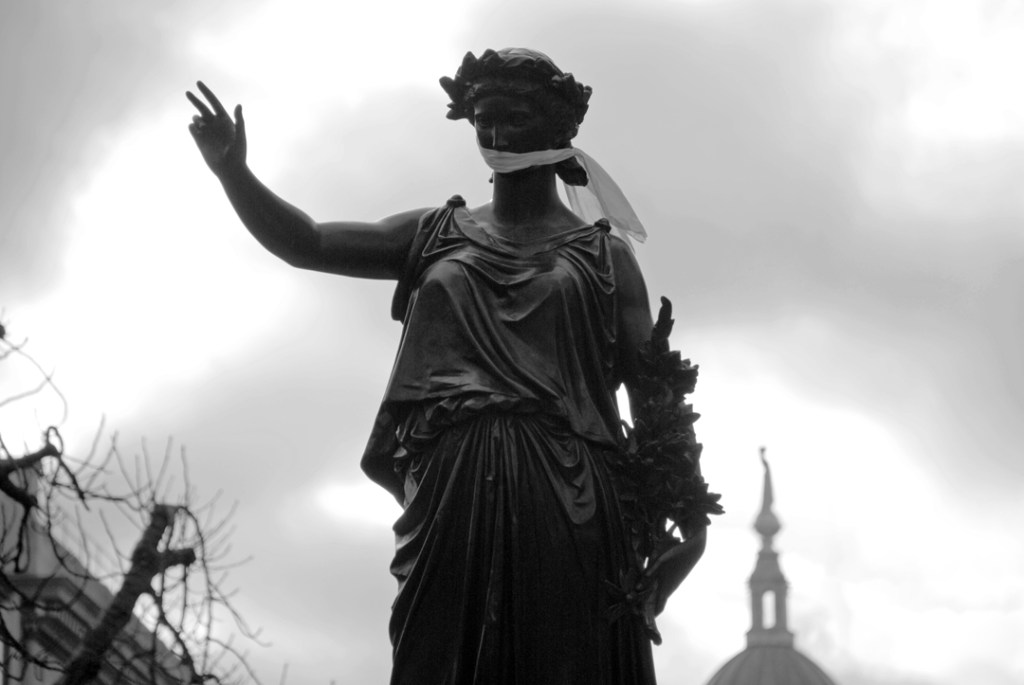
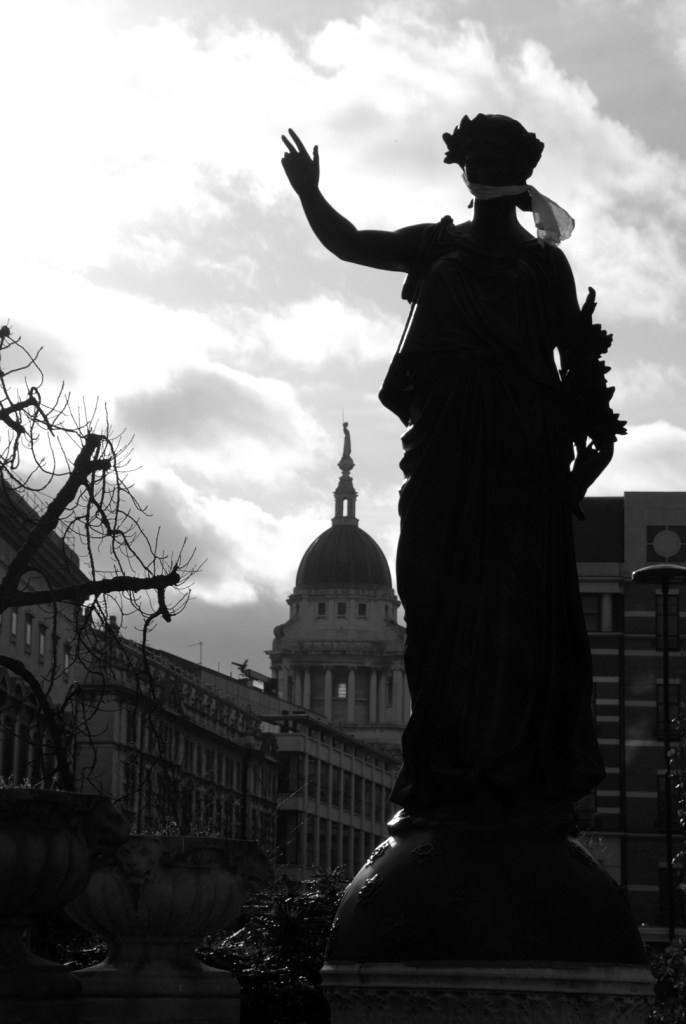
Peace – Originally one of 5 statues (temperance, hope, faith and charity) the others were removed and have been ‘lost’. Peace echos the statue of Lady Justice atop the Old Bailey, which is visible in the distance. Made in 1879 by John Birnie Philip, who had 10 children, one of whom married James McNeill Whistler.
Churchill & Roosevelt – Mayfair
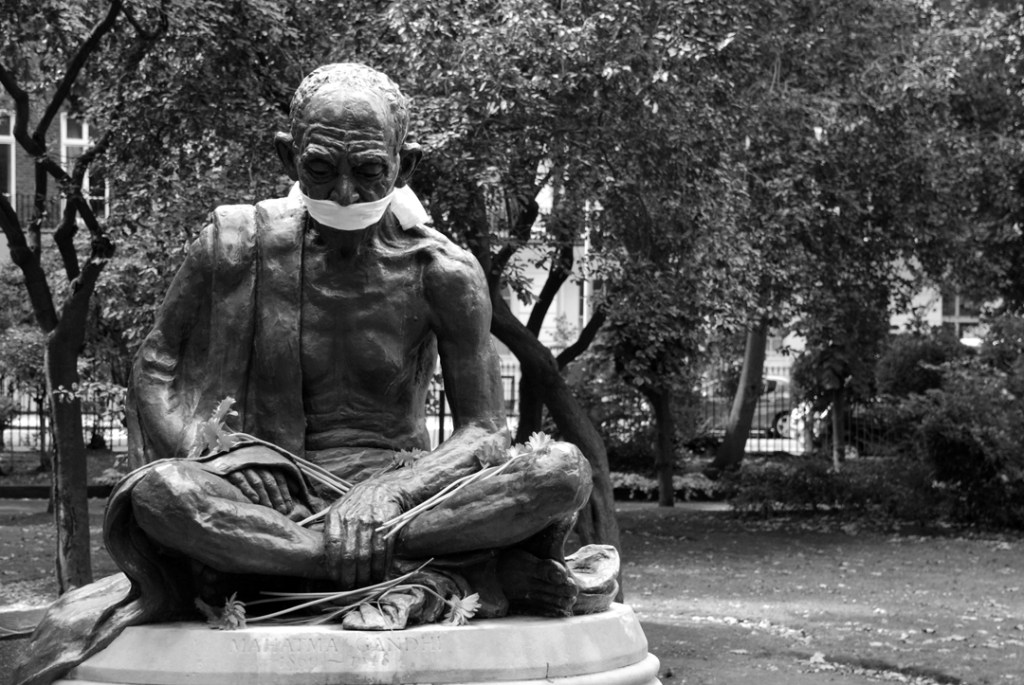
Gandhi – Russel Square
Paddington Bear – Interestingly the only statue I had to ask permission to gag. People got upset and one man (in an angry stern voice) asked ‘Is this sexual?’ I promptly replied ‘Not for me’..
Faraday – The third of four children he had a rudimentary education, but at 14 he worked at a bookshop and discovered Jane Marcet (author of Conversations on Chemistry). At the forefront of technology he laid the groundwork for electrical power and communications systems, turning electricity from a subject of curiosity into practical applications. He refused both a knighthood and to help with chemical weapons during the Crimean war (for ethical reasons). It seems that society is at a similar juncture with AI, and leaders in these technologies face similar moral quandaries.

Freud – I went to a lecture at the Freud Museum, a psychoanalyst was talking about Blake through Freudian and Jungian analysis. She dropped out that two types of people come for analysis ‘those who feel too much, and those who feel too little’.
Britannia – Sitting under Lord Clyde with olive branch in hand and sword resting against the lion. It is worth reminiscing, however uncomfortably, that Britannia served as a powerful national personification and propaganda symbol for the British Empire, representing Britain’s strength, unity, and, most importantly, its dominant maritime power. The image was used to project an ideology of imperial supremacy and national pride both at home and in the colonies.
Buddha – Covered in gold leaf, the statue seems to glow. A passer by stopped and protested that I shouldn’t gag Buddha. He seemed cross because he believed I wouldn’t put a gag on Jesus. To him it was the inconsistency, a perceived level of disrespect for one religion over another, that was problematic. So I asked enthusiastically if he could recommend a Jesus statue. He shook his fist at me, I guess he was a Buddhist because that’s as far as it went.
Newton – Based on a rare print and watercolour by Blake, the opposing views of the two characters make the statue as much a portrait of Blake as Newton. The heavens opened as I climbed the statue.

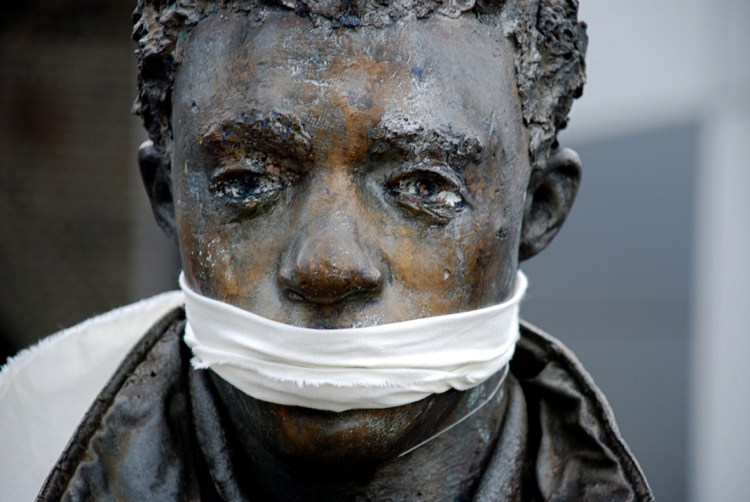
Black Man Brixton #BLM – The first public sculpture of black British people in the UK. The sculpture ‘Platforms Piece’ by Kevin Atherton is of residents Peter Lloyd, Joy Battick and Karin Heistermann. The works were given listed status in 2016 by Historic England but were left off the BBC list (July 2020) of statues of black individuals in the UK, because they are “not named historical figures”. The gagged man is Peter Lloyd.
Plimsoll – The gagged sailor is part of memorial to Samuel Plimsoll (1824-1898), a Victorian politician who invented the Plimsoll Line drawn on ships‘ hulls to indicate safe loading. He tried to get a bill passed through Parliament in 1867. It failed, so he wrote a book Our Seamen. An Appeal. It set out his concerns and a Royal Commission on unworthy ships was set up. In 1876 the Merchant Shipping Act made the load line mark compulsory.
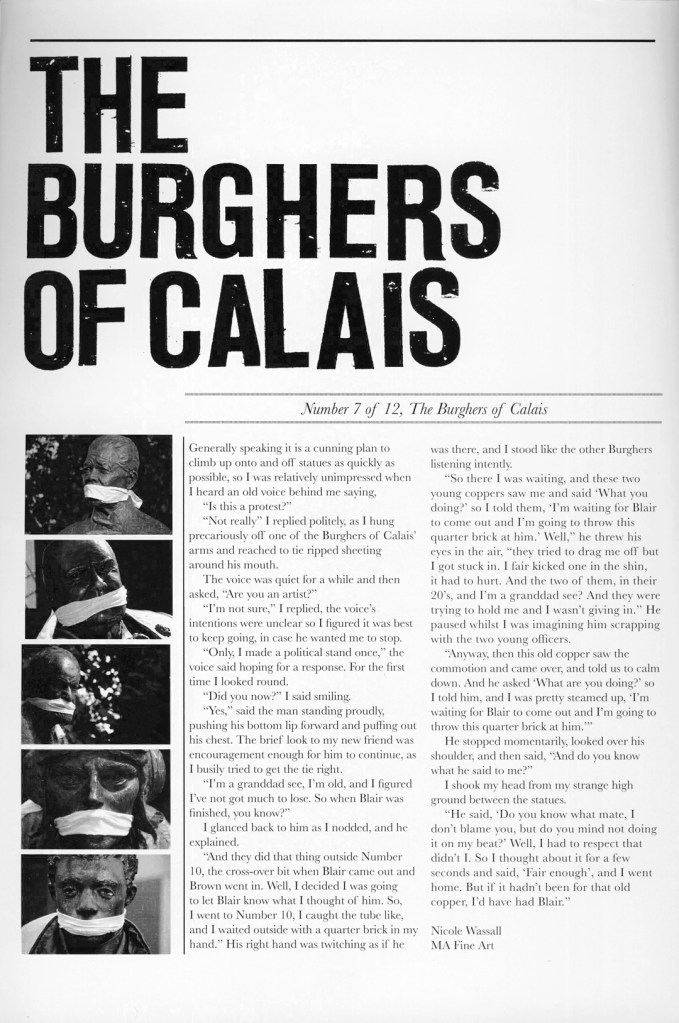
The prints have been exhibited at Art 14 (Kensington Olympia) and more recently at Fiumano Projects (2019) and Thomas More was included in an exhibition at TMLighting (2025). A selection of the images and a story were published in the award winning magazine Less Common More Sense, no 15 The Uncensored issue.


Bouville
A lack of female statues/voices led to a feminist off shoot of this project called ‘Bouville’. ‘Bouville’ references an interaction between Simone de Beauvoir and Jean-Paul Sartre, which took place in a cafe near Euston Station. Sartre believed he could capture the essence of London in a sentence and she did not. Sartre later wrote a book (La Nausée) about Le Havre, which he called Bouville, in this instance Beauvoir believed he had managed to capture the essence of a place. The discussion between the two writers remains a point of contemplation for feminists. Did Sartre succeed in capturing the essence of Le Havre or did Simone de Beauvoir fall into a classic female trap?
The piece uses the images from ‘What’s left unsaid’ and invites male artists to respond to the images with text. A variant of the artists book was exhibited at Kaleid and ArtWars Project Space (Redchurch Street). It was also exhibited as part of Dazed Live (in conjunction with Dazed and Confused magazine and Absolut Vodka).
33cm x 48cm Glicee print on Somerset Enhanced 100% cotton. Framed in discrete white exhibition frames (pictures on request) £650
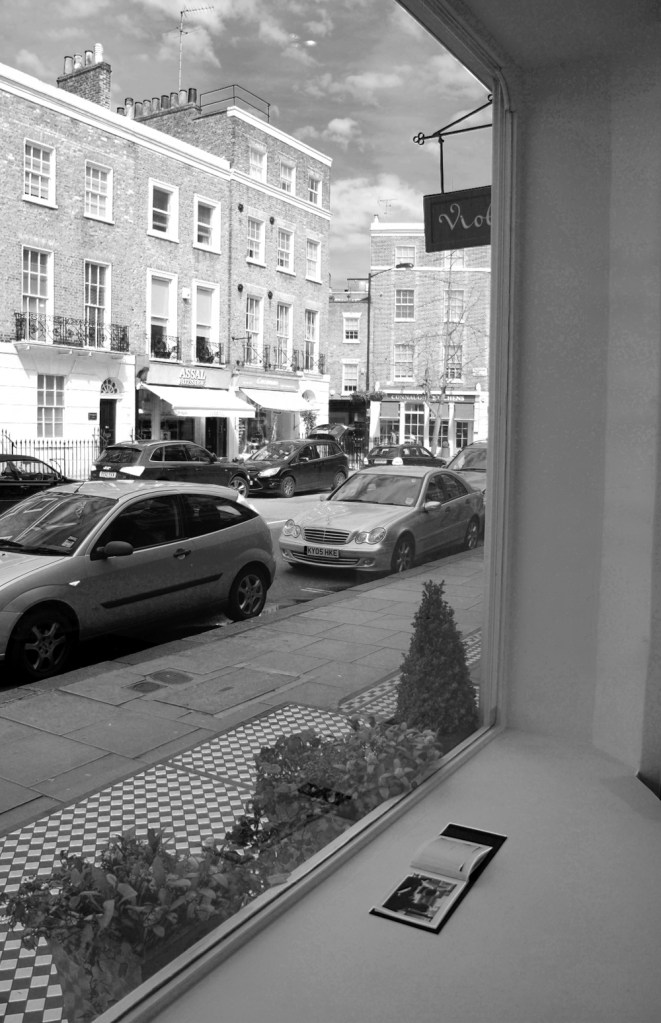
The piece is an ongoing work and captures an open ended reflection on London.
 nicolewassall.com